
- Typical cause
- Roof leaks, sweating ducts, bath fans venting into the attic, plumbing leaks, or wet soil under a crawlspace.
- First move
- Do not stir it up. Find where the moisture comes from and have the space inspected safely.
- Not included
- Roof, duct, vent and plumbing repairs belong to their own trades.
Why concealed spaces grow mold
Attics and crawlspaces share limited airflow, big temperature swings and very little attention, which is how small, steady moisture sources go unnoticed for years. Dallas summers add a particular cause: ducts and air handlers in a hot attic run cold, and humid attic air condenses on them. The water drips onto insulation and the ceiling below, and it can look like a roof leak.
| Space | Common source | Clue |
|---|---|---|
| Attic | Roof leak at a vent, flashing or valley | Stain on the deck underside near one spot; wet insulation under it. |
| Attic | Sweating ducts or air handler | Drips along duct runs in warm humid weather; torn duct wrap. |
| Attic | Bath fan venting into the attic | Stained or wet decking and insulation around the fan, often a disconnected duct. |
| Attic | Water heater or air handler leak | Rust, a pan with water, ceiling stain below the unit. |
| Crawlspace | Surface water after heavy rain | Standing water or mud lines; wet insulation. |
| Crawlspace | Plumbing leak | Drips or stains on joists; a damp spot not tied to rain. |
| Crawlspace | Bare soil, no vapor barrier | Condensation on the floor system; musty smell in the rooms above. |
Many North Texas houses are slabs with no crawlspace, and older houses on piers often have one. Neither condition is universal, and the age of a house does not tell you what is in the attic.
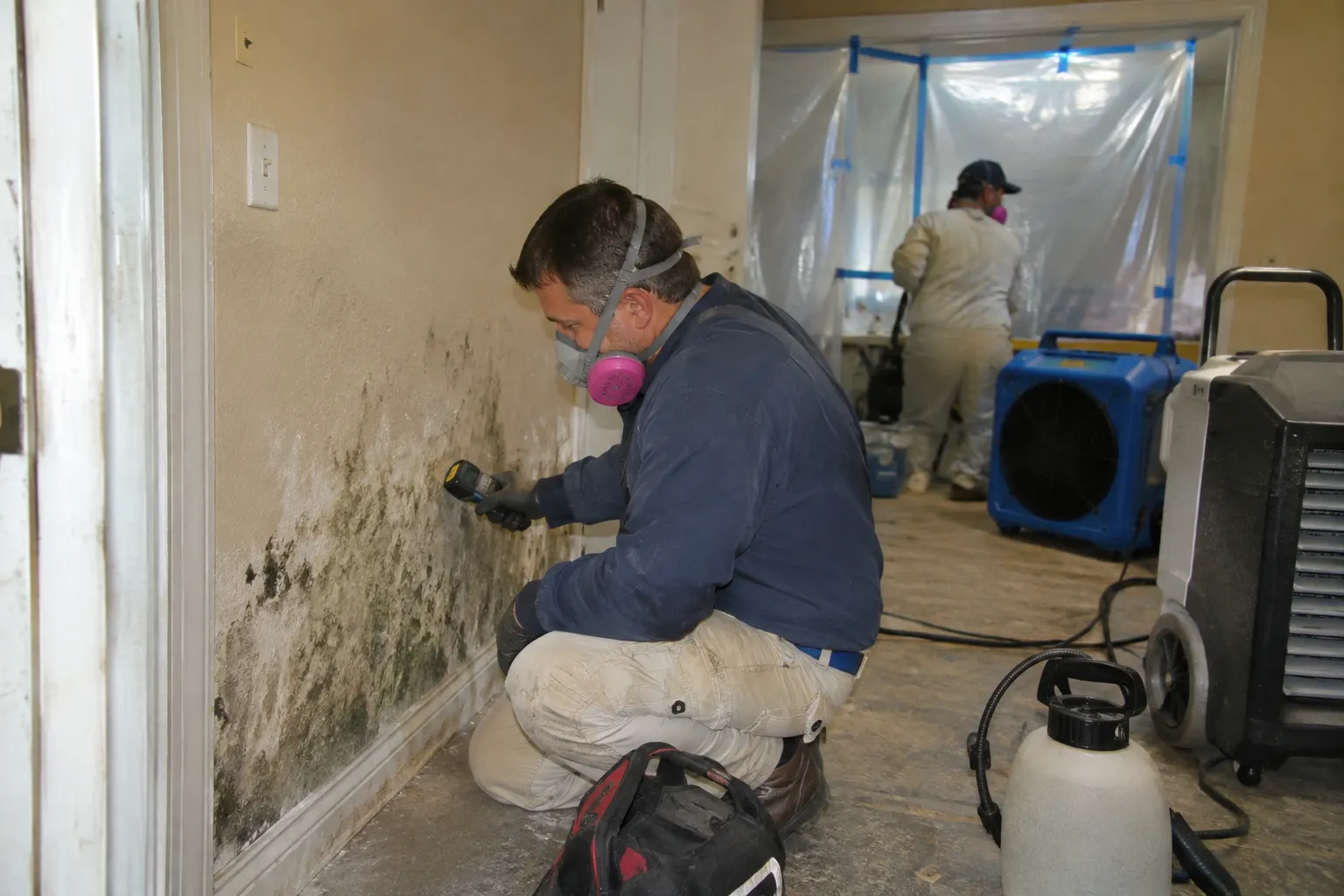
What an inspection looks at
- Moisture readings in the decking, joists and insulation, to separate active moisture from old staining.
- The source, by tracing wet areas back to a roof penetration, a duct, a fan, a plumbing line or the ground.
- How far growth extends, including behind insulation and on the back side of drywall.
- Access and hazards, because the work plan depends on whether crews can reach the area safely.
Visual and moisture inspection tell you where growth is and why. EPA says that in most cases sampling is unnecessary when visible growth is present. Neither this site nor its assessment tool identifies species.
Tell us whether it is an attic or crawlspace, what you saw and what water event came first.
What removal involves
- Fix or isolate the moisture. A roofer, plumber or HVAC technician corrects the leak, the duct or the fan.
- Contain. Barriers and negative air with HEPA filtration keep disturbed material out of the living space. This matters because attic access is usually in a hallway or closet.
- Remove affected material. Wet or growth-covered insulation is bagged and removed. Badly affected wood may be cleaned or replaced.
- Clean the framing. HEPA vacuuming and cleaning of the wood, depending on the scope.
- Dry and ventilate. Humidity control to bring readings down.
- Re-insulate after readings are normal.
Keeping it from coming back
The lasting fixes are mundane. Reconnect or reroute bath fan ducts so they discharge outside the building. Repair and insulate ducts, and seal their joints. Fix roof penetrations. Keep the air handler drain line clear; EPA recommends keeping drip pans clean and drain lines unobstructed. In crawlspaces, manage drainage near the foundation and consider a vapor barrier or other moisture control, which is a separate trade from mold removal. Removal cannot guarantee that mold stays away, because it returns when moisture does.
Where to read next
The general explanation is on the mold removal page. If the moisture started with the roof, read roof leak water damage; if with an air handler or a water heater, see water heater and appliance leaks. The mold assessment tool helps you describe what you see.
Frequently asked questions
Is dark staining on attic wood always mold?
No. Staining can come from old moisture, dirt or past condensation. Whether growth is active depends on moisture readings and the condition of the material, which an inspection checks.
Should I go into the crawlspace to look?
Crawlspaces are confined, with standing water, live wiring, sharp objects and animals. Have it inspected by someone with the right equipment instead of crawling in alone.
Will a dehumidifier or vapor barrier fix it?
They help control humidity as part of moisture correction. They do not remove growth already there and do not stop a leak.
Why are my air ducts sweating in the attic?
In humid weather, cold air in ducts or on a cold surface condenses moisture from warm attic air. Torn or missing duct insulation and leaky duct joints are common causes. An HVAC technician fixes the duct; restoration deals with wet material and mold.
Do I need a licensed company for attic or crawlspace mold?
In Texas, TDLR says visible mold under 25 contiguous square feet can be cleaned by people who are not licensed, and larger projects fall under the licensing rules. Ask any contractor for a TDLR license number and check it. See the mold removal page for the assessor and remediator rule.
Moisture history first, then materials.
Source notes
- EPA, A Brief Guide to Mold, Moisture and Your Home, sampling, drip pans and drain lines
- TDLR, Mold program FAQ, 25 square foot exemption and licensing; check current rules