
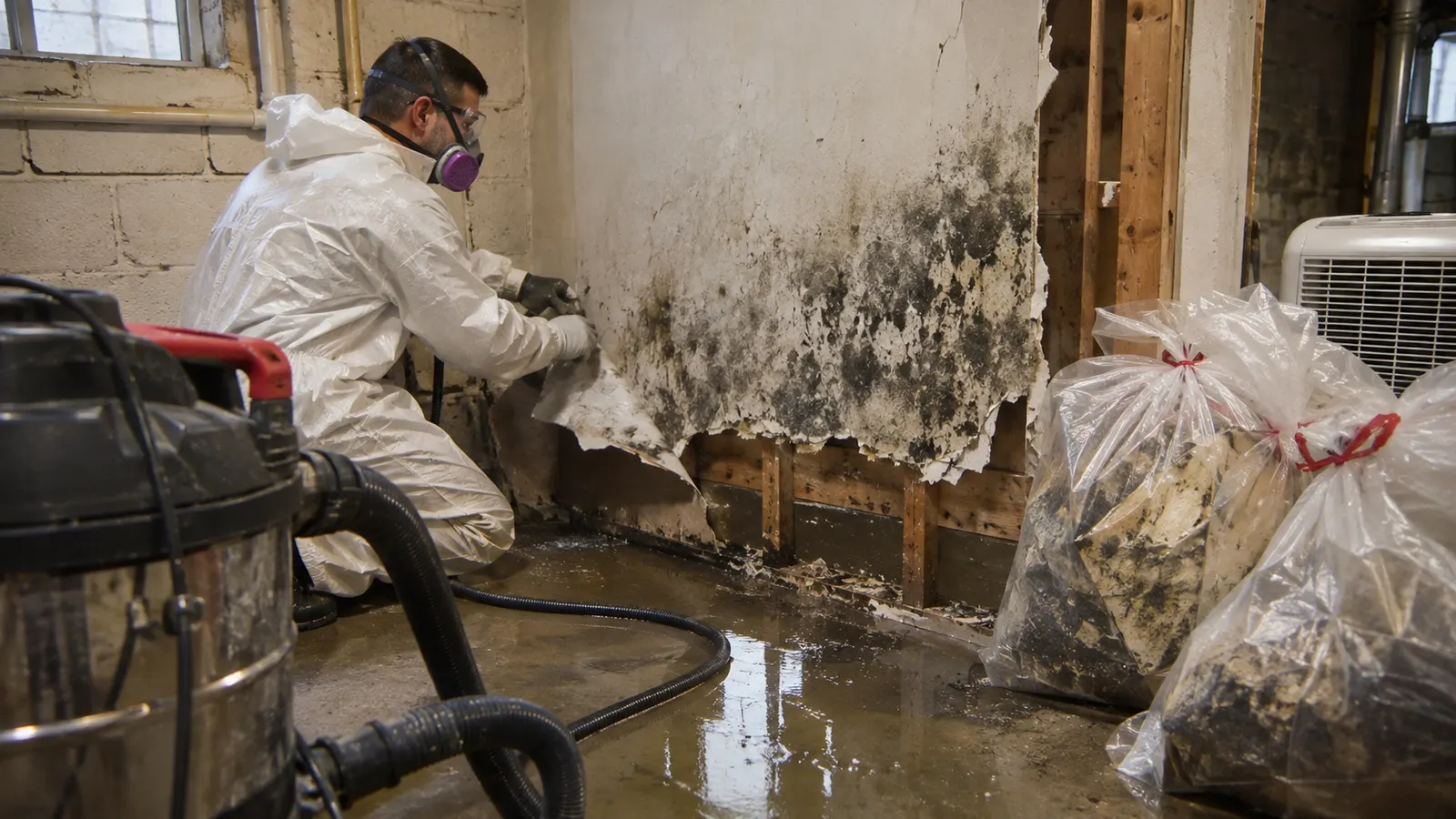
- Typical cause
- Materials that stayed wet. EPA’s rule of thumb is to dry water-damaged areas within 24 to 48 hours.
- First move
- Stop the moisture source, do not disturb or scrub the growth, and note when the water event happened.
- Not included
- Cleaning cannot fix a leak. Plumbing, roof and HVAC repairs are separate trades.
Start with the moisture history
Mold grows where organic material stays damp: drywall paper, framing, insulation facing, carpet backing, dust. The practical questions are not about the color of the growth. They are how long the material was wet, how far the moisture reached and whether it is still there. A ceiling stain that returns after repainting, baseboards that stay damp along an exterior wall, a closet corner that smells musty and cabinet interiors that warp all point to a moisture source that is active or keeps coming back.
That is why a scope of work starts with finding the water. Removing growth from a wall that is still taking on moisture from a roof flashing or a weeping supply fitting accomplishes little.
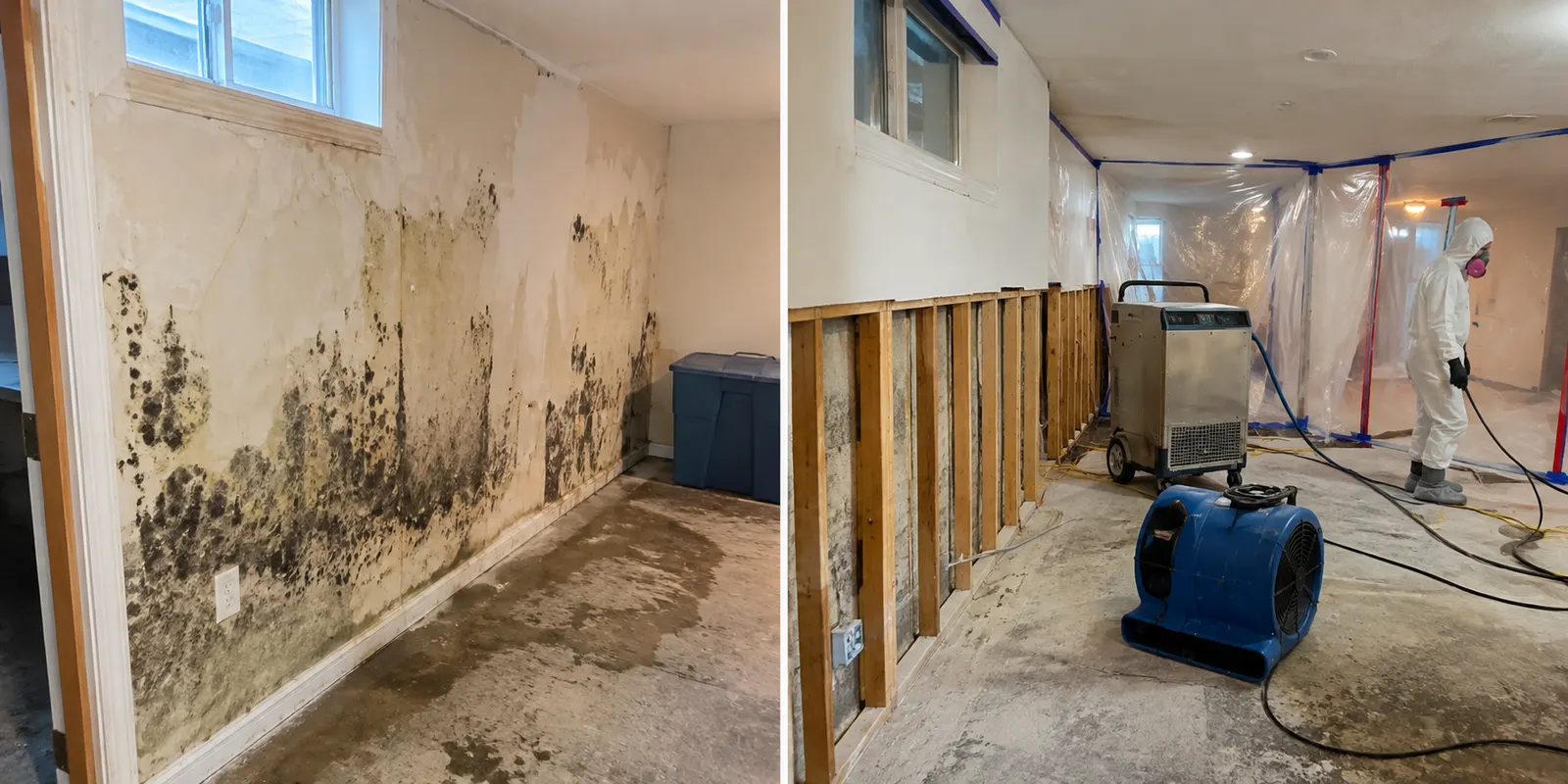
What removal looks like
- Fix or isolate the moisture. The right trade repairs the leak, condensate line or vent. Moisture meters and thermal imaging map what is still wet.
- Define the affected area. Visible growth, adjacent materials and concealed cavities are assessed. Selective opening is common because growth often continues behind the finish.
- Contain. Plastic barriers and negative air pressure with HEPA filtration keep disturbed material from reaching clean areas. Containment is sized to the area and the activity.
- Remove affected porous materials. Wet or growth-covered drywall, insulation and carpet are bagged and removed. Framing is cleaned or treated per the scope.
- Clean and dry. HEPA vacuuming and damp wiping of what remains, then drying to normal readings.
- Verify, then rebuild. Readings confirm dryness before finishes are replaced. Reconstruction is a separate scope.
Why surface cleaning and fogging fall short
On tile or glass, wiping can remove growth. On drywall, carpet, insulation and raw wood, growth goes into the material, and wiping the surface treats only part of it. Painting or sealing over growth traps moisture and tends to fail visibly later. EPA also says the point of cleanup is removal: killing mold with bleach or a biocide is not recommended as routine practice, since dead mold can still trigger allergic reactions. Be wary of anyone who offers fogging, ozone or encapsulating paint as the whole answer without finding the water and removing affected material.
Describe where the growth or odor is and what water event came first. A specialist will tell you what to do and what to leave alone in the meantime.
Testing versus visual assessment
Most scopes are written from a visual and moisture inspection: where growth is visible, which materials are wet, what the building history says. Laboratory sampling is a separate service. EPA states that in most cases sampling is unnecessary when visible growth is present, that no federal limits exist for mold or spores, and that surface sampling can be useful to judge whether an area was cleaned adequately. A lab result does not by itself say how much to remove. Neither this site nor its assessment tool identifies species or diagnoses anything.
Texas licensing, and the assessor/remediator rule
Texas licenses mold work through the Texas Department of Licensing and Regulation. TDLR states that anyone who performs mold assessment in Texas must be licensed, that mold remediation contractors and companies are required to be licensed, and that mold remediation workers register with the state. It says visible mold under 25 contiguous square feet can be cleaned up by people who are not licensed, such as an owner or maintenance staff, and that a licensed contractor does not get that exemption.
Two rules matter when you are choosing who to hire. A licensed remediator’s work follows a protocol written by a licensed mold assessment consultant, and TDLR says the same person or company cannot do both the assessment and the remediation on the same project. After remediation, the consultant’s post-remediation assessment determines clearance. You can look up any license on the TDLR license search. Ask every mold contractor, including us, for the license number and check it. This site does not state any license for Dallas Flood Guard; ask for current documentation before signing.
Moisture correction is the part that lasts
What keeps it from coming back is fixing what kept the area wet: repairing leaks, improving drainage away from the foundation, venting bathroom fans to the outside, keeping air conditioner drain lines clear and holding indoor humidity down. A cheap hygrometer shows whether a room stays humid. Sustained readings above about 60 percent relative humidity are worth investigating, though the right level depends on the building and the season.
Related situations
Mold concerns usually start with a water event. For the first days after a leak, see the drying explanation on the home page. For concealed spaces, see attic and crawlspace mold. If staining is overhead, read winter ceiling and attic water damage. The assessment tool helps you describe what you see.
Frequently asked questions
Can I treat mold myself with bleach?
EPA does not recommend bleach or other biocides as routine practice for mold cleanup, because killing mold is not enough; it has to be removed, and dead mold can still cause allergic reactions. Fix the moisture, remove affected porous material and clean the rest. Never mix bleach with ammonia-containing cleaners.
Do I need mold testing before anything is done?
Often not. EPA says that in most cases, if visible mold growth is present, sampling is unnecessary, and that no federal limits exist for mold spores. Sampling answers narrower questions, such as whether an area was cleaned adequately, and should be done by someone experienced.
How big a patch can I clean myself?
EPA says a patch smaller than about 10 square feet, roughly 3 feet by 3 feet, can in most cases be handled by the homeowner. In Texas, TDLR says people who are not licensed may clean visible mold under 25 contiguous square feet. Larger areas, contaminated water or HVAC involvement call for a professional.
Will the musty smell go away after cleaning?
If the source of the odor was removed and the building is dry, usually yes. A smell that comes back means moisture is still present somewhere you have not opened.
Can a mold company promise it will never come back?
No one can. Mold returns when moisture returns. Removal and moisture correction lower the chance, and controlling leaks and humidity keeps it down.
Who decides whether it is safe to stay in the house?
That is a medical question when anyone has asthma, allergies, a weakened immune system or symptoms. Ask a physician. This site does not give medical advice.
Moisture history first, then materials. Have both ready.
Source notes
- EPA, A Brief Guide to Mold, Moisture and Your Home, 24 to 48 hour drying, 10 square feet, sampling, biocides, HVAC, sewage
- EPA, Mold Cleanup in Your Home, updated June 4, 2026
- TDLR, Mold Assessors and Remediators, program overview
- TDLR, Mold program FAQ