
Irving’s size and history
Irving is a big city by Dallas County standards. The Census Bureau’s ACS 2024 one-year estimate lists about 258,000 residents across roughly 67 square miles. The Handbook of Texas dates the townsite to a lot auction on December 19, 1903, records that residents voted to incorporate in 1914, and says population rose from 2,615 in 1950 to 45,895 in 1960 and 100,996 in 1970. It adds that the Las Colinas planned residential and business community began on the city’s north side in the 1970s, announced in 1973 as a joint venture after plans for D/FW Airport were revealed, and that the city today is home to thousands of businesses and several Fortune 500 headquarters. A city that grew that fast, in that many phases, contains very different conditions from one end to the other.
What the census says about the buildings in Irving
The five-year ACS counts 102,512 housing units in Irving with a median year built of 1986. About 39% of units are single-family detached houses; roughly 48 percent are in buildings of five or more units and about 14% in buildings of 50 or more. About 62% of occupied units are renter-occupied, second only to Addison among this site’s service areas. About a quarter of the housing was built before 1970. The result is a city where most water losses involve a renter, a landlord or a property manager, and where a large share of buildings are old enough that original water heaters and supply connections have long since been replaced.
measuredWhat housing is made of in Irving, and who lives in it
Housing units by structure size and occupied units by owner versus renter.
Units in structure (n = 102,512)
Occupied units by tenure (n = 94,845)
For an Irving resident the practical consequence is notice. If you rent, tell the manager at once and photograph your unit; if you manage, find the shutoff for the building section and the affected units below before anything else. The notification sequence on the Addison page applies equally to Irving’s apartment and office buildings.
Our water damage restoration process in Irving, from water extraction to basement drying
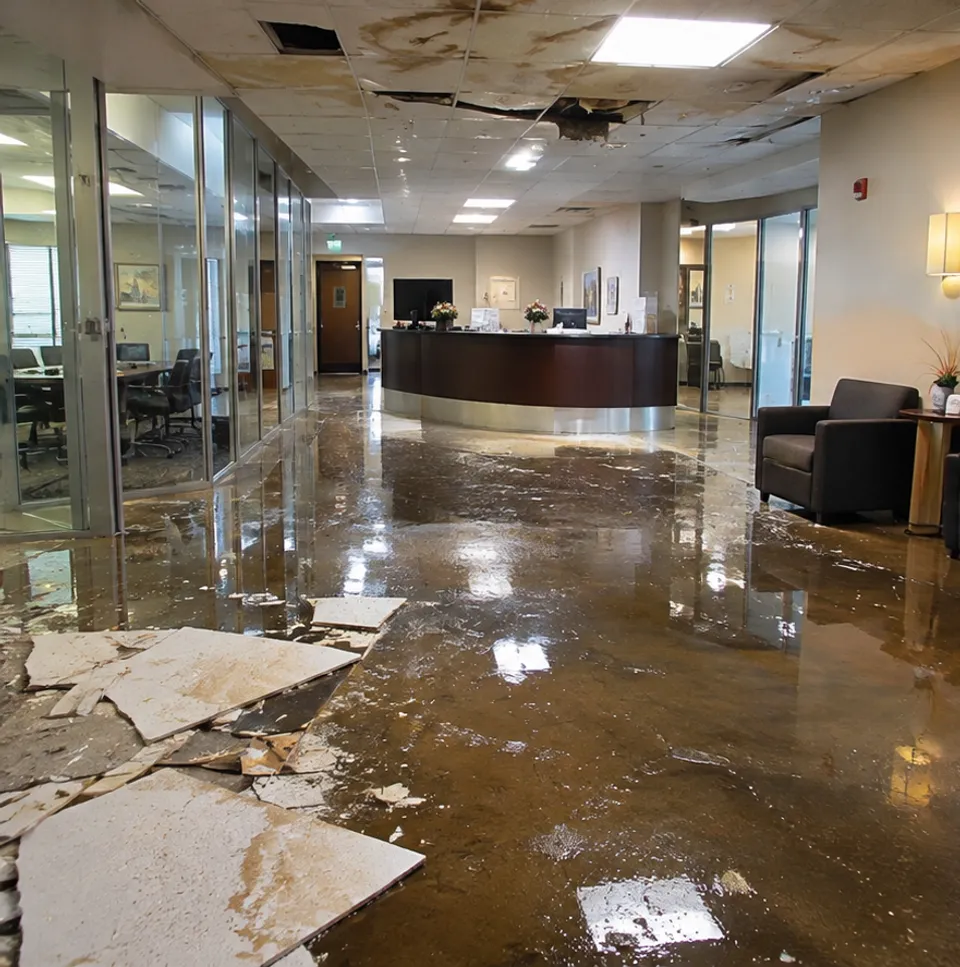
Flood Damage Cleanup
Pump-out, removal of soaked materials and structural drying after heavy rain or storm water enters a property.
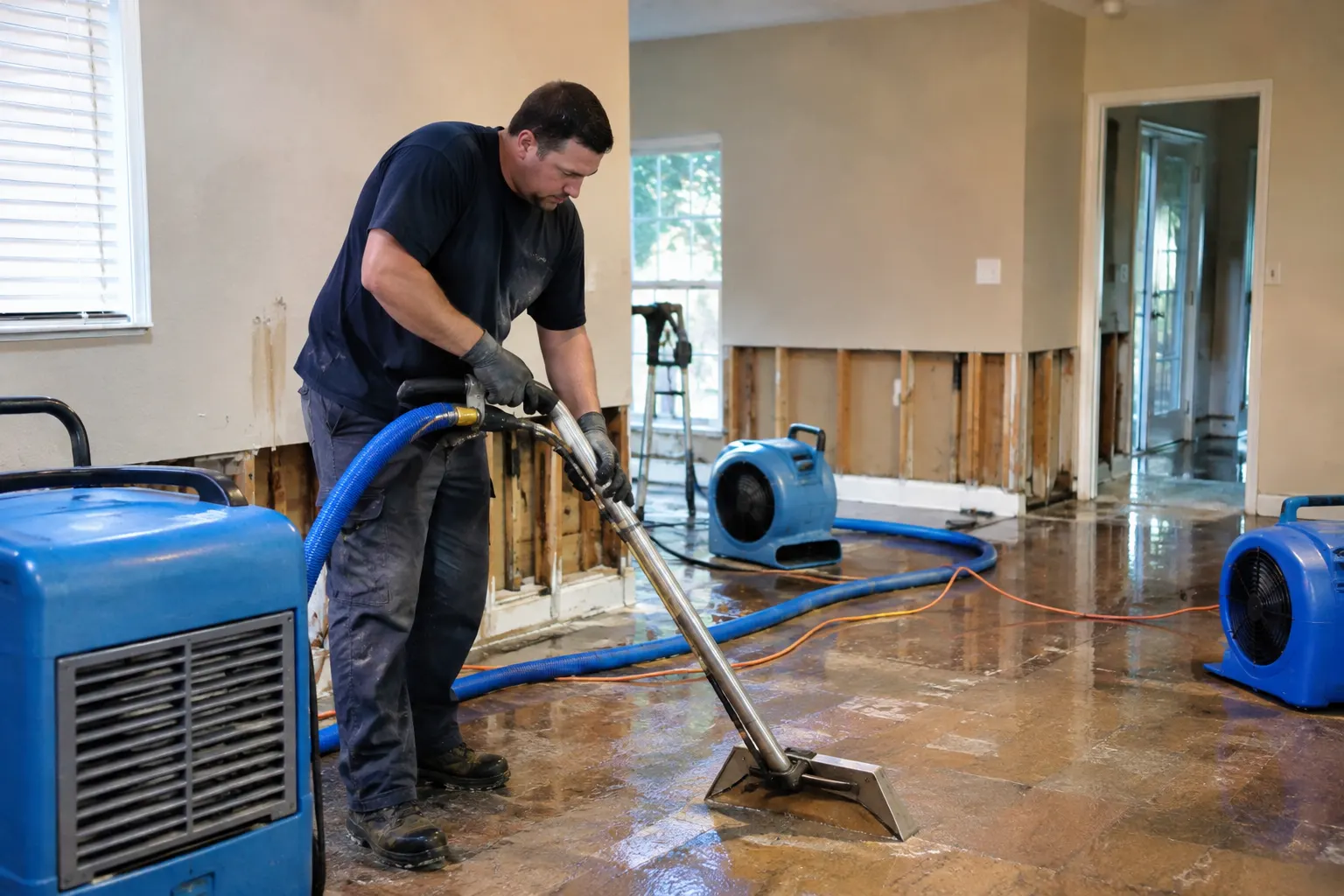
Sewage Backup Cleanup
Contaminated water removal, material disposal and sanitizing after a drain or sewer line backs up.
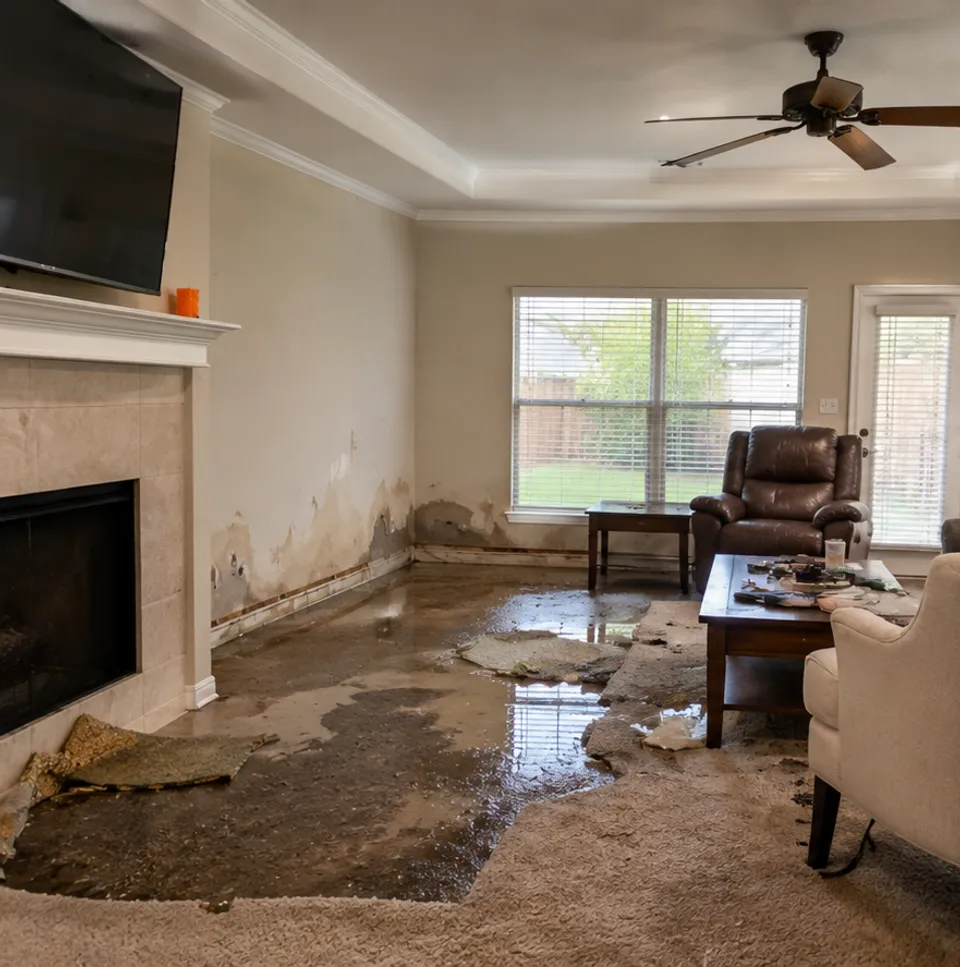
Water Heater and Appliance Leaks
Water extraction and drying after a water heater, washing machine, dishwasher or ice maker leak.
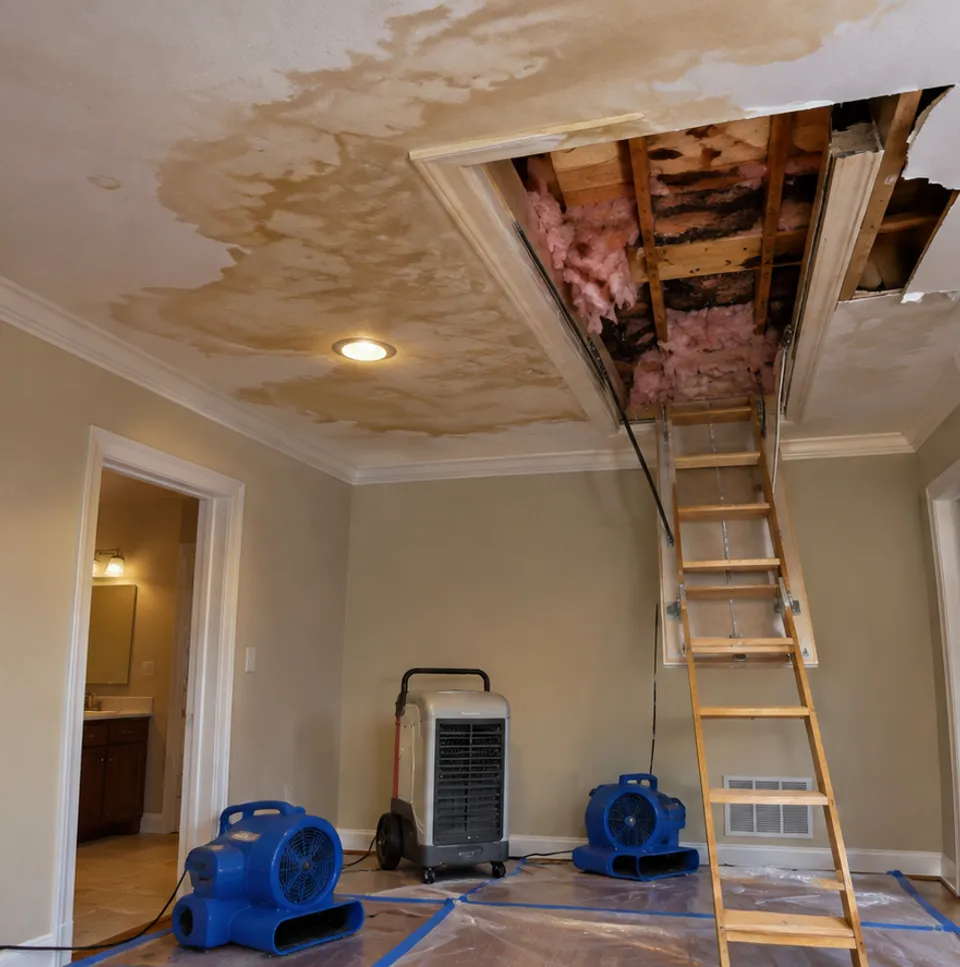
Roof Leak Water Damage
Interior cleanup of wet ceilings, insulation and walls after storm or wind-driven rain gets through the roof.
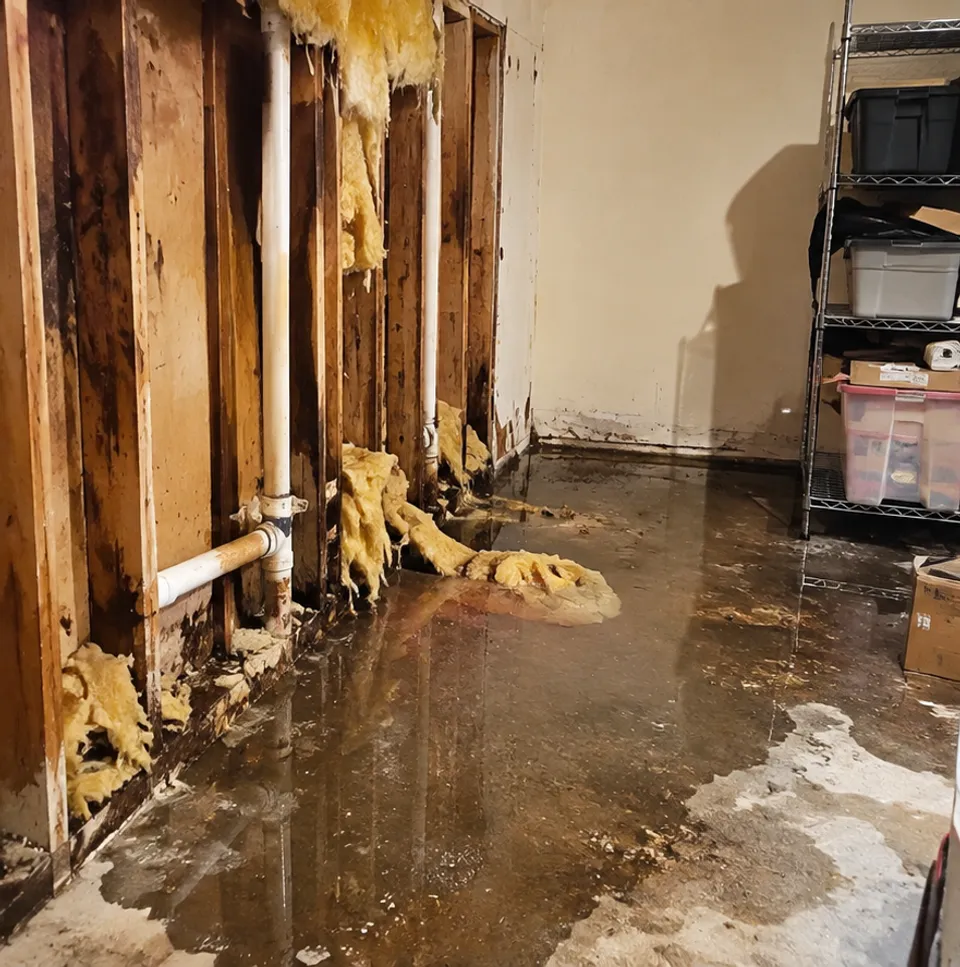
Frozen and Burst Pipe Cleanup
Extraction and deep drying of flooded rooms, ceilings and wall cavities after a plumbing line ruptures.
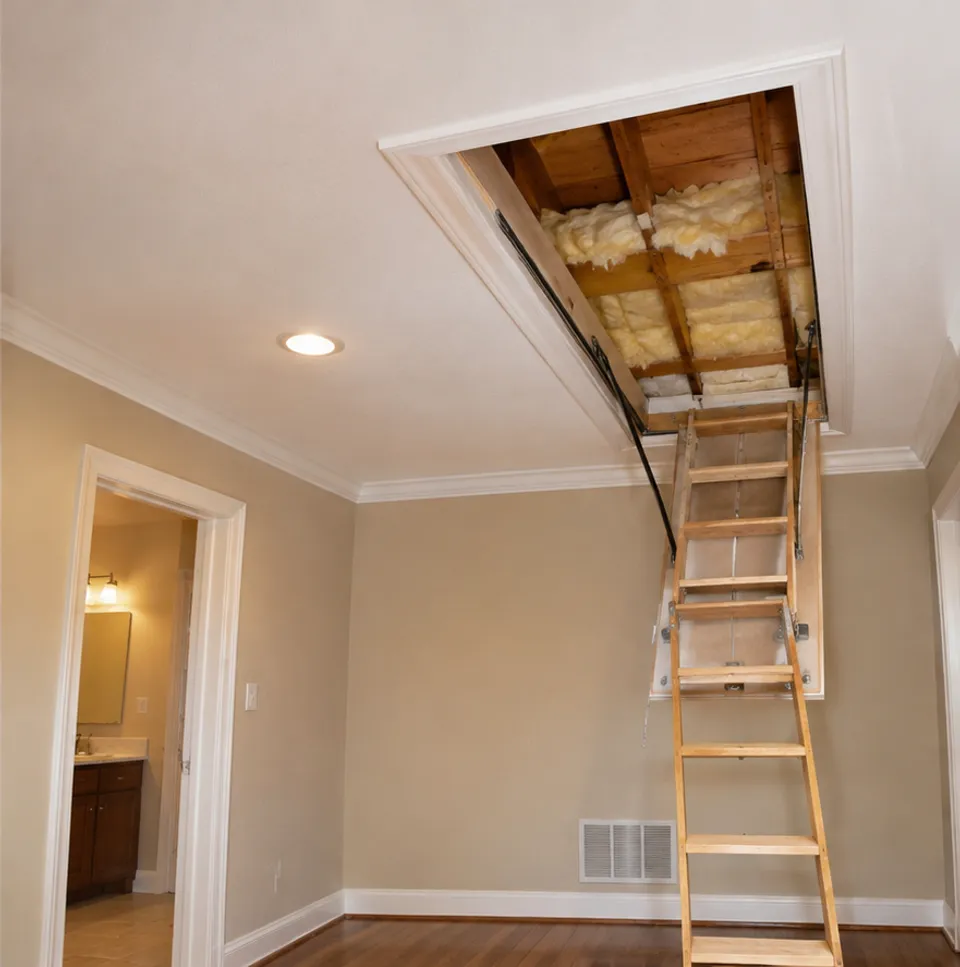
Winter Ceiling and Attic Water Damage
Wet insulation, sagging ceilings and hidden attic moisture after winter leaks.
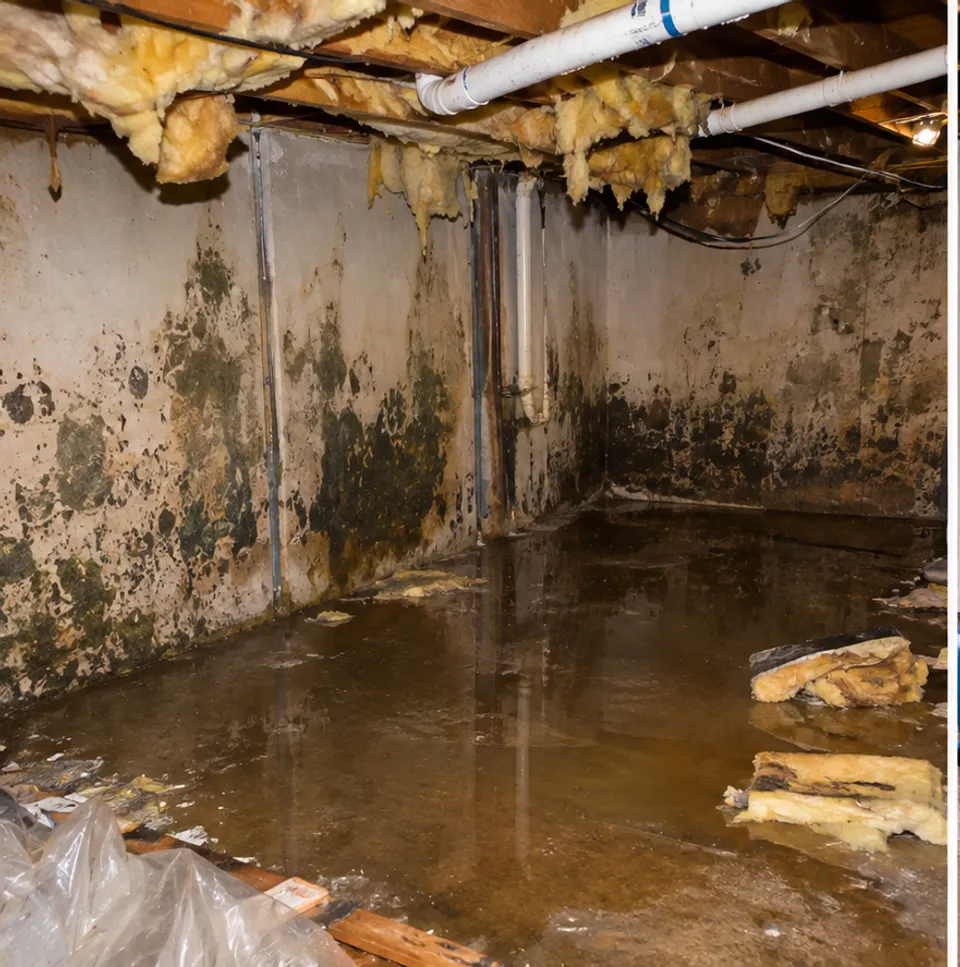
Basement Flooding After Snowmelt
Low-level water cleanup in basements, garages and below-grade rooms when melting snow or rain gets in.
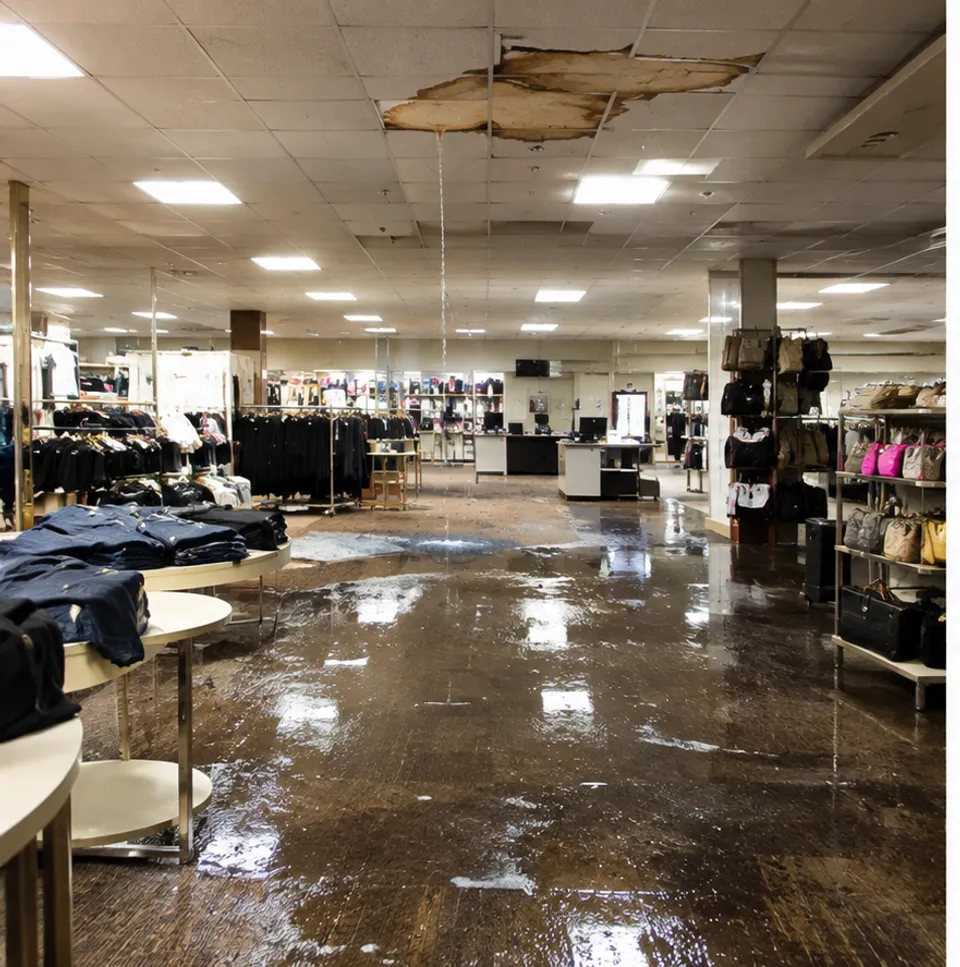
Ice Dam Roof Leak Cleanup
Interior drying and insulation removal after ice at the roof edge forces water inside.
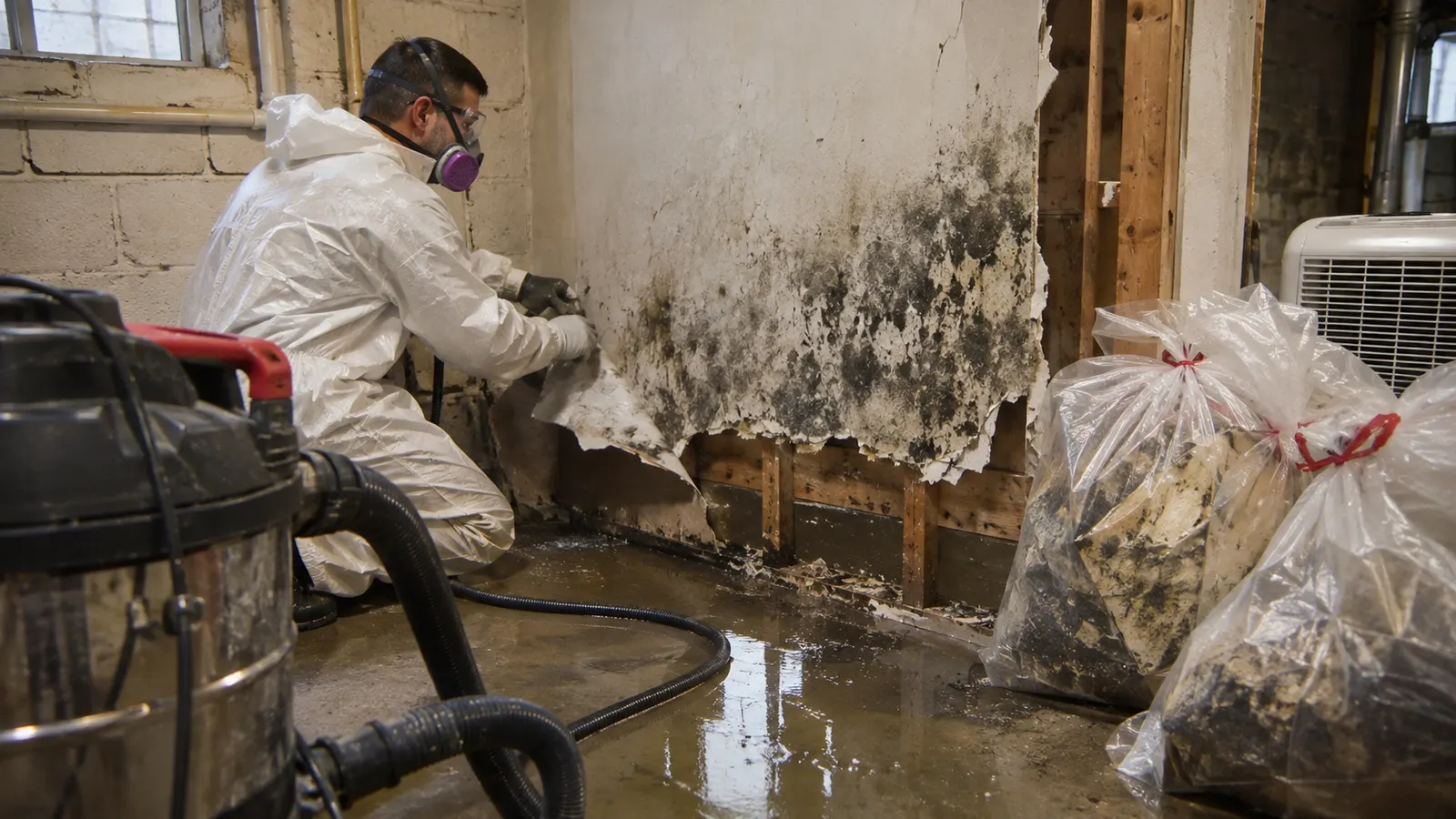
Mold Removal
Moisture-source correction, containment and removal of mold-affected materials after water damage.
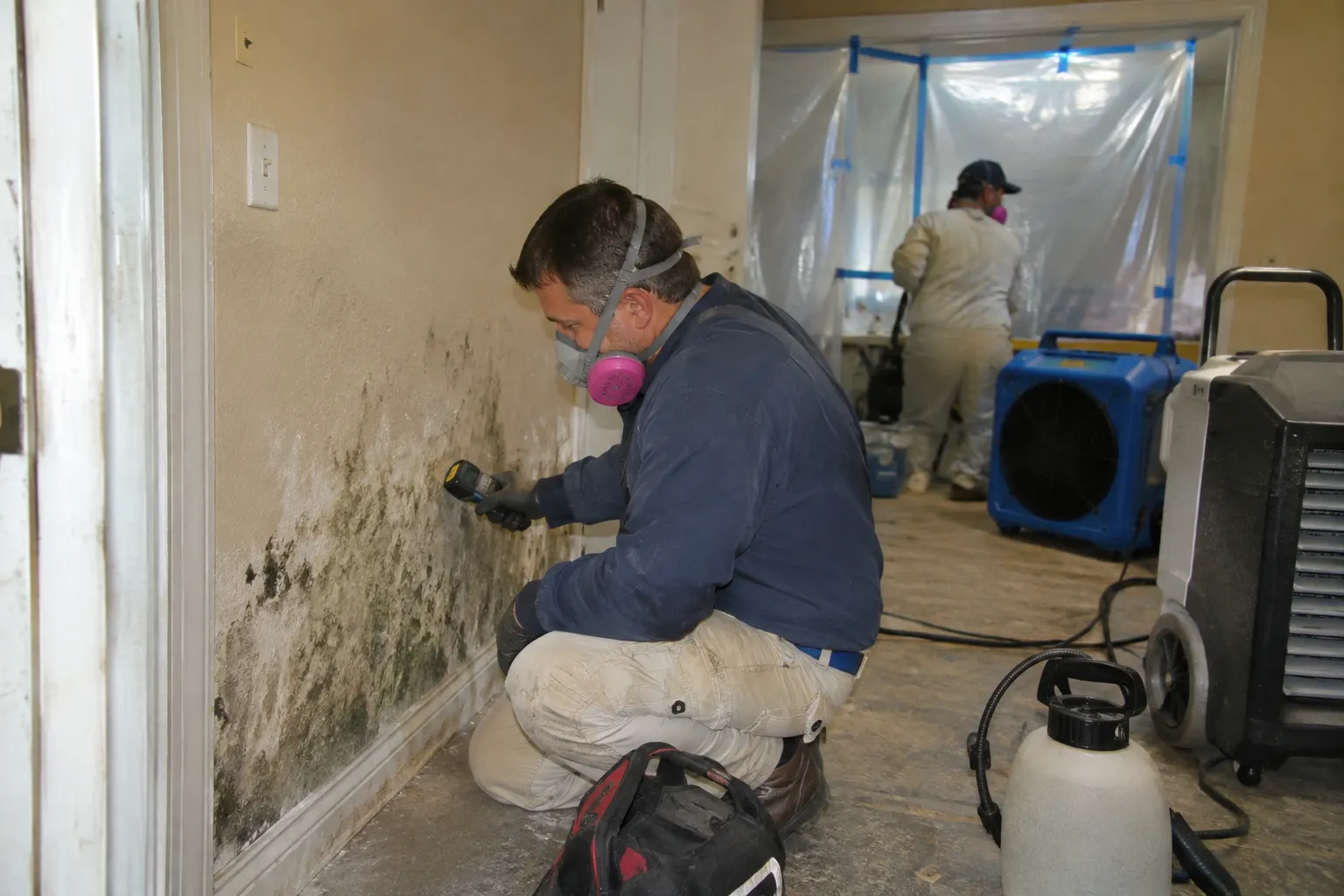
Attic and Crawlspace Mold
Assessment and removal planning for mold in attics, crawlspaces and other concealed, poorly ventilated areas.
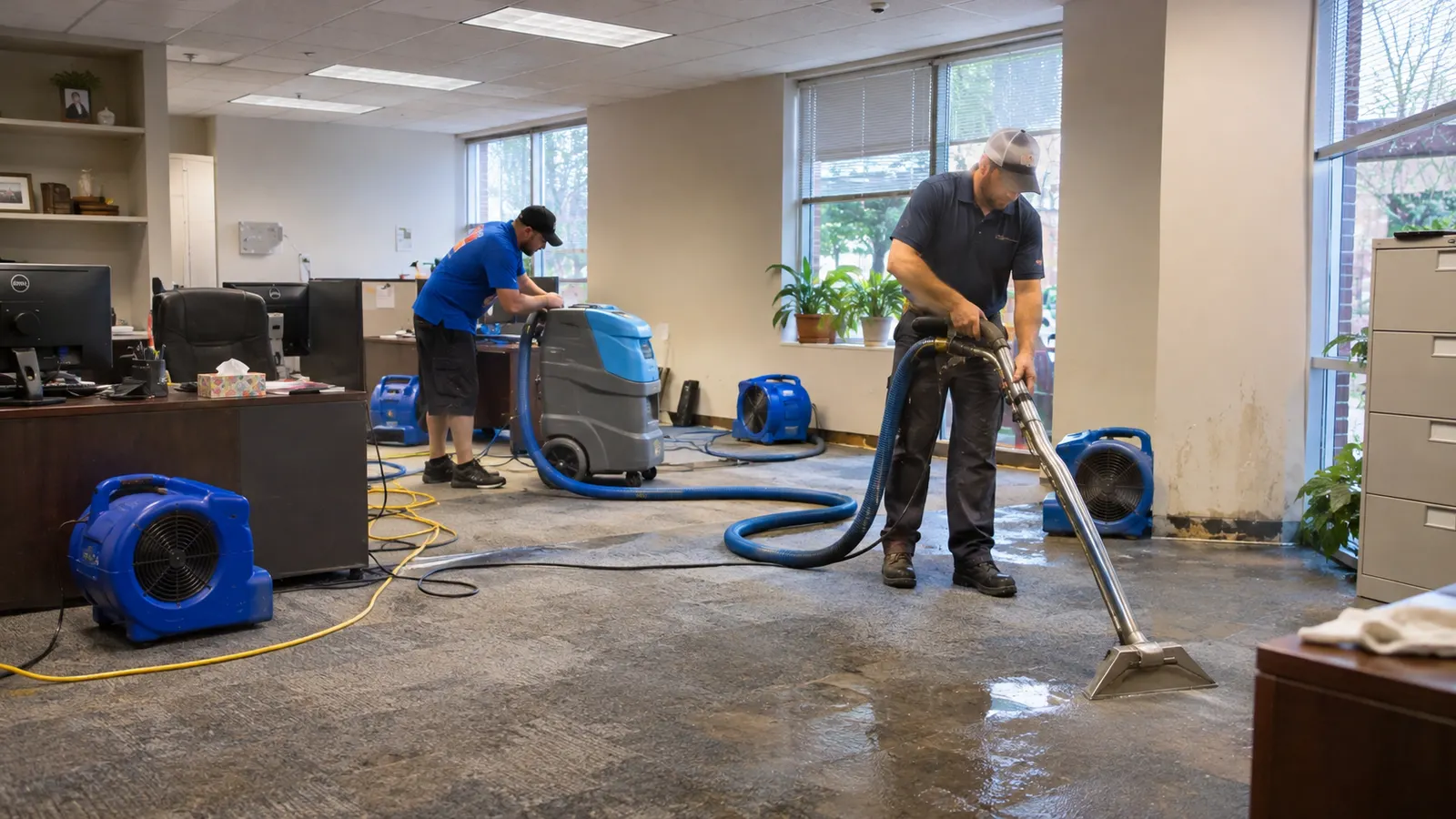
Commercial Water Damage Restoration
Water extraction, drying and tenant coordination for offices, retail units, restaurants and multi-tenant buildings.
A seamless water damage restoration process in Irving, for your peace of mind
Call and describe the water
Tell us where it is and what it came from. You get safety steps for the next few minutes.
Inspect and map the moisture
Meters and thermal imaging show where the water went, including behind walls and under floors.
Extract and remove what cannot dry
Standing water comes out first. Saturated materials are removed, and you are told which and why.
Dry with recorded readings
Air movers and dehumidifiers run, and readings are tracked so you can see the building drying.
Verify and document
Equipment leaves when readings match dry materials. You keep the readings and photos for your records.
What the public record says about flood control in Irving
Irving sits along the Elm Fork of the Trinity River. Irving Flood Control District Section 3 was formed by the Texas Legislature in 1983 to remove the Valley Ranch area from the 100-year floodplain of the Elm Fork. The district says it began constructing the Valley Ranch levee in 1983, built a stormwater pump station and 5.5 miles of canals and ponds, and serves nearly 30,000 residents and businesses between Belt Line Road and LBJ Freeway. In a March 2024 post it says FEMA no longer classifies Valley Ranch as a 1 percent annual chance flood hazard and instead classifies it as an area with reduced flood risk due to the levee. The district’s own materials describe the pump station holding waterways at about 418 feet against a river near 404 feet.
Separately, the city has invested in drainage channels on Delaware Creek. City-sourced reporting dated February 2026 says Irving was awarded state financing and a grant from the Texas Water Development Board to accelerate upgrades to the Delaware Creek Channel, including excavation of about 10,000 linear feet of concrete channel lining, replacement of five concrete box culverts and relocation of utility lines, and that a further phase called North Delaware Creek Phase 2 was being prepared for a funding request. That article describes the improvements as planned; earlier news coverage from 2021 and 2022, which could not be re-read, described a channel project begun in 2016 to contain a 100-year flood and protect more than 350 structures. Confirm which phases are complete before citing any of this about a given neighborhood.
News reports also describe river flooding damaging parks along the Campion Trail, a roughly 22-mile greenbelt along the Elm and West forks, after heavy rain in 2015 and 2016, with closures again in 2020. Those are reports about public parks on the river, not about residential or commercial buildings.
schematicThree scales of water risk that people confuse
Regional, neighborhood and building-level conditions are different questions.
Limit: Describes the river system, not a particular building.
Limit: Maps are a regulatory snapshot; they do not say whether water will enter a building.
Limit: Only an on-site inspection shows this.
Tell us whether it is a house, an apartment or a commercial building and what is wet.
Residential areas in Irving
Most residential water damage in a city this size is internal: supply lines, water heaters, appliances, HVAC condensate and roof leaks. Houses from the 1960s and 1970s often have older ceilings and layered flooring that behave differently from newer finishes; apartments from the 1980s and later often have stacked units and shared risers. Slab houses show leaks as damp flooring and baseboards, and pier-and-beam houses collect water under the floor. The water damage restoration page describes the process.
Commercial districts in Irving
Las Colinas and other business districts contain mid-rise and high-rise offices, hotels and corporate buildings. The key issues are those on the commercial page: shutoff, tenant notification, shared risers, ceiling plenums and electrical safety. Properties near DFW Airport are covered separately on the airport-area page.
Winter exposure in Irving
Cold-weather failures follow the regional pattern from the DFW normals. Apartment communities and older commercial buildings with plumbing in unheated areas face the most exposure, and vacant units are the usual place for a leak to run unnoticed. See frozen and burst pipe cleanup.
Irving local resources
- City of Irving, drainage and floodplain staff (irvingtx.gov).
- Irving Flood Control District Section 3, Valley Ranch levee, pump station and alert information (ifcd3.squarespace.com).
- FEMA Flood Map Service Center, mapped flood hazard areas.
- NCTCOG, regional stormwater and Elm Fork studies.
Water damage restoration work for buildings like those in Irving
Typical conditions and equipment for the building types discussed on this page. The photos are not tied to a specific address or project.
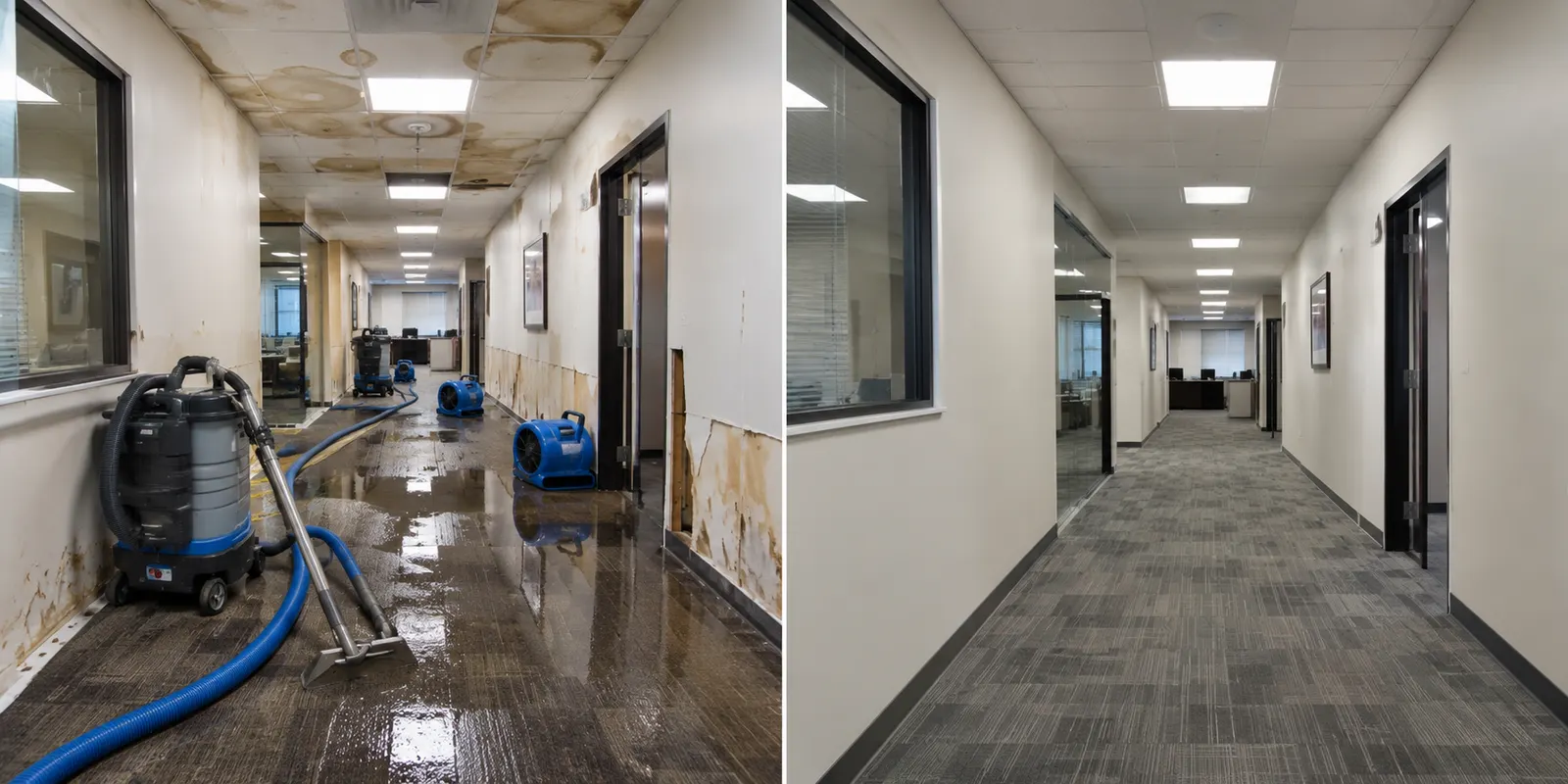
A wet corridor with stained ceiling tiles and a technician extracting water, then the dry corridor.
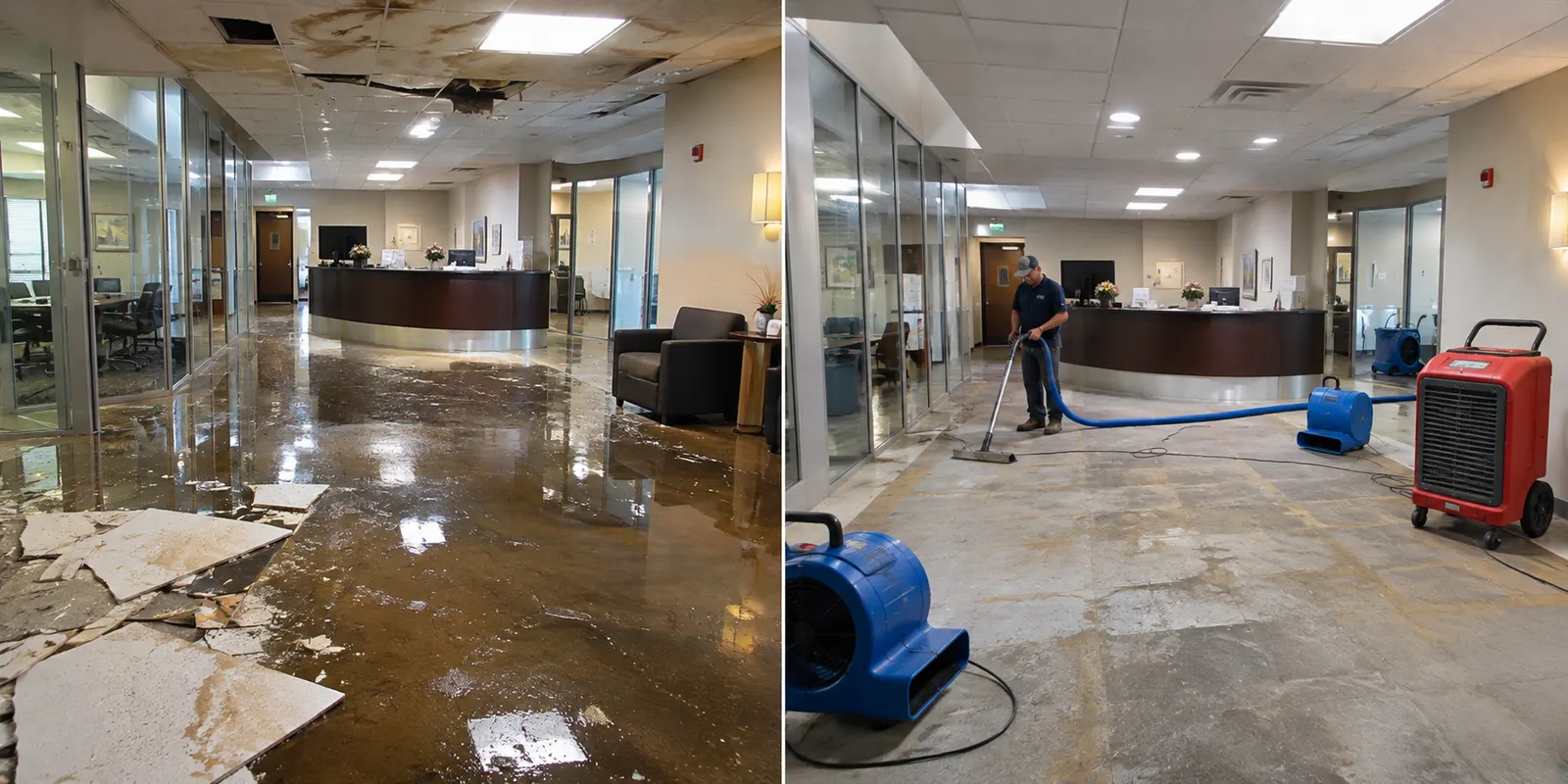
A flooded office lobby, then the same space during extraction with fans and an extractor.
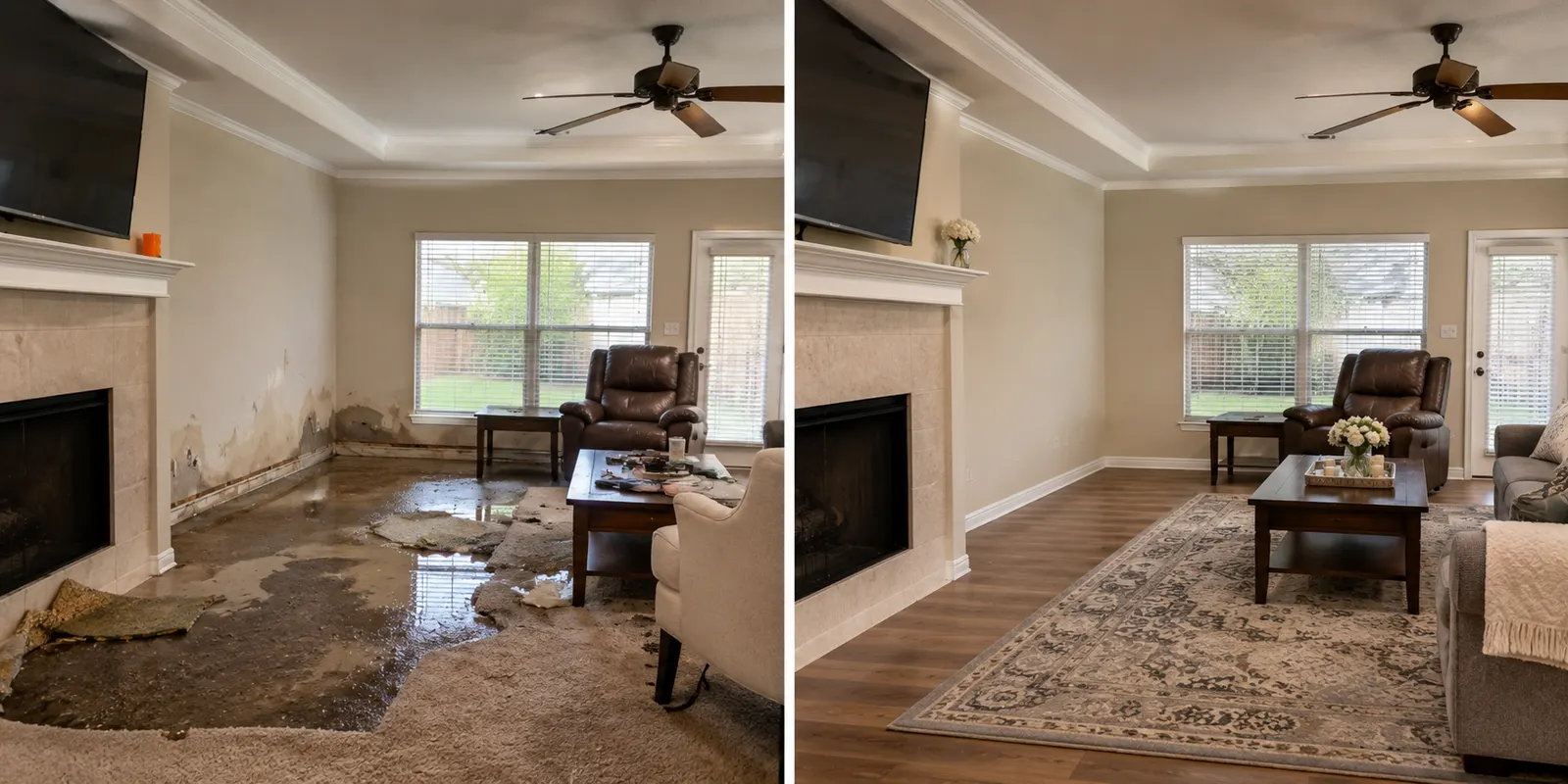
Wet carpet and water-stained walls in a living room, then the restored room with new flooring.
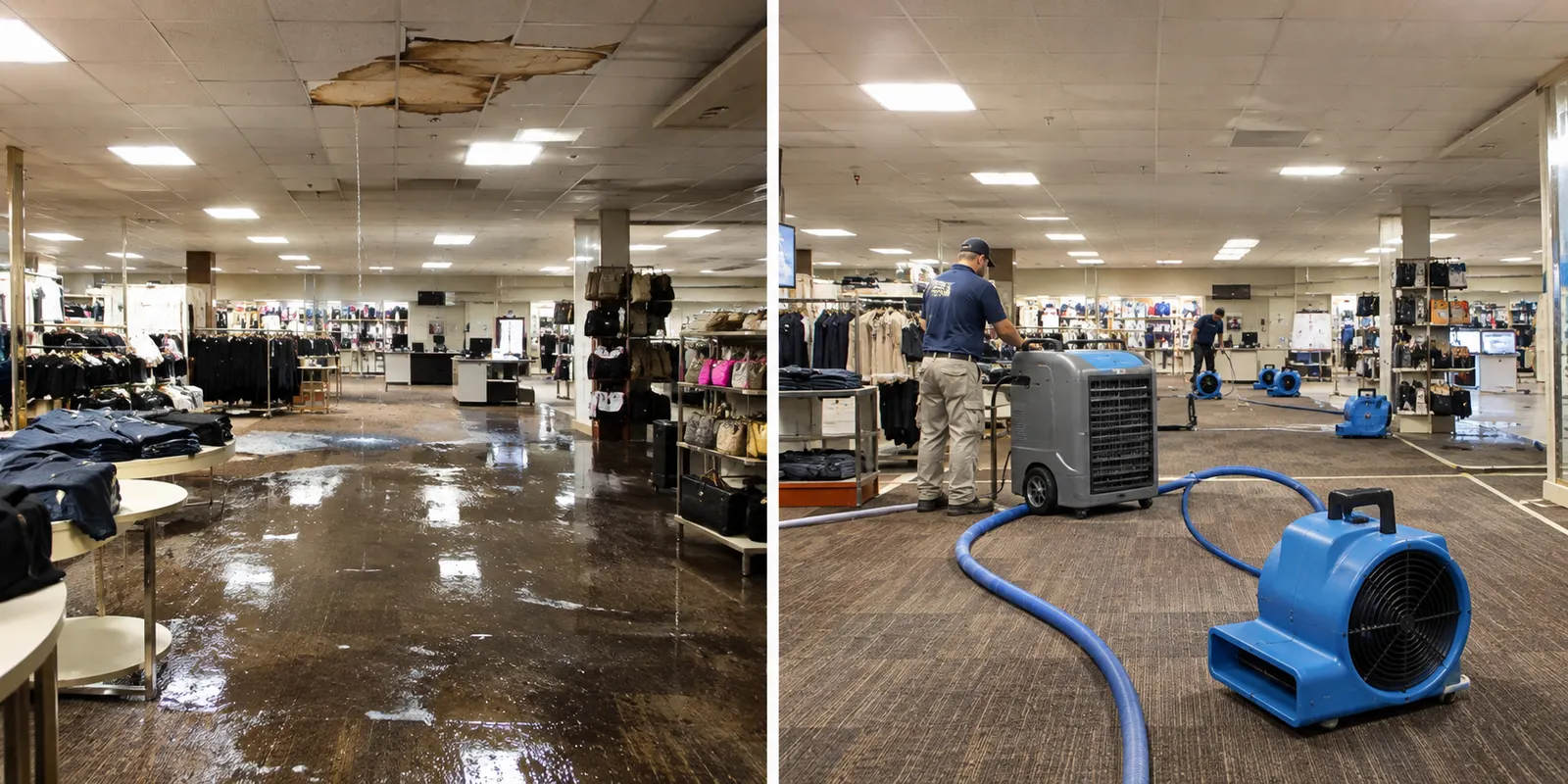
Standing water on a retail floor, then a technician working among dehumidifiers and fans.
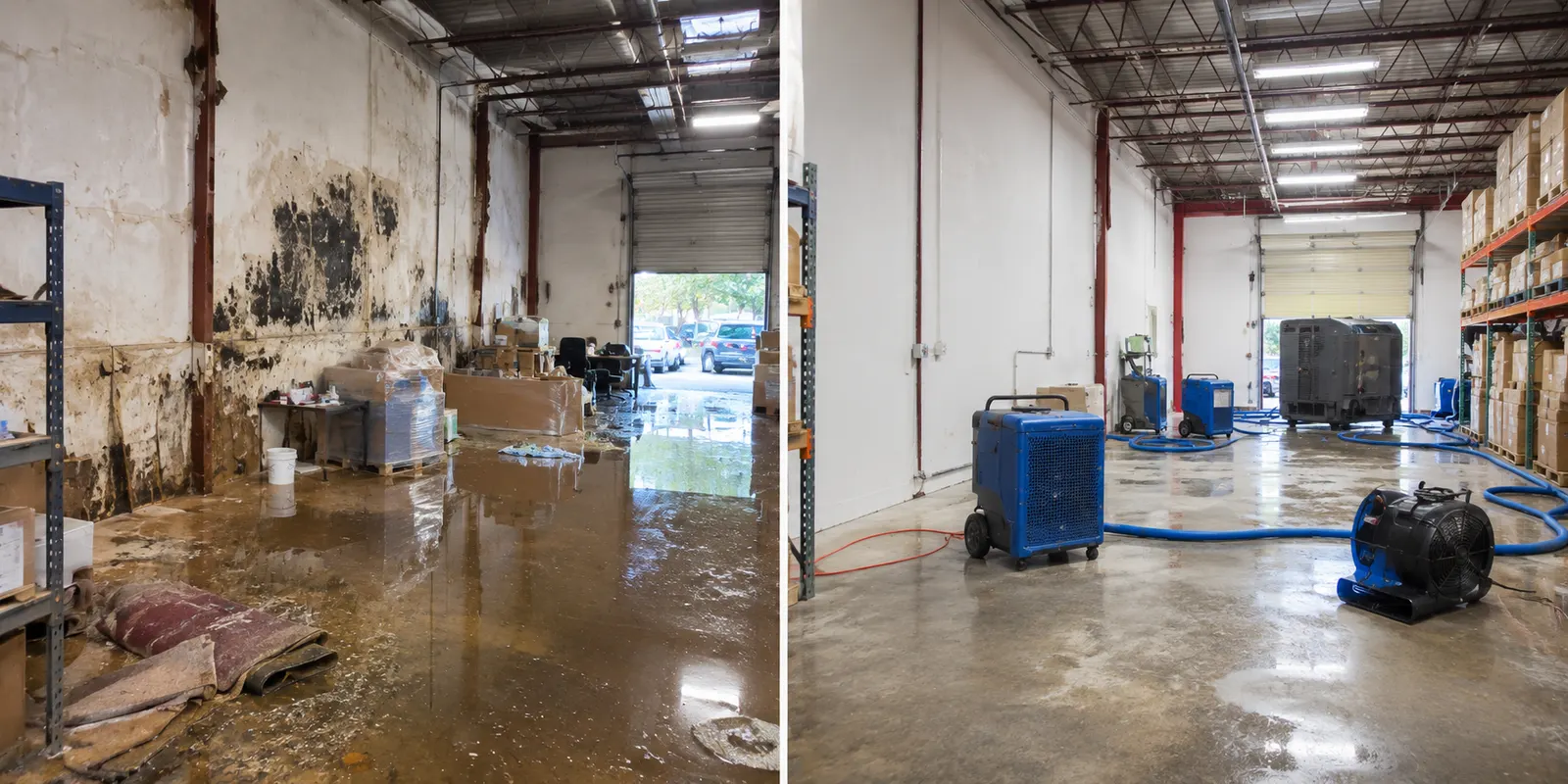
Standing water and damaged goods on a warehouse floor, then the cleared, dry space.
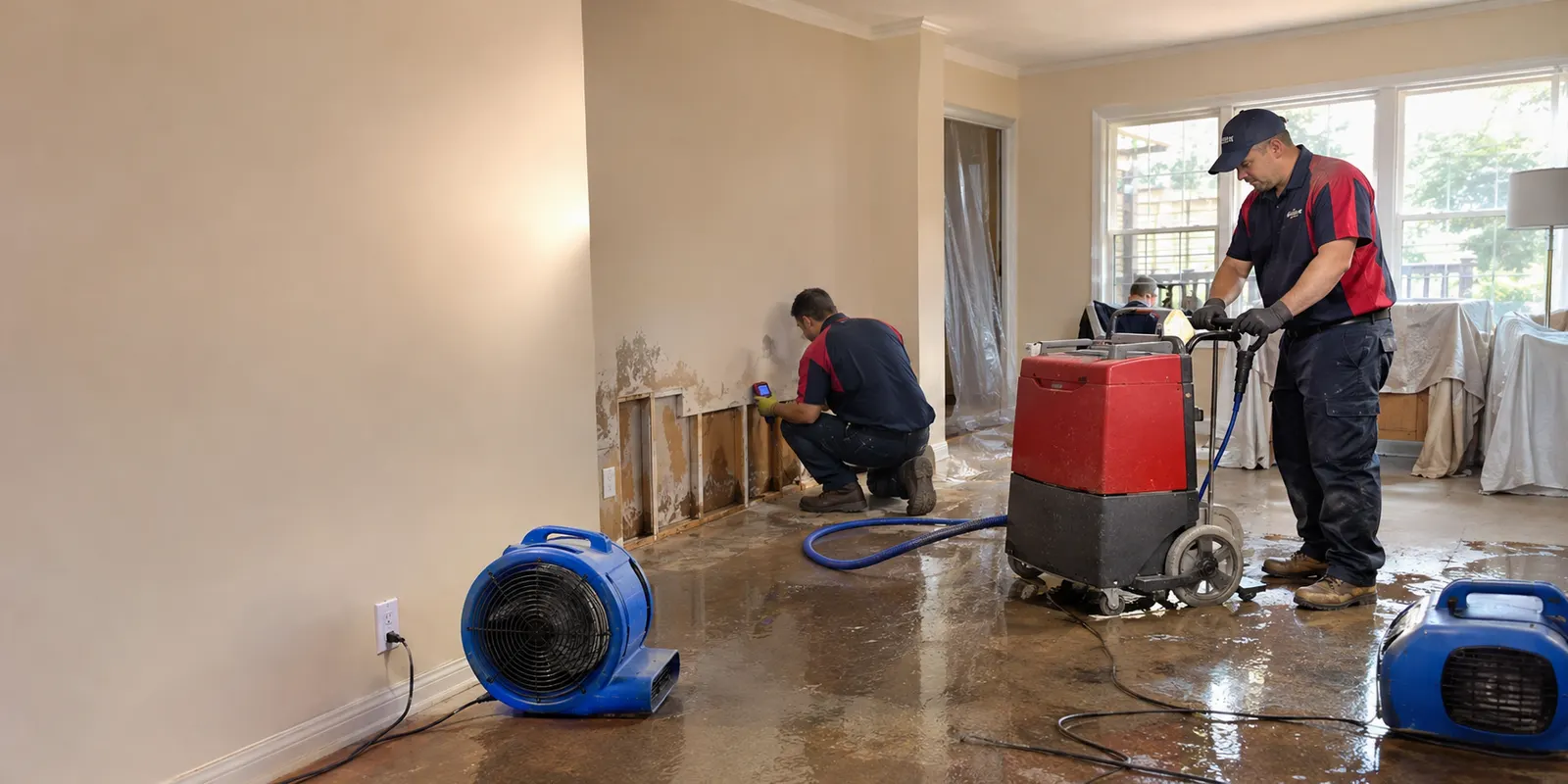
An empty room with an air mover running, then technicians extracting water and cutting out lower wall material.
Water damage questions in Irving
Is Las Colinas or Valley Ranch more likely to have water problems?
This page makes no such claim. Regional flood work such as the Valley Ranch levee addresses river exposure, which is separate from the plumbing, roof and appliance failures that affect buildings anywhere.
Does the Delaware Creek project mean my property is safe from flooding?
No. City reporting describes channel improvements aimed at containing a 100-year flood for the structures the project protects. That does not guarantee any building against water entry from other causes, and the status of each phase should be confirmed with the city.
Valley Ranch is protected by a levee. What does that change?
According to the flood control district, FEMA classifies the area as having reduced flood risk due to the levee rather than as a 1 percent annual chance flood hazard. Reduced risk is not zero risk, and the levee does nothing about a failed supply line or roof.
I manage a large office or apartment building in Irving. What is the first step after a leak?
Isolate the source, secure electrical safety, notify tenants and the owner, and document before moving contents. See the commercial restoration page for the sequence.
Where do I check flood status for my address?
Use the FEMA Flood Map Service Center and ask the City of Irving’s floodplain and drainage staff, who can speak to local conditions and any levee-protected areas.
Describe the property type, the rooms or floors and the source.
Source notes
- Census Reporter, Irving profile (ACS 2024 1-year) and ACS 2024 5-year tables B25034, B25024, B25003, B25035, population, area; housing from the 5-year tables
- Handbook of Texas, Irving, TX, townsite, incorporation, growth; revised 2024
- Handbook of Texas, Las Colinas, origins and 1973 announcement; revised 2021
- Irving Flood Control District III, Removing Valley Ranch from the floodplain, levee, pump station, FEMA classification; post dated March 20, 2024
- Irving Flood Control District III, About, formed 1983; service area; pump station elevations
- Irving Weekly, Irving lands state award to accelerate Delaware Creek flood control work, article dated February 4, 2026; planned scope
- City of Irving, Campion Trail