
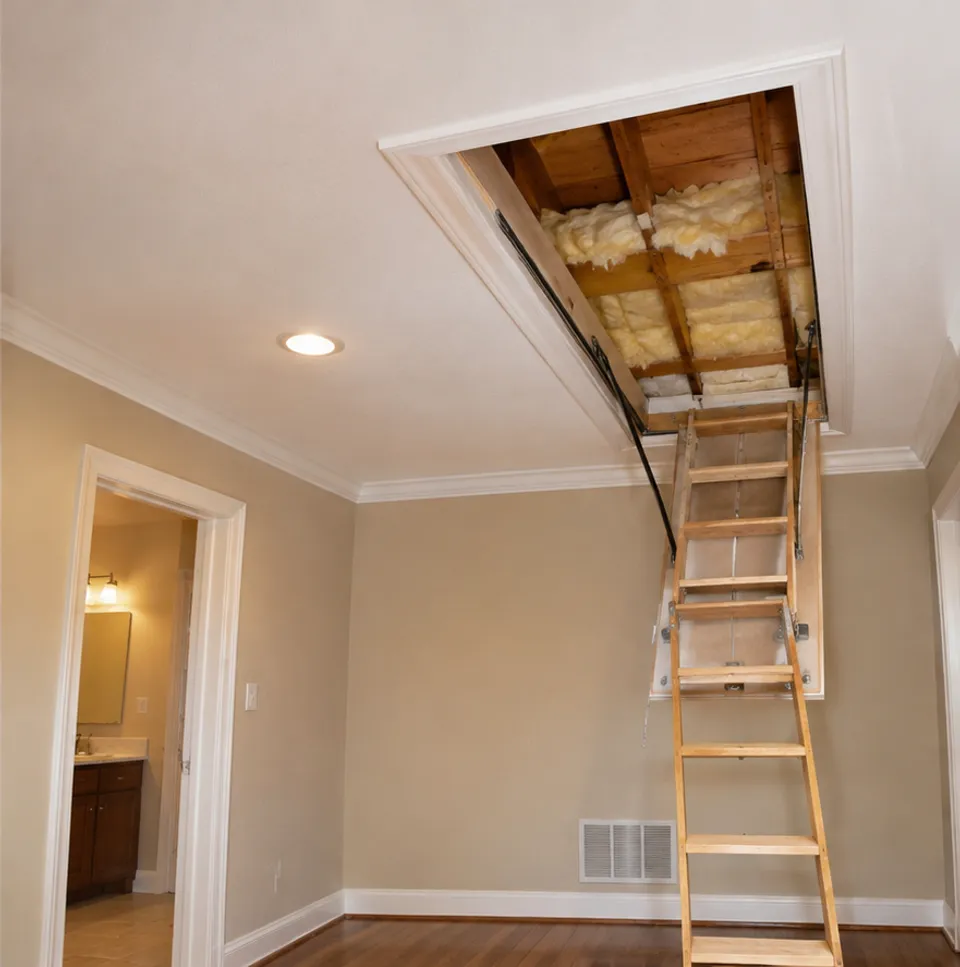
- Typical cause
- A thawed supply line in the attic, a roof penetration leaking in winter rain, or condensation on cold surfaces.
- First move
- Keep out from under bulges, leave wet fixtures off, and put containers under drips.
- Not included
- Pipe and roof repairs belong to a plumber or roofer. Restoration removes and dries what got wet.
What you are looking at, in order of urgency
How to tell a pipe leak from a roof leak or condensation
| Source | How it behaves | Where it shows |
|---|---|---|
| Pipe leak | Starts suddenly, often as the weather warms after a freeze; volume can be large. | Below an attic supply line, or near a bath, kitchen or water heater location. |
| Roof leak | Follows rain or melting snow; stops when it dries. | Near a vent, flashing, chimney or skylight, or at an exterior wall. |
| Condensation | Damp insulation and drips on cold mornings or humid days; no single point. | Along cold ducts, a bath fan duct dumping into the attic, or under cold decking. |
| Air handler drain | Dripping when the system runs; stops when it is off. | Below the unit or its pan. |
Do not decide from the stain alone. A pipe leak, a roof leak and condensation can look identical from below. A leak after a freeze is not always a frozen pipe. Tracing the source is part of the job, and the repair belongs to a plumber, roofer or HVAC technician.
Say where the stain is, whether it is dripping and whether the attic holds an air handler or a water heater.
Inspecting an attic safely
- Stay out from under sagging areas. Wet drywall can drop.
- Leave wet fixtures off. Switch off the breaker only if the panel is dry and reachable without crossing water.
- Only go up if the access is safe, and step only on framing. Insulation hides the joists, and a foot between them goes through the ceiling. Take a flashlight and do not disturb wet insulation.
- Look for damp or matted insulation, drips from pipes, stained decking near penetrations, and wet duct wrap.
- Photograph from where you stand. Do not move large areas of insulation without protective gear.
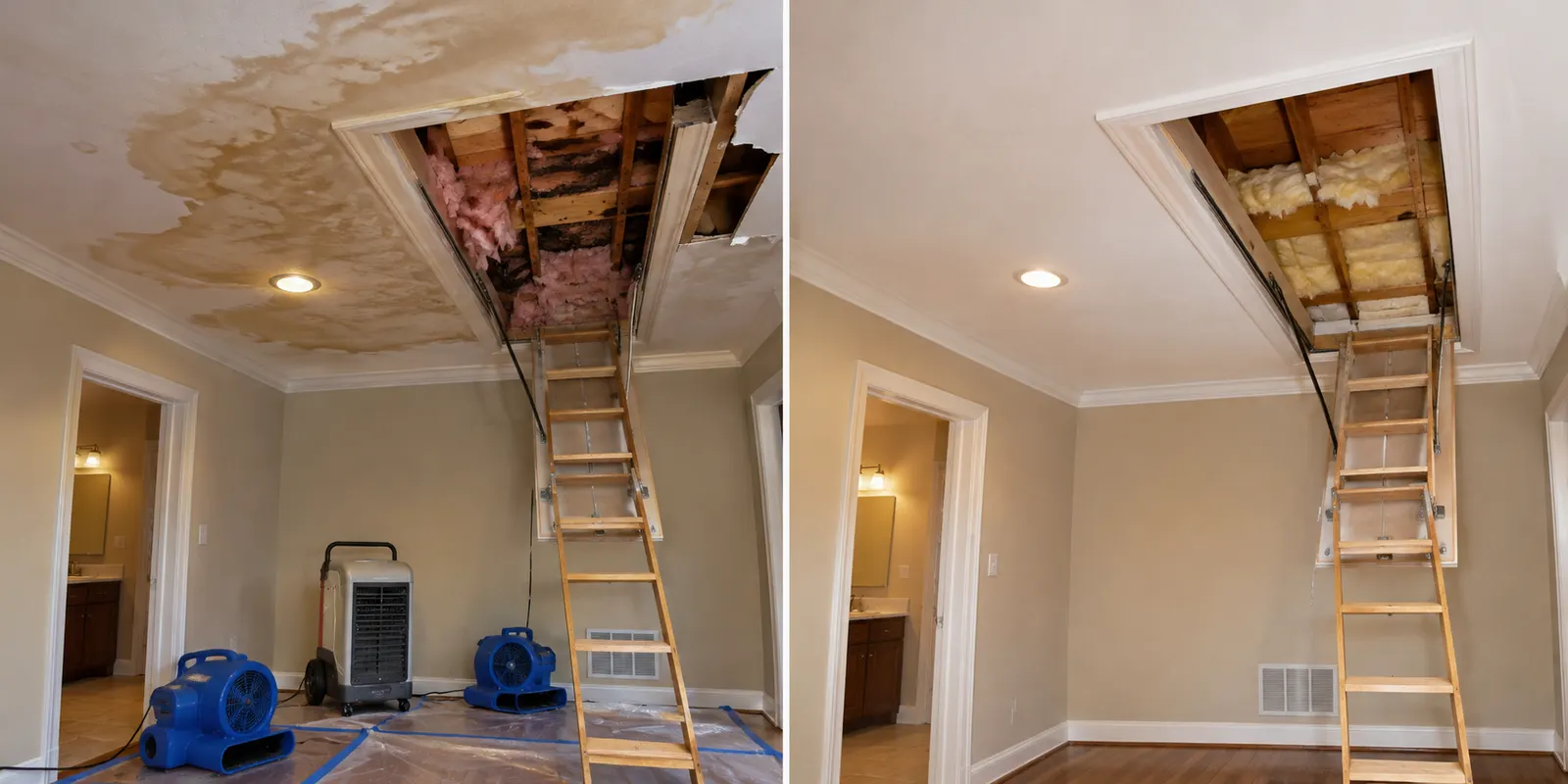
Hidden wet materials
Insulation stores water. A saturated batt can hold it against the drywall for days, and the stain may keep growing after the leak stops. Water also follows ceiling joists to the top plate and down into wall cavities, so a ceiling leak can end up as a wet wall, especially along an exterior wall. Thermal imaging shows cooler wet areas behind finishes and meters confirm them.
What the insulation is made of changes the plan. Wet blown-in cellulose generally has to be removed. Fiberglass batts that were wet briefly can sometimes be dried, though matted ones lose much of their value. Closed-cell spray foam does not absorb water, so the work is checking the surfaces around it. Tell the technician what is in your attic when you call.
Drying or replacing the ceiling
When the ceiling stays, the usual method is to take wet insulation out from above or open a section, then use air movers and dehumidification to dry the framing and the back of the drywall. When it has to come down, removal is done in sections with protection for floors and furniture, and wet insulation is bagged. Textured and plaster ceilings dry differently from standard gypsum board, so the readings, not the look, decide. Poorly ventilated attics dry slowly, and the plan allows for that.
Sequence of repairs
Fix the source first: a plumber for a failed line, a roofer for the roof, an HVAC technician for a drain or a duct. Restoration then dries the wet area. Reconstruction, including drywall, texture and paint, comes last, once readings are in range. Ask each provider to put its scope in writing so there is no gap between them. For pipe damage in particular see frozen and burst pipe cleanup; for storm leaks, roof leak water damage; for ice at the roof edge, ice dam roof leaks.
Frequently asked questions
Can I poke a hole in a bulging ceiling to drain it?
Only with caution. Draining can prevent a sudden collapse, but standing under the bulge is dangerous and the water may be near wiring. If you are unsure, stay clear and call.
The stain is dry now. Is the ceiling fine?
The surface may be dry while insulation or framing above is still wet. A moisture reading tells you. The look of the stain does not.
Is attic insulation ruined once it gets wet?
Often. Wet blown-in cellulose and compressed fiberglass clump and hold water against the deck and ceiling, and are usually removed. Closed-cell spray foam does not absorb water, so the work there is checking what is around it.
Is my ceiling leak from a pipe, the roof or condensation?
A pipe leak tends to start suddenly and in volume, often near a bathroom, kitchen or water heater. A roof leak tracks with rain or melting snow and shows up near a roof penetration. Condensation shows as damp insulation and drips on cold mornings or humid days, with no single point. Tracing it is part of the job.
When can I paint over the stain?
After readings show the materials are dry and the cause is fixed. Stain-blocking primer over a damp ceiling hides the problem and it comes back.
Describe what you see and where, and we will help you decide what to do next.