
- What counts
- Rain, runoff, creek overflow or storm water that enters from outside the plumbing system.
- First move
- Stay out of standing water near outlets, panels and cords. Do not enter water you cannot see through.
- Not included
- Grading, drainage and foundation fixes, sump installation and roof repair are separate trades.
Flood water is not the same as a leak
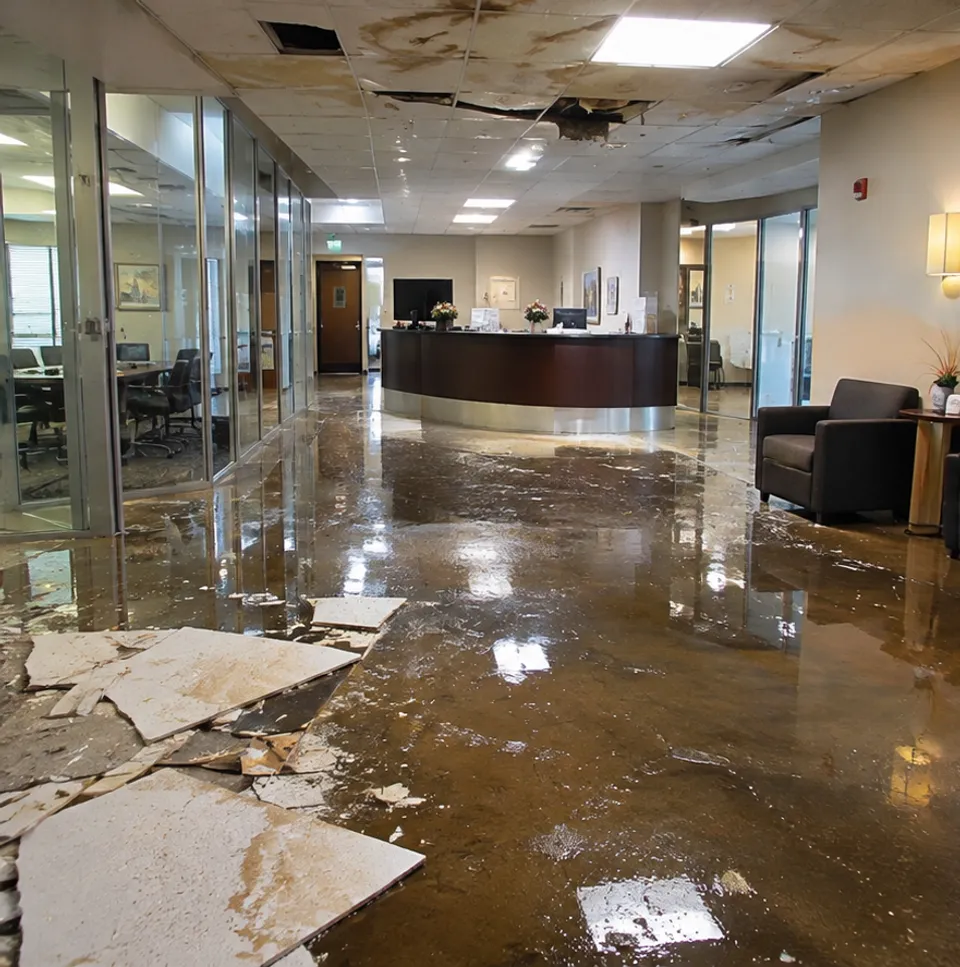
In restoration, flood damage means water that came from outside the building: rain that overwhelmed drainage, runoff that crossed a threshold, a creek or channel that overflowed, or storm water forced through a door, window well or garage. It has crossed pavement, soil and debris on the way in, so it cannot be assumed clean, and the whole job changes accordingly. Carpet and pad are removed instead of dried, drywall is cut higher, and surfaces are cleaned before they are dried.
North Texas rain is seasonal. The National Weather Service’s 1991–2020 normals for DFW Airport list May and October as the wettest months, at 4.78 and 4.37 inches. Averages hide intensity, though. A single downpour in any month can push water into a low garage, a ground-floor unit or a yard graded toward the house. Whether a property sits in a mapped flood zone is a separate question that the FEMA Flood Map Service Center answers, and plenty of interior water damage happens outside mapped zones.
What happens, in order
- Safety and power. A qualified person decides whether power can be switched off safely. A wet panel or an unreachable one goes to the utility or an electrician.
- Stop more water coming in. Clear blockages and redirect water away from openings where it is safe, and note exactly where water entered.
- Pump out and extract. Removal is paced when the ground outside is saturated, because dropping interior water too fast can push water back in or stress walls.
- Remove what cannot be cleaned. Carpet, pad, insulation, drywall that wicked water, and porous stored goods go. Sealed hard surfaces stay.
- Clean before drying. Silt and debris come off surfaces first, so contamination is not dried onto the structure.
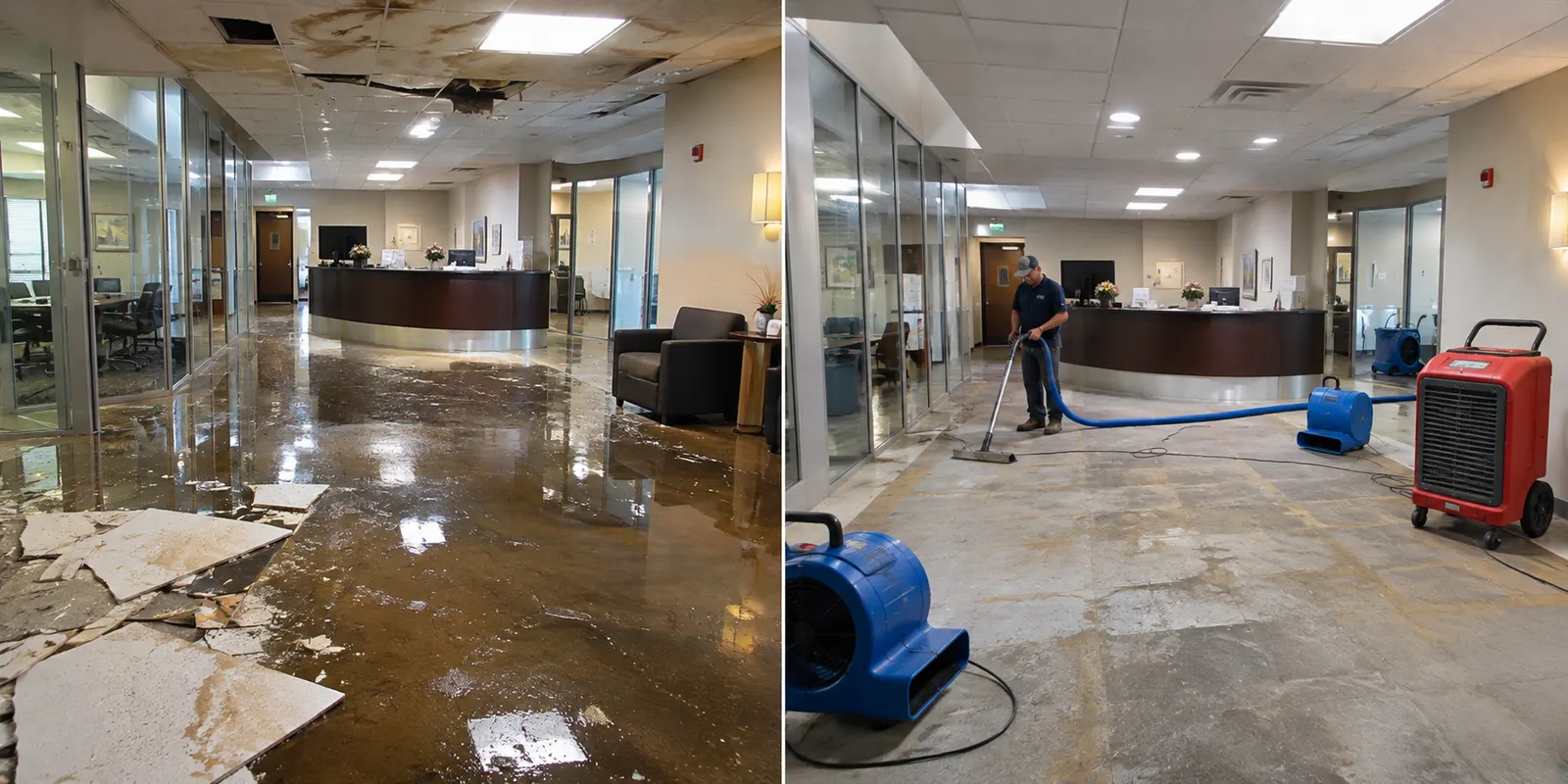
- Dry and verify. Air movers and dehumidifiers run until readings match dry reference materials. The method is explained on the home page.
What usually stays and what usually goes
| Material | Typical outcome | Why |
|---|---|---|
| Carpet and pad | Removed | Porous materials cannot be reliably decontaminated. |
| Drywall and insulation | Cut out above the water line, often 2 feet or more above it | Water wicks above the visible line; wet insulation holds contamination. |
| Tile, sealed concrete, metal | Cleaned and dried | Non-porous surfaces clean well. |
| Solid wood framing | Cleaned and dried | Dries with air movement once the cavity is opened. |
| Cabinets, particleboard, laminate | Often replaced | Swell and delaminate; the core absorbs contaminated water. |
| Stored cardboard, upholstery, mattresses | Usually discarded | Absorb water and are hard to clean. |
Say how deep the water got, what it touched and whether it came from outside.
Where flood water tends to enter a Dallas property
- Garage thresholds and low slabs. Water runs under the door or along the slab edge, then into adjoining rooms. See low-level flooding for basements and below-grade rooms.
- Ground-floor apartments and condos. Entry at thresholds and patio doors; the neighbors and the manager are affected too. Notify management right away.
- Retail and warehouse floors. Stock on the floor and racking bases wick water. See commercial restoration.
- Crawlspaces. Water pools under pier-and-beam floors and wets the insulation and subfloor underside. If it lingers, read crawlspace mold.
Insurance and documentation
Photograph high-water marks, damaged contents and building finishes before removal, and note when the water arrived and where it came in. Flood coverage is usually a separate policy. A standard homeowners policy may respond to wind-driven rain through a storm-damaged opening and not to rising water, so the claim turns on how the water entered. A restoration provider documents the loss with photographs and readings; the insurer decides coverage.
What this service does not include
Regrading, drainage work, foundation repair, sump installation, roof repair and reconstruction are separate trades. If the same opening lets water in again, the drying repeats. Restoration deals with what the water did inside the building.
Frequently asked questions
Is flood damage covered by homeowners insurance?
Standard homeowners policies generally exclude damage from rising or surface water and require separate flood coverage. Wind-driven rain through a storm-damaged opening is often handled differently, so how the water entered matters. Ask your agent before assuming either way and document everything.
Can I keep my carpet after a flood?
Carpet and pad that sat in water from outside are normally removed, because that water is treated as contaminated. Sealed hard surfaces such as tile and sealed concrete can usually be cleaned and dried.
How soon does flood cleanup need to start?
As soon as the area is safe to enter. EPA guidance is to dry water-damaged areas and items within 24 to 48 hours to prevent mold growth, and contaminated materials should not sit in the building while you wait.
Is it safe to turn on the AC or furnace after a flood?
Not until a qualified technician has checked equipment and ducts that were exposed to water. Wet electrical components and contaminated ductwork should be inspected before they are switched on.
Can I drive or walk through floodwater to get to the house?
No. The National Weather Service’s message is “turn around, don’t drown,” because moving water can sweep away people and vehicles in a few inches or feet, and the road surface underneath may be gone.
Have the rooms affected and the time the water arrived ready.
Source notes
- NWS Fort Worth, DFW normals (1991–2020), monthly precipitation
- EPA, A Brief Guide to Mold, Moisture and Your Home, 24 to 48 hour drying guidance
- FEMA Flood Map Service Center, official flood hazard maps