
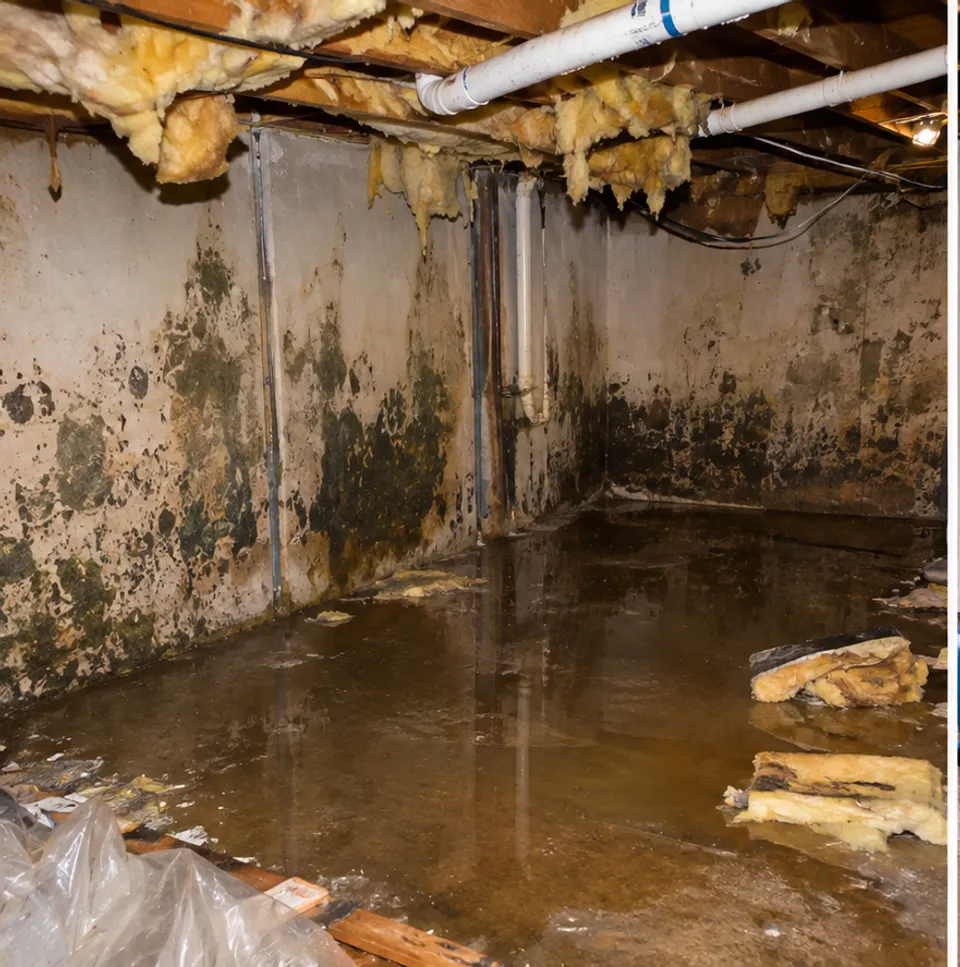
- Where it applies
- Basements, walkouts, sunken garages, window wells and below-grade mechanical rooms.
- First move
- Stay out of standing water near a furnace, water heater or panel. Clear drains and wells only if it is safe.
- Not included
- Regrading, drain tile, sump installation and waterproofing are separate trades.
How rare is this, really?
Plenty of people searching for snowmelt basement flooding in Dallas have something else going on. The NWS 1991–2020 normals for DFW Airport list annual snowfall of about 1.6 inches, mostly in February. A winter storm can leave more, and the thaw can send water against a building, but this is a far less common route to indoor water than rain, plumbing failures or roof leaks.
Housing matters too. Basements are not typical in North Texas. Most houses are slab-on-grade or pier-and-beam, and below-grade space shows up more often in some custom and older homes, in walkout lots, and in commercial and multifamily buildings with below-grade parking or mechanical rooms. This page is for that smaller group.
How meltwater and rain-on-snow reach a low space
| Pathway | How it works | What to look for |
|---|---|---|
| Surface runoff | Meltwater runs toward the structure over frozen or saturated ground and enters at a door, window well or garage threshold. | Water entering at an opening; staining at doors; a wet slab edge. |
| Rain on snow | Warm rain falls on snow cover, adding to the melt while drains are iced over or packed with debris. | Water during or just after a warm winter rain; blocked gutters and area drains. |
| Foundation entry | Saturated soil pushes water through cracks, the wall-floor joint or utility penetrations. | Dampness along the joint; white mineral crust on masonry; seepage at cracks. |
| Window wells and stairwells | The well fills faster than it drains and water goes through or over the window. | Water pooled in the well; wet wall under the window. |
| Sump or drain failure | Footing drains or the pump cannot keep up, or lose power. | Standing water at the lowest point; a silent or alarming pump. |
| Plumbing | A pipe that froze and thawed during the same stretch is mistaken for the melt. | Water from walls or ceilings, not from the floor or lower walls. |
The table lists possibilities. It does not say any of them occur everywhere. Working out the path at a given property takes an on-site look at grade, drainage and the structure.
Rain is the more usual story
Low-level water here most often follows heavy rain, and May and October are the wettest months in the DFW normals. Plumbing and appliance failures in garages and utility rooms are another big group. Treating snowmelt as the default explanation can lead to the wrong fix. Grading and drainage help against runoff; a leaking water heater needs a different response entirely. See flood damage cleanup for rain-driven events and water heater and appliance leaks for the plumbing side.
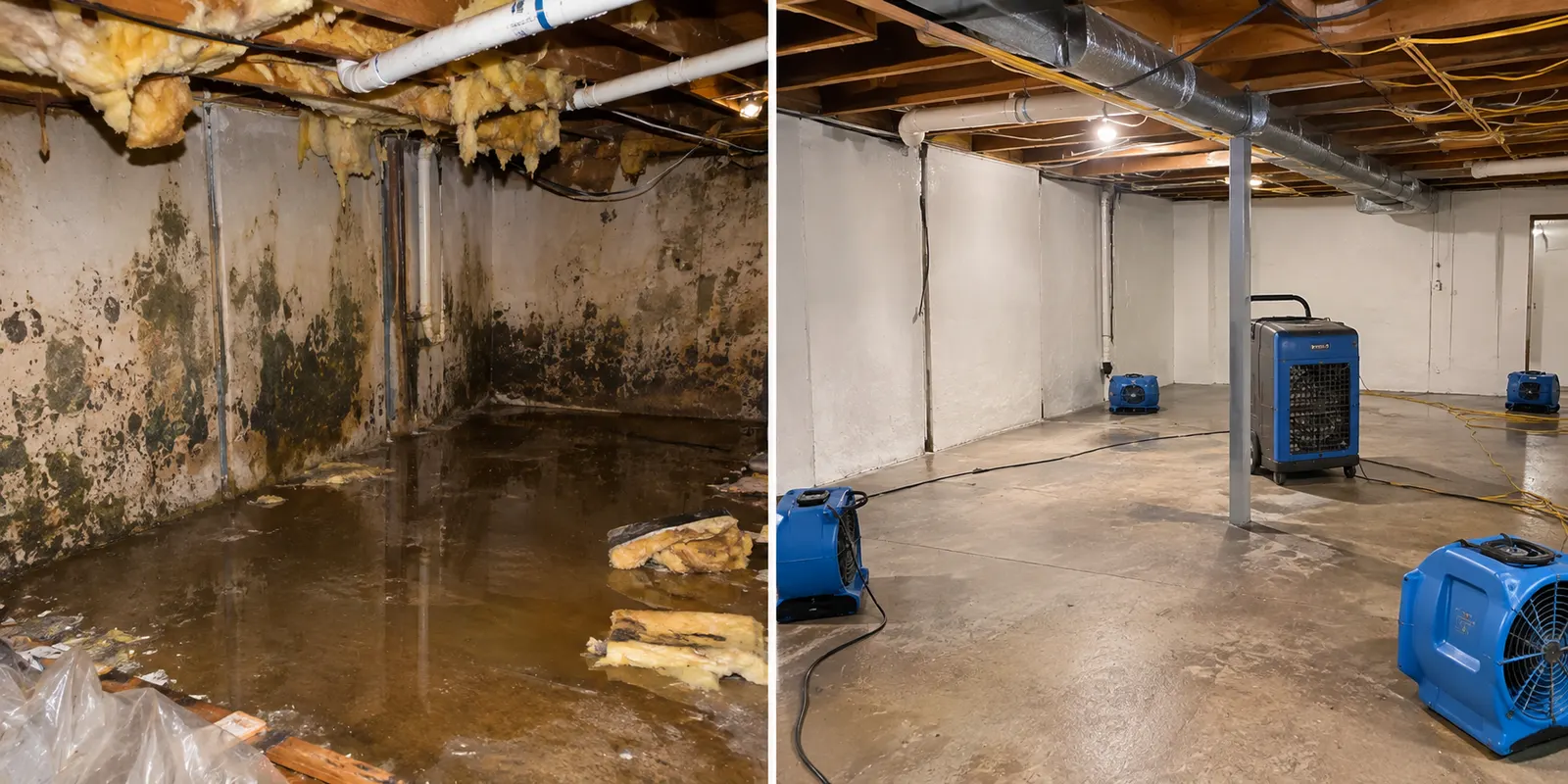
Tell us what level is wet, where the water entered and what the room is used for.
Cleanup in basements and low rooms
- Hazards first. Do not enter standing water if a panel, furnace or water heater is in the room. Fuel-fired appliances that were flooded need inspection before use.
- Stop more water coming in. Clear drains and window wells where it is safe, and make sure any sump is running.
- Extract. Pumps remove standing water. Pace it when the soil outside is saturated, so you are not pulling water back through the walls.
- Remove what cannot dry. Carpet pad, wet insulation, drywall that wicked, and stored goods that soaked it up.
- Dry and monitor. Concrete and masonry release moisture slowly, so humidity control runs longer than for a framed wall.
- Check for recurrence. If the cause is grade or drainage, the repair is separate and the space can wet again.
Garages, mechanical rooms and building garages
More Dallas properties have a low garage or a below-grade equipment room than a full basement. Garage slabs are poured with a slope toward the door, and water runs under the door or along the slab edge. These spaces usually hold stored belongings and sometimes the water heater and furnace, which affects what can be dried and what needs inspection afterward. In a commercial building with a below-grade garage level, the owner or manager, shared pumps and fire protection systems are part of the picture; see commercial restoration.
If the area stays damp, read mold removal. The assessment tool helps you list what you see, including basement or crawlspace involvement.
Frequently asked questions
Is snowmelt a common cause of basement flooding in Dallas?
No. Snow here is infrequent and usually light, so rain, plumbing failures and drainage problems cause far more water in low areas. Snowmelt matters mostly after unusual storms, often combined with rain or blocked drainage.
My garage floor is wet after the snow melted. Is that a flood?
It may be meltwater from vehicles, water that crossed the threshold, or a drainage problem. Look at where it enters, whether it stops when the melting stops, and whether the slab edge or lower walls are wet.
Does a sump pump solve it?
A properly sized, powered sump can remove groundwater, but it does not dry walls, insulation or flooring, and it fails in a power outage. Many Dallas-area homes have no sump at all.
How do I know if the water is contaminated?
Water that touched soil, drains or a sewer line should be treated as contaminated until a technician says otherwise, and finished materials that absorbed it are usually removed.
Our building has below-grade parking. Is that covered here?
The same drainage and drying principles apply, but a garage level or equipment room also involves the owner or manager, shared systems and sometimes the fire protection contractor. See the commercial restoration page.
Say what level is wet and whether you know where the water came from.
Source notes
- NWS Fort Worth, DFW Normals, Means, and Extremes (1991–2020), snowfall and precipitation normals