What “near the airport” means
DFW International Airport is owned by the cities of Dallas and Fort Worth and governed by the DFW Airport Board, which the airport describes as semi-autonomous. The board has twelve members: eleven appointed by the owner cities’ councils and a twelfth, non-voting seat that rotates among Irving, Grapevine, Euless and Coppell. The airport’s facts page says it covers more than 26.9 square miles and 17,183 acres of real property, and it lists city-like functions, including its own zip code, police, fire and emergency medical services.
The practical point is that the airport is a large, separately governed place surrounded by several cities. A hotel on an airport-area road and a warehouse on an industrial street a few miles away may be in different cities with different permit offices, floodplain administrators and emergency services.
Who owns the problem near DFW Airport
In airport-corridor buildings, the party that calls about a leak is often not the building owner. A hotel’s engineering team, a corporate facility manager, a warehouse tenant or an owner’s property management company may each hold part of the decision. A water loss therefore starts by identifying who can authorize shutoffs, work in common areas and work in tenant spaces.
schematicHow three common airport-corridor building types differ in a water loss
General comparison for explanation; not a survey of buildings near DFW.
| Type | What gets wet first | What drives the schedule |
|---|---|---|
| Hotel | Guest rooms below a leak, corridors, ceiling cavities, carpet over slab or elevated floors. | Which rooms must be taken out of service; guest relocation; occupied floors above and below. |
| Office building | Suites below, suspended ceilings, carpet tile, equipment rooms. | Tenant notification, server and records protection, lease responsibilities. |
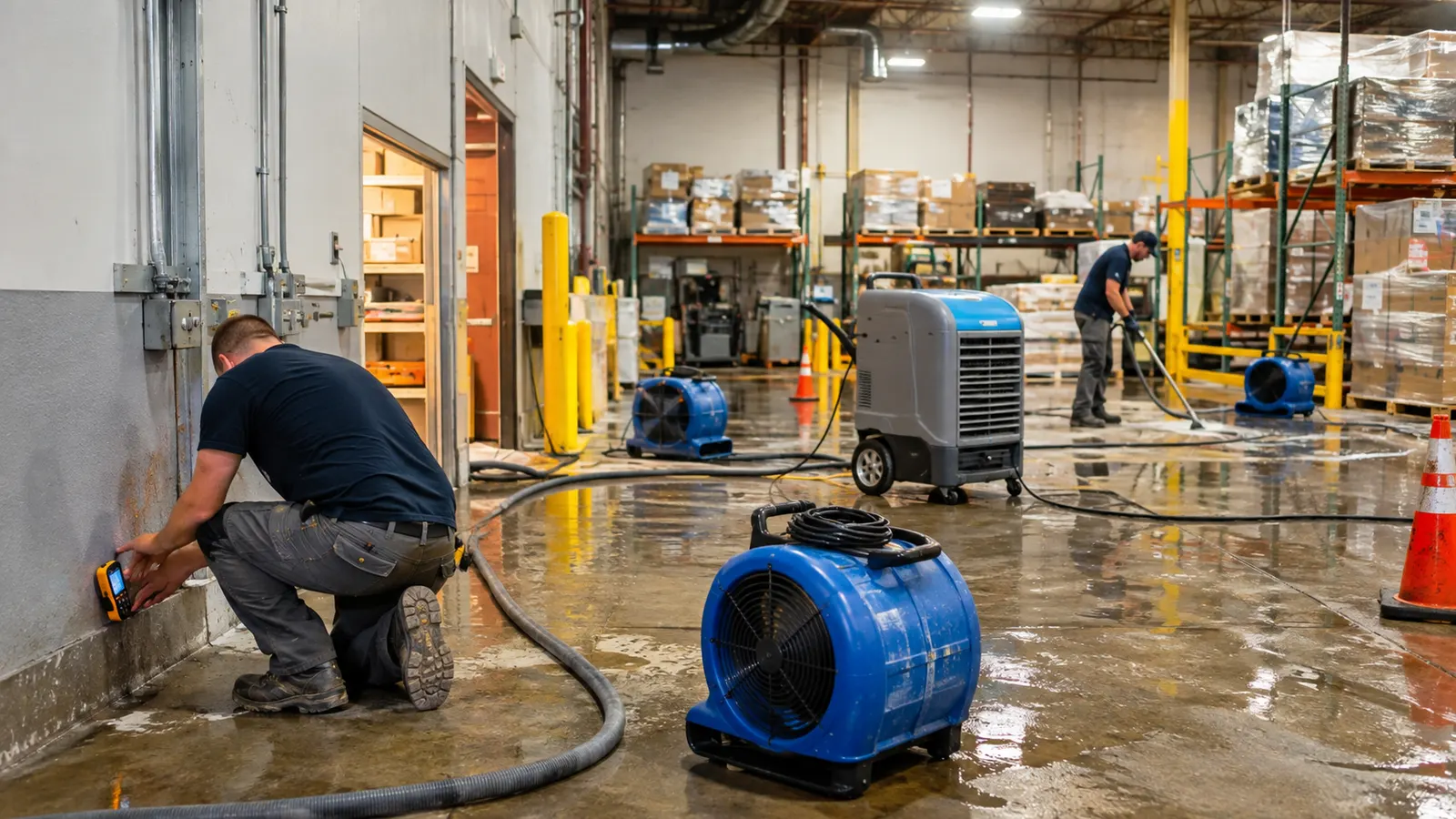
| Warehouse / logistics | Slab, pallets and racking bases, dock areas; roof drain overflow onto stock. | Inventory handling, customer commitments, large-volume drying, electrical hazards near powered equipment. |
Our water damage restoration process in DFW Airport Area, from water extraction to basement drying
Flood Damage Cleanup
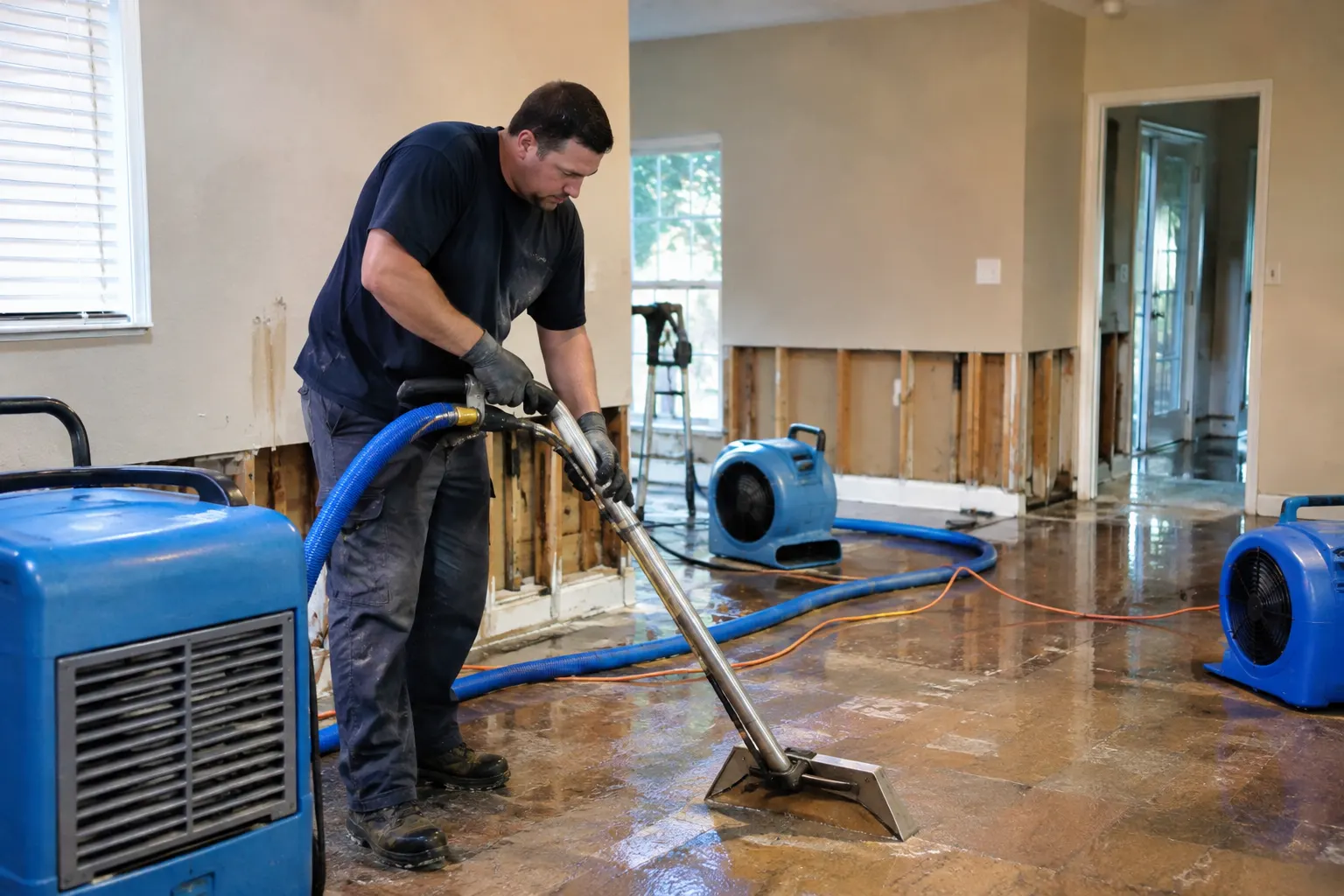
Pump-out, removal of soaked materials and structural drying after heavy rain or storm water enters a property.
Sewage Backup Cleanup
Contaminated water removal, material disposal and sanitizing after a drain or sewer line backs up.
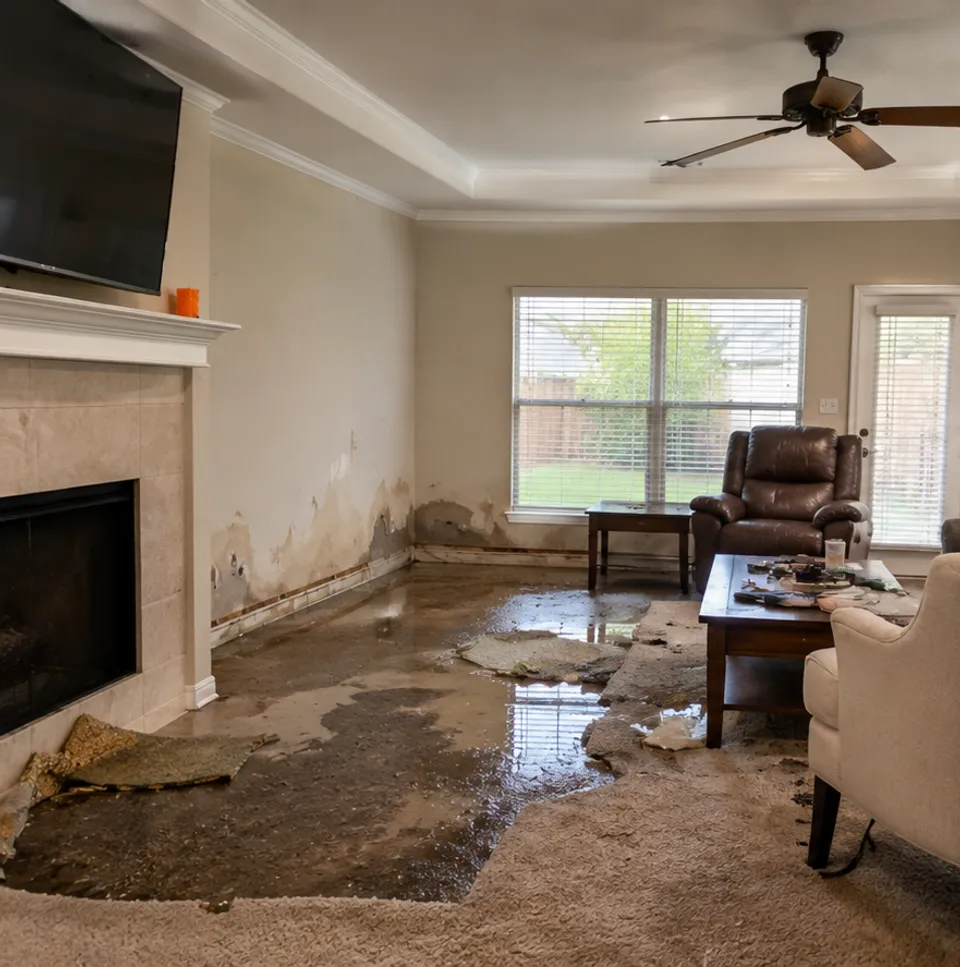
Water Heater and Appliance Leaks
Water extraction and drying after a water heater, washing machine, dishwasher or ice maker leak.
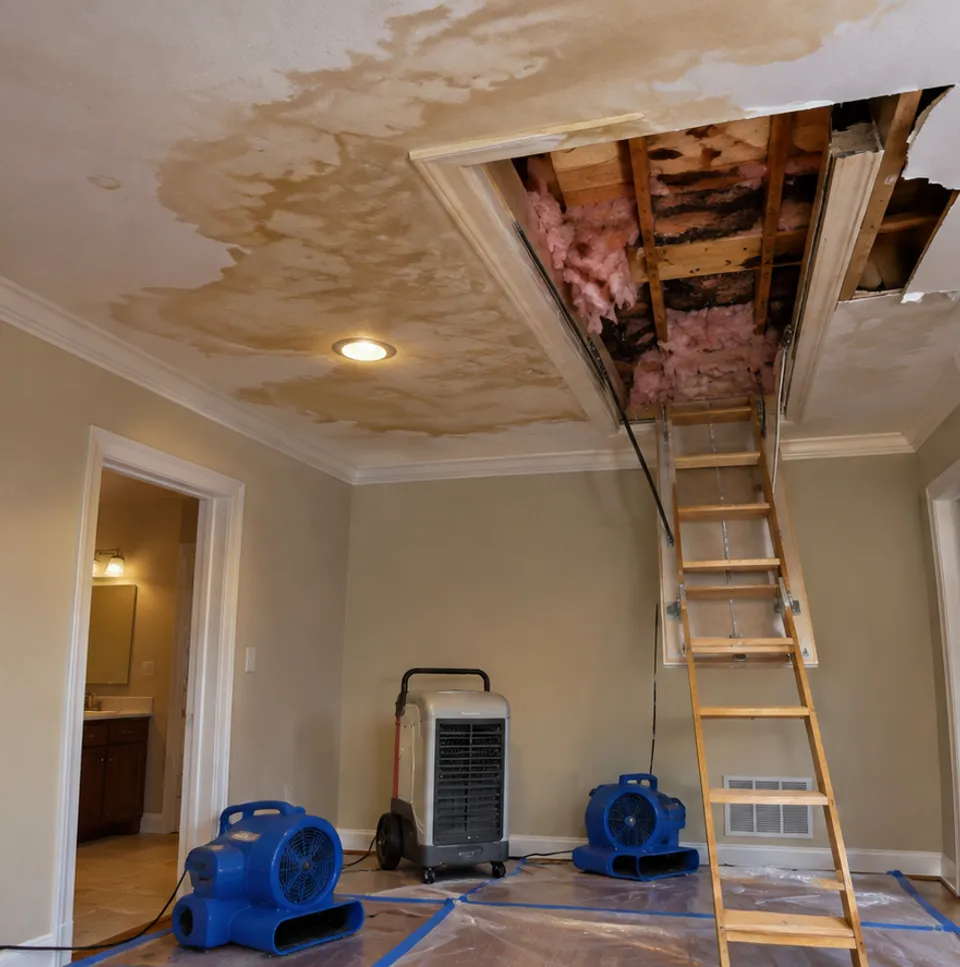
Roof Leak Water Damage
Interior cleanup of wet ceilings, insulation and walls after storm or wind-driven rain gets through the roof.
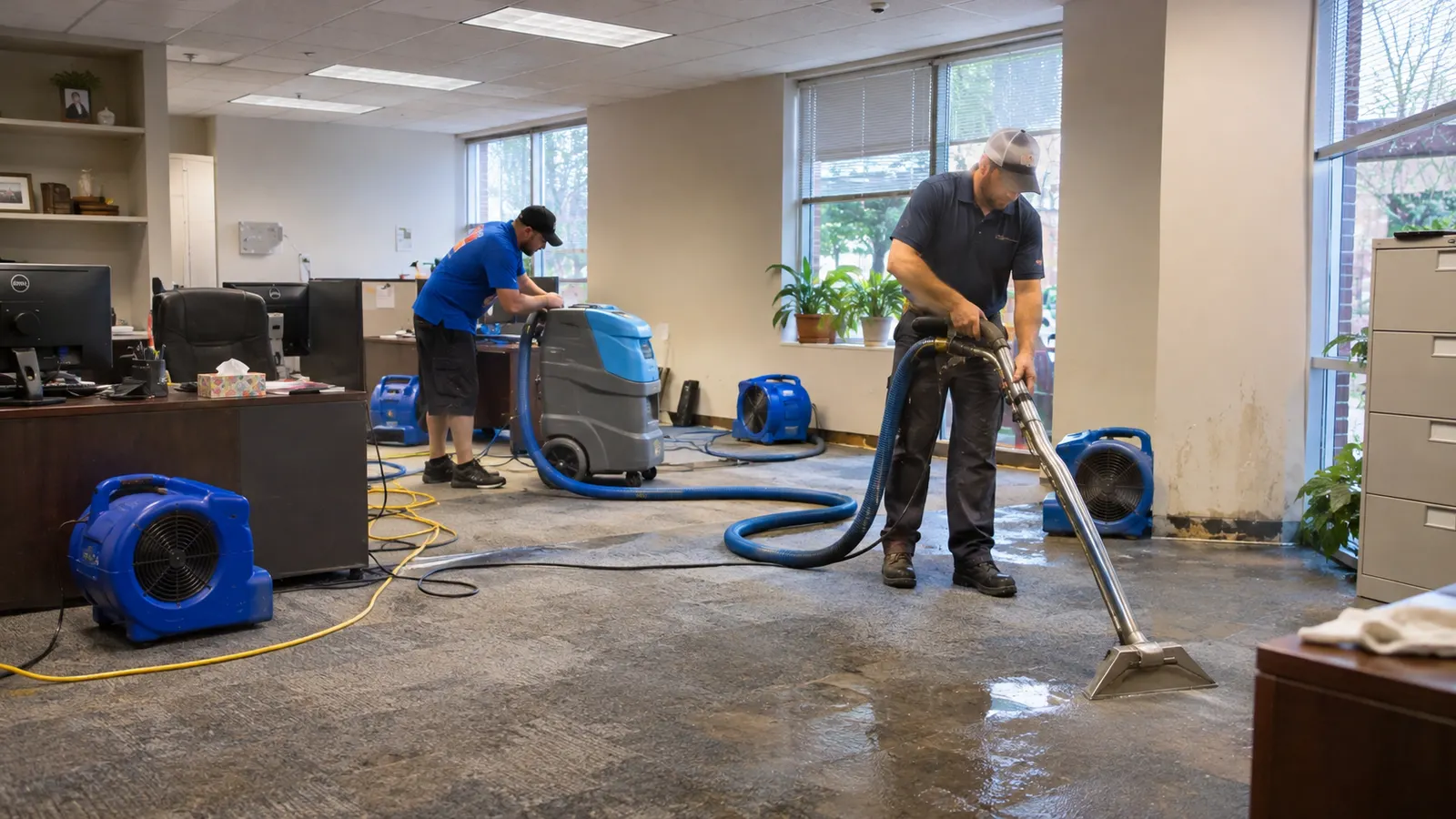
Commercial Water Damage Restoration
Water extraction, drying and tenant coordination for offices, retail units, restaurants and multi-tenant buildings.
A seamless water damage restoration process in DFW Airport area, for your peace of mind
Call and describe the water
Tell us where it is and what it came from. You get safety steps for the next few minutes.
Inspect and map the moisture
Meters and thermal imaging show where the water went, including behind walls and under floors.
Extract and remove what cannot dry
Standing water comes out first. Saturated materials are removed, and you are told which and why.
Dry with recorded readings
Air movers and dehumidifiers run, and readings are tracked so you can see the building drying.
Verify and document
Equipment leaves when readings match dry materials. You keep the readings and photos for your records.
Say what type of building, which floors or bays are wet and who manages the property.
Hotels near DFW Airport
A leak in a hotel typically wets a guest room and the rooms below it, plus any corridor. Because the next guests are scheduled, the property wants early answers about which rooms can be returned to service. Those answers depend on moisture readings and on whether any water was contaminated, not on whether the room looks normal. Documentation of each affected room, including room numbers and times, is useful for the owner’s insurer. Kitchens and laundry areas add drain and grease-line sources, which are handled differently from clean supply water.
Offices and warehouses near DFW Airport
Offices follow the process on the commercial page. In warehouses and logistics facilities, the main concern is protecting inventory and keeping people away from powered equipment near water. Large slabs take time to dry, and tenants often need an interim plan for storage. Roof drain failures during heavy rain can put water onto stock quickly, and sprinkler line failures are handled by the fire protection contractor.
Weather and drainage context for the DFW Airport area
Weather context comes from the DFW Airport weather station itself: the NWS 1991–2020 normals list about 37 inches of annual precipitation, with May and October the wettest months, about 29 freeze days a year, and record daily lows of 9°F, 4°F and −2°F on February 14–16, 2021. That is a single-point measurement and is charted on the homepage. This page does not offer drainage or floodplain claims about specific airport-corridor sites; a property’s mapped flood status is found on the FEMA map and with the city whose jurisdiction it falls in.
DFW Airport area local resources
- The city that has jurisdiction over the property (Irving, Grapevine, Euless or Coppell) for permits and floodplain questions.
- DFW Airport Department of Public Safety, for emergencies on airport property (call 911).
- FEMA Flood Map Service Center for mapped flood hazard areas.
- National Weather Service Fort Worth for forecasts and the climate normals referenced above.
Water damage restoration work for buildings like those in the DFW Airport area
Typical conditions and equipment for the building types discussed on this page. The photos are not tied to a specific address or project.
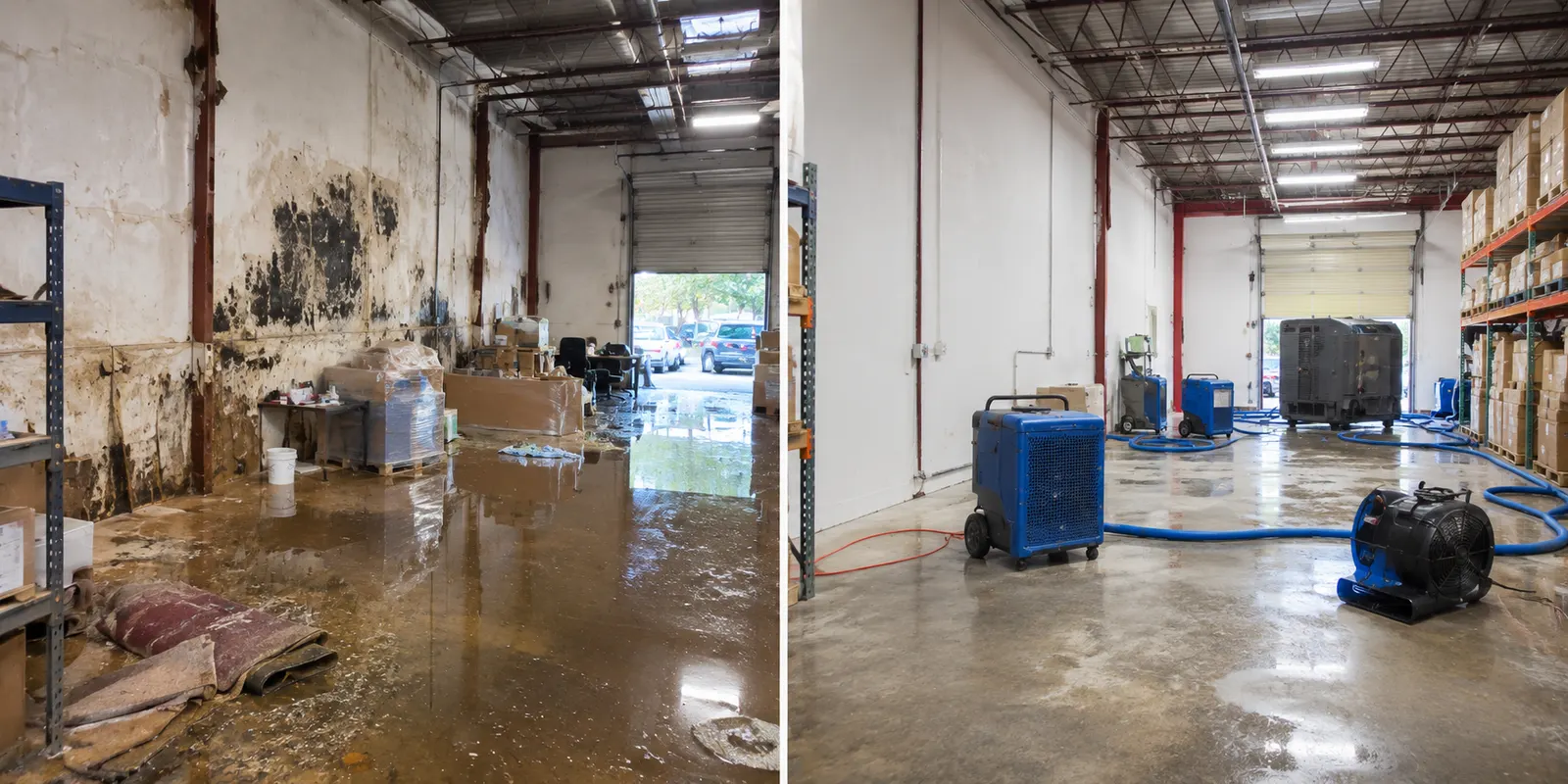
Standing water and damaged goods on a warehouse floor, then the cleared, dry space.
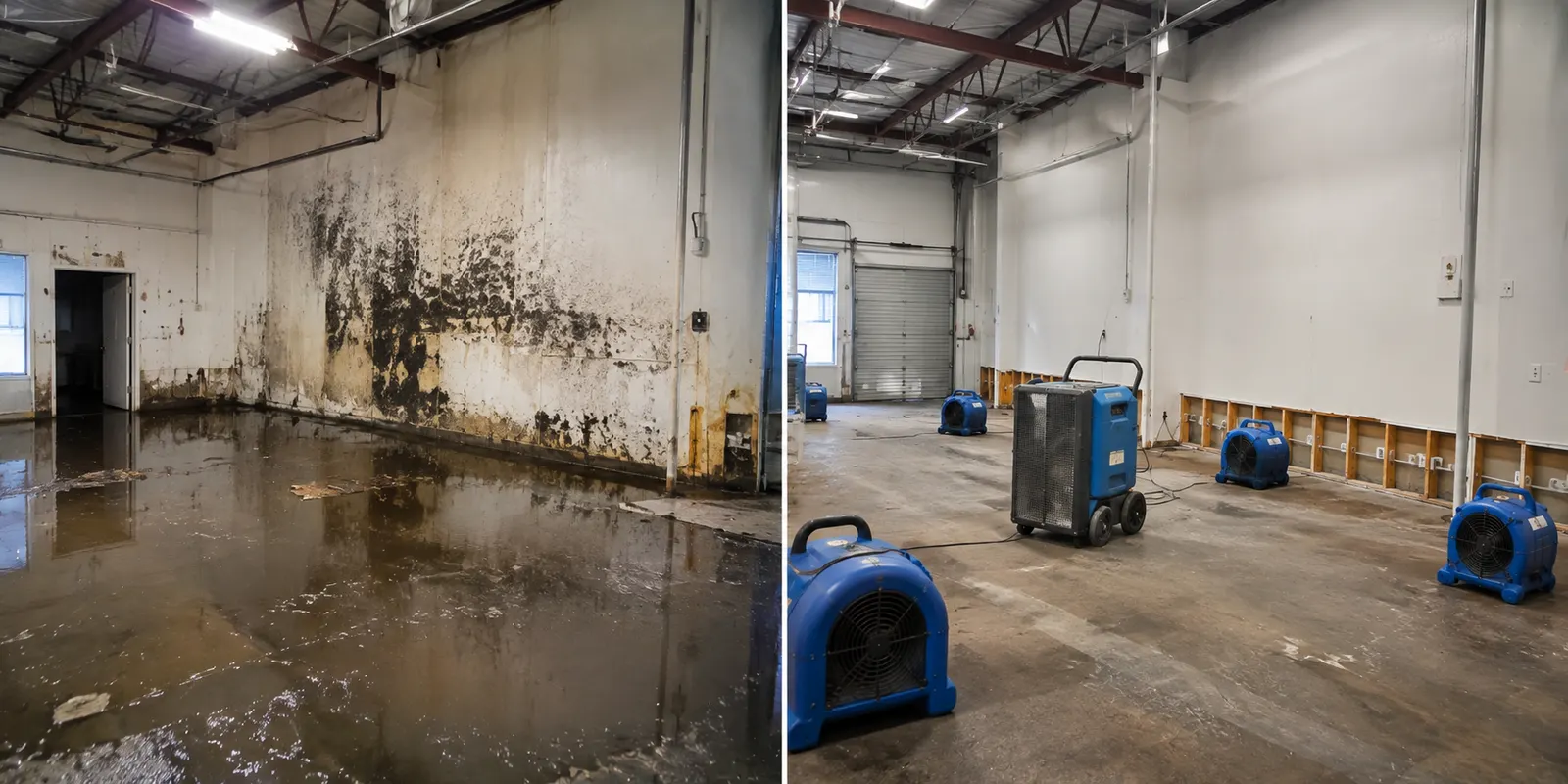
A stained warehouse wall with standing water, then the dry bay with drying equipment.
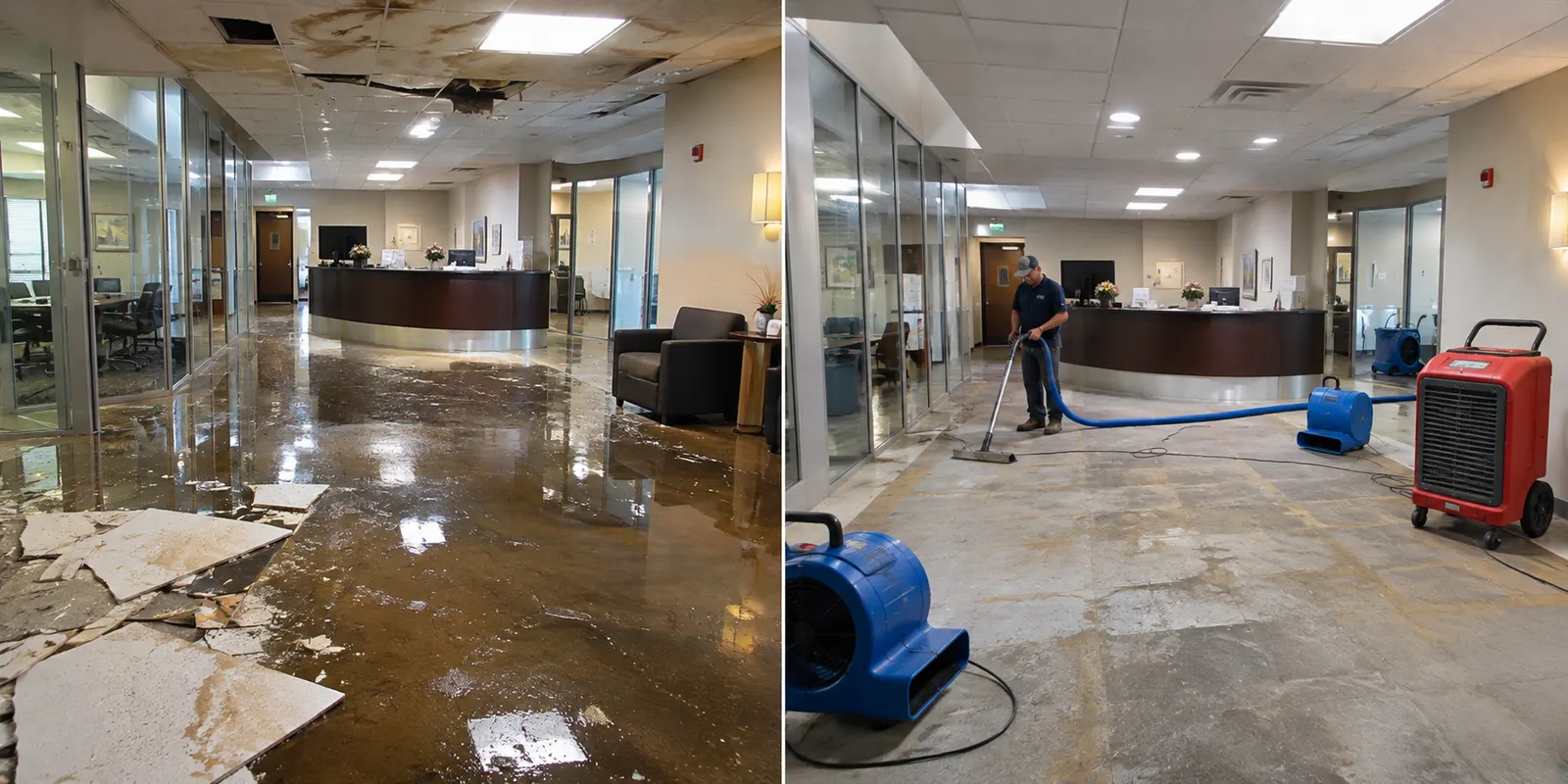
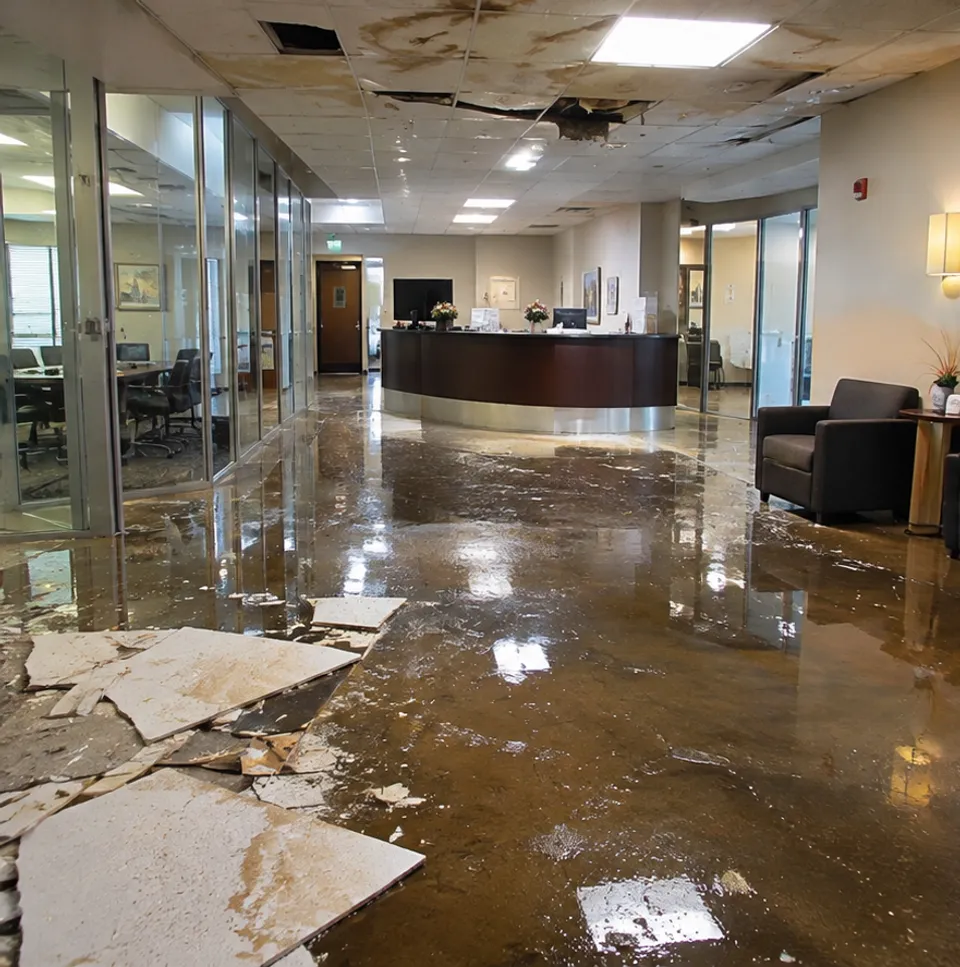
A flooded office lobby, then the same space during extraction with fans and an extractor.
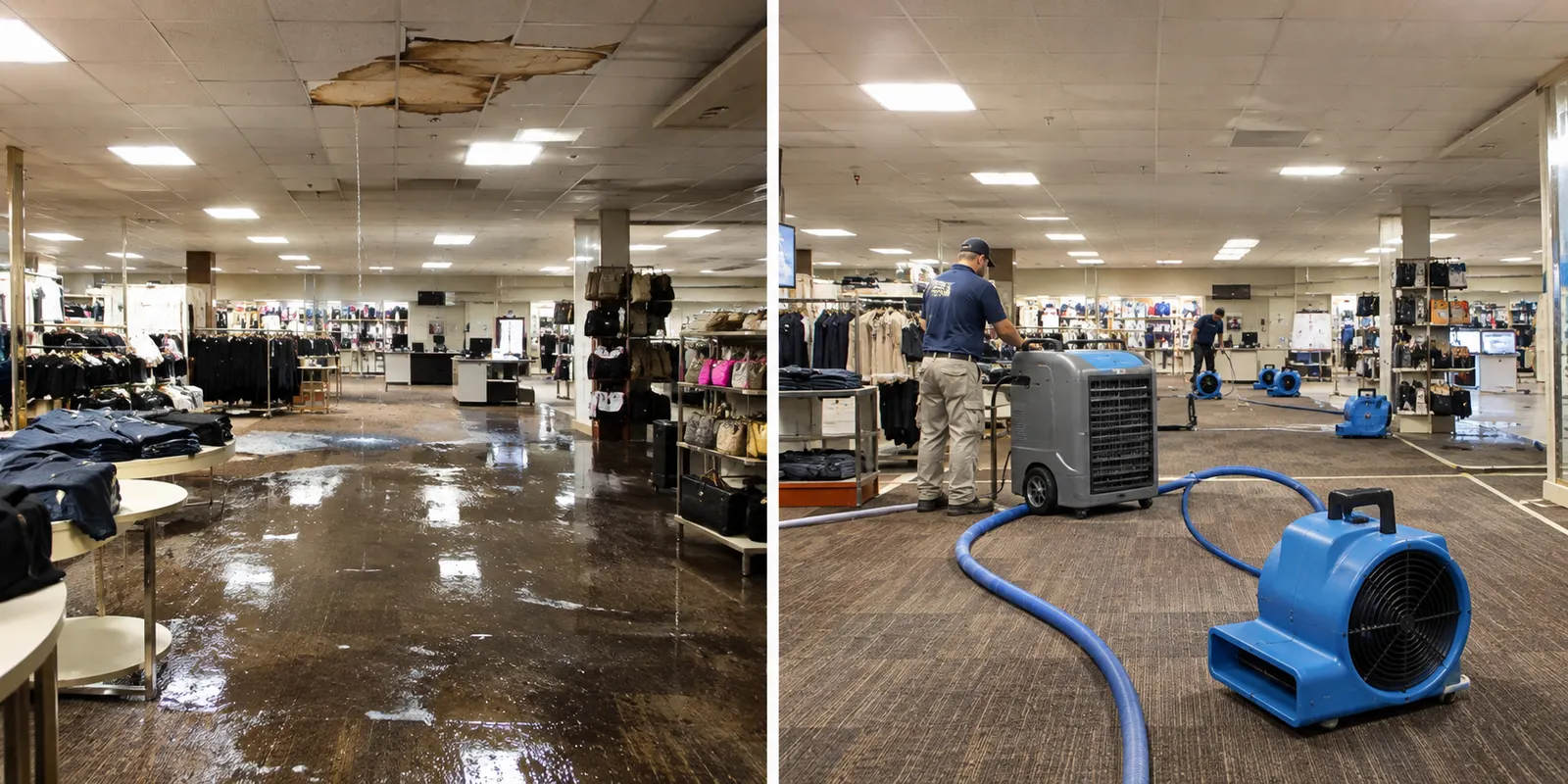
Standing water on a retail floor, then a technician working among dehumidifiers and fans.
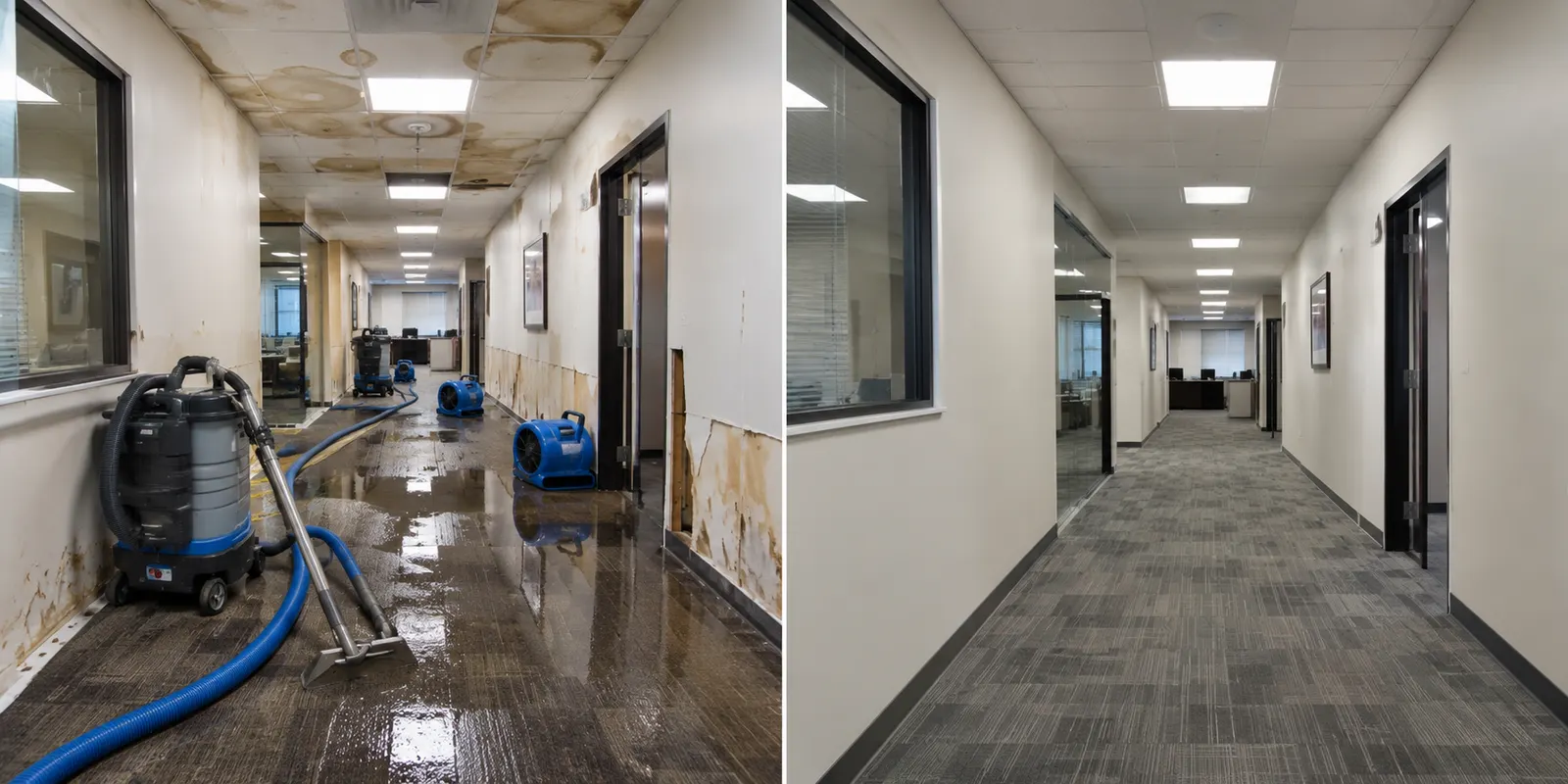
A wet corridor with stained ceiling tiles and a technician extracting water, then the dry corridor.
Water damage questions in DFW Airport area
Do you work inside DFW Airport terminals or secure areas?
No claim is made here that any work occurs on airport property, in terminals, on airfields or in restricted areas. The airport controls access through its own badging and secure access programs, and nothing on this page suggests otherwise.
Which city is an “airport area” hotel in?
Properties around the airport fall in different cities, including Irving, Grapevine, Euless and Coppell, which are the four neighboring cities the airport board names. The city matters for permits, floodplain questions and emergency services; check the property address.
Who responds to an emergency on airport property?
The airport’s own Department of Public Safety provides police, fire rescue and emergency medical services on airport property, and its page says to call 911 for emergencies there. Off-airport properties are served by the surrounding city.
We manage a warehouse near the airport. What should we have ready?
Shutoff locations, a contact for the owner or landlord, an inventory of what is on the floor, and electrical panel locations. Photographs of the affected area before anything is moved help later.
Is this page live for search engines?
It is held back from indexing and the sitemap until the operator confirms that airport-adjacent commercial properties are within the service footprint.
Confirm service to your property type and address when you call.
Source notes
- DFW Airport, Facts, owner cities, 26.9 square miles, 17,183 acres, city-like functions
- DFW Airport, Board, semi-autonomous governing body, composition, rotating non-voting seat
- DFW Airport, Department of Public Safety, police, fire rescue, EMS; 911 on airport property
- DFW Airport, Access DFW, central badging for businesses and individuals
- DFW Airport, Secure Access Program, short-term access to restricted areas for approved business purposes
- NWS Fort Worth, DFW normals (1991–2020), precipitation, freeze days, Feb 2021 record lows