
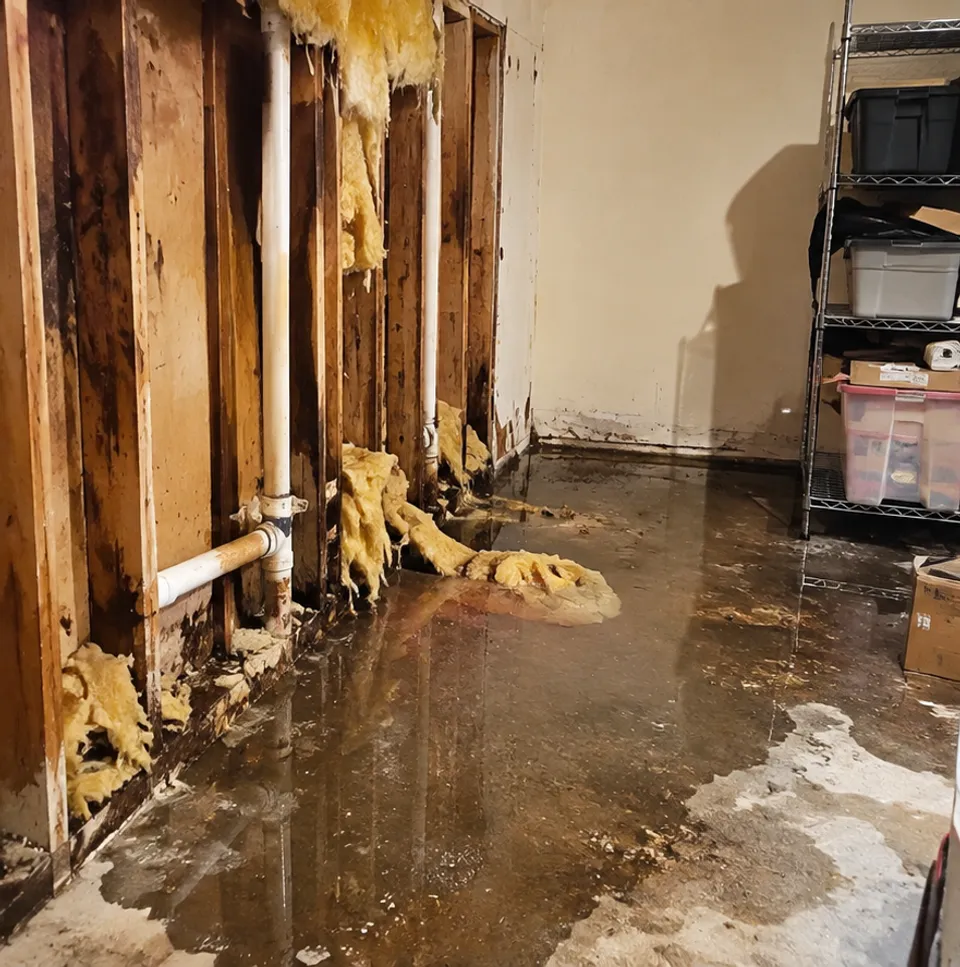
- Typical cause
- A supply line in an attic, exterior wall, garage or crawlspace freezes, splits, and leaks as it thaws.
- First move
- Close the main shutoff. Stay out of water near outlets, cords and the panel.
- Not included
- Replacing the pipe is a plumber’s job. Restoration handles the water, the wet materials and the drying.
If the pipe is frozen but has not burst yet
This is the best time to act, and the one most people miss. A faucet that suddenly runs weak or stops in freezing weather usually has ice somewhere upstream. Open that faucet fully, so the water has somewhere to go as the ice melts, and warm the pipe gently from the faucet end back toward the frozen section with a hair dryer or a heating pad. Do not use a torch or open flame. Check the other lines on the same exterior wall or attic run, because they were exposed to the same cold.
If you can see a bulge or a crack, or water starts to appear, close the main valve and leave the faucet open. The burst pipe checklist walks through this and produces a printable summary for the phone call.
Why the flooding starts at the thaw
Water expands as it freezes, and a pipe usually ruptures where pressure builds between the ice plug and a closed faucet. The ice often holds the split shut. When temperatures rise, even for a few hours in the afternoon, the plug melts and the pipe starts to flow through the split. In an occupied house that is noticed in minutes. In an attic, a vacant rental or a house whose owners are away, it can run for hours or days.
The weather record shows why this catches Dallas houses off guard. The NWS 1991–2020 normals for DFW Airport put the average at about 29 days a year with a low at or below 32°F, concentrated in December through February, and the same station set daily record lows of 9°F, 4°F and −2°F on February 14–16, 2021. Plumbing that runs through attics, exterior walls and garages, common in slab-on-grade houses, gets little protection when it does stay cold for days. That record says nothing about any particular building; each case depends on where the pipes run and how long the cold lasted.
schematicWhere pipes are most exposed to freezing, and where the water ends up
Common exposure points in a slab-on-grade or pier-and-beam house.
Water extraction after a pipe burst, room by room
A burst pipe flooded house is rarely one problem. Water follows framing, so the cleanup depends on where the line was. The table shows the usual paths and what typically gets opened.
| Where it burst | Where the water goes | What is typically opened or removed |
|---|---|---|
| Attic supply line | Insulation, then ceiling drywall, then wall cavities and floors below. | Saturated insulation removed; ceiling opened where it holds water or sags; wall cavities checked top to bottom. |
| Exterior wall (kitchen, bath, laundry) | Down the cavity to the bottom plate; into cabinet bases and flooring at the wall. | Lower drywall cut back above the wet line; insulation pulled; toe-kicks and cabinet backs opened. |
| Garage or utility closet | Slab, then the garage door threshold and adjoining rooms. | Extraction; baseboards and lower drywall at shared walls; stored goods moved. |
| Crawlspace under pier-and-beam | Pools on the soil; wets insulation and the underside of the subfloor. | Pump-out; insulation removed; subfloor underside dried; flooring above read for moisture. |
| Irrigation or hose bib line | Wall penetration behind the fixture, or soil next to the foundation. | Wall opened behind the fixture; drainage and grade are a separate repair. |
Should wet drywall after frozen pipes be dried or replaced?
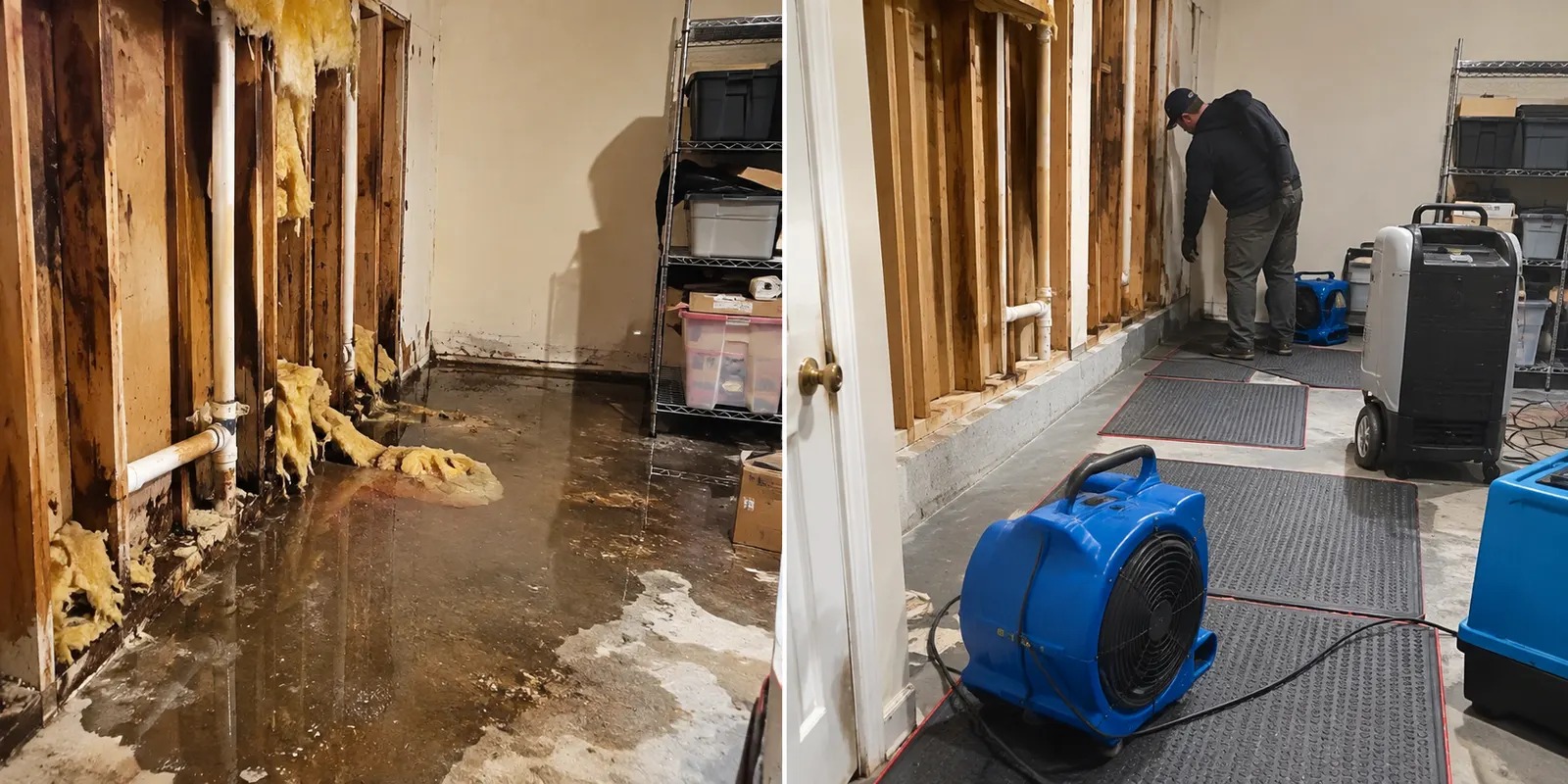
Drywall that sat wet briefly with clean water can often be dried in place; the readings decide. It is replaced when it is saturated, has lost strength, sags, has been wet for days, or has water behind it that cannot dry through the face. In walls, technicians commonly cut the board well above the visible wet line (often a foot or two) so air reaches the cavity and wet insulation can come out. The cut is straight and clean so the repair is a straightforward patch.
Attic pipe burst and the ceiling below
Attic insulation absorbs the first of the water, which makes it heavy. It presses on the ceiling drywall, and the ceiling can fail without warning. Stay out from under any bulge. Removing wet insulation takes the load off the ceiling and removes the thing that keeps it wet. Read the winter ceiling and attic page for how ceilings are judged.
Tell us which rooms are wet, whether the water is still running and which levels are affected.
How drying is verified
Extraction takes bulk water out. Drying takes out what is held inside wood, drywall, subfloor and slab. Technicians map the damage with moisture meters and thermal imaging, set air movers and dehumidifiers to the size of the affected rooms, and return on a schedule to read the same points. The job ends when those materials read like comparable dry materials elsewhere in the house, and the readings are recorded so you can hand them to your insurer. Wet materials that cannot reach that point are removed. A drying job that ends when the floor looks dry has not been verified.
Who handles what after a burst pipe
| Who | What they handle | When |
|---|---|---|
| Licensed plumber | Finds and repairs the failed section, checks other exposed lines. | As soon as the main is closed; before drying can be trusted. |
| Restoration | Water extraction, removal of wet materials, drying, moisture records. | Immediately after the water is stopped. |
| Your insurer | Decides coverage and what to document. | Call promptly. Ask before throwing anything away. |
| Contractor | Rebuilds drywall, insulation, flooring and paint. | After readings show the structure is dry. |
This site does not state that Dallas Flood Guard repairs plumbing. If you need both services, ask how they will be coordinated. The order that works is to stop the water, then dry, then rebuild. Starting to dry before the leak is fixed gets repeated; rebuilding before the structure is dry traps moisture.
What to document before anything is moved
- Wide and close photographs of each affected room, ceiling, wall and floor, plus a short video walk-through.
- The failed section of pipe, if the plumber removes it. Keep it.
- The time you discovered the water and the time the main was closed.
- A list of damaged belongings with rough age and value, kept separate from the building.
- Receipts for emergency purchases, such as fans, tarps or hotel nights.
Mistakes that make a burst pipe loss worse
- Waiting for the adjuster before starting drying. Most policies expect you to protect the property; ask the insurer what they require, but do not leave wet materials in place for days.
- Painting or replacing flooring over materials that have not been checked for moisture.
- Running a household vacuum on standing water, or using space heaters and ceiling fans to dry a room that still has water in it.
- Walking into a ceiling bulge or leaving wet insulation in place because the stain looks small.
Rentals, vacant properties and multi-unit buildings
In an apartment or condo, a burst line in one unit wets the units below through floors, ceilings and shared walls. Tell the manager or association at once, because shutting off a riser or a building branch is usually not something a resident can do. For vacant rentals, photograph the unit before the first visit and note the last time the property was occupied, since insurers ask. See commercial water damage restoration for how shared-building coordination works.
If the damp area stays damp, read mold removal and attic and crawlspace mold. If the leak is from an appliance rather than a freeze, see water heater and appliance leaks.
Frequently asked questions
How long does a house take to dry after a burst pipe?
Most burst pipe losses need several days of drying equipment, and larger losses, hardwood floors, slabs and insulated wall cavities take longer. The finish date is set by moisture readings compared against dry reference materials in the same house, not by a fixed number of days.
Does the ceiling have to come down after a pipe burst in the attic?
Not always. Drywall that was wet briefly with clean water can sometimes be dried in place. A ceiling that is sagging, stained through, holding a pocket of water or sitting under saturated insulation usually needs to be opened or removed, both for safety and so the cavity can dry.
My pipe froze but has not burst. What should I do?
Open the faucet it feeds, warm the pipe slowly starting at the faucet end with a hair dryer or heating pad, and never use a flame or torch. Know where the main shutoff is before you start. If you see a bulge, a split or any water, close the main valve and leave the faucet open.
We were away when it burst and the water ran for days. Is that different?
Yes. The longer materials stay wet, the more of them need removal, and the more likely it is that mold and odor become part of the job. Stay out of rooms with wet outlets or fixtures, close the main if you can reach it safely, and call as soon as you can describe the rooms involved.
Will my homeowners policy cover a frozen pipe?
Many policies cover a sudden pipe burst but attach conditions, such as keeping the home heated or taking reasonable steps to protect it. Read the policy, tell the insurer promptly, photograph everything before it is moved, and ask what they want kept.
The line that broke is between the street meter and my house. Whose problem is it?
That depends on the water utility’s rules and where the break is. Call the utility, tell them where the water is surfacing, and ask who is responsible for that section before arranging repairs.
Burst lines get worse with time. Call as soon as the water is stopped and the area is safe.
Source notes
- NWS Fort Worth, DFW Normals, Means, and Extremes (1991–2020), freeze-day normals and February 2021 daily record lows