Key points
- EPA says to dry water-damaged areas and items within 24 to 48 hours to prevent mold growth, and that dry materials in that window will not grow mold in most cases.
- CDC says the same for flood cleanup, and says to assume a flooded home that was closed up for several days has mold.
- The clock is about the material, not the room. Carpet pad, drywall paper and insulation are at risk first.
- Missing the window does not mean the house is ruined. It means the decisions shift toward opening, inspecting and removing.
- Cleaning mold away without fixing the moisture only resets the clock.
The short answer from the two agencies most people trust is 24 to 48 hours, and the useful way to read that number is as a deadline for the drying, not a prediction for the mold. If wet materials are dry by then, mold usually does not start. If they are not, the chance rises with every day, and the decisions about what to keep get harder.
What the agencies actually say
- EPA’s brief guide to mold says it is important to dry water-damaged areas and items within 24 to 48 hours to prevent mold growth. It also says that if wet or damp materials are dried 24 to 48 hours after a leak or spill, in most cases mold will not grow.
- CDC’s mold page says to clean up and dry out your home fully and quickly, within 24 to 48 hours, after a flood.
- CDC’s guidance for re-entering a flooded home says that if the home has been closed up for several days, you should assume it has mold.
None of these pages gives a number of hours before the first spore germinates, and it would be wrong to quote one. What they give you is a working rule for cleanup, and it is a strict one: the first two days are when the outcome is decided.
schematicWhat happens to a wet house over the first week
Sourced milestones are in red. The rest is the usual order of decisions, not a measurement.
- Hour 0Water stops. Extraction and removal of standing water start.
- Hours 0 to 24Wet materials identified with meters. Drying equipment placed.
- Hours 24 to 48EPA and CDC window to have water-damaged areas and items dry.
- After 48 hoursMaterials still wet are at higher risk. Opening and inspecting replaces drying in place.
- Several days closed upCDC says to assume a flooded, closed-up home has mold.
- Week 2 and laterStaining, odor and visible growth become likely in materials that stayed wet.
Stated by a cited sourceTypical practice, not a cited figure
What mold needs to start
Mold needs moisture, something organic to eat and time. Moisture is the one you can control. Food is everywhere: the paper on drywall, wood framing, ceiling tile, carpet backing, dust and the glue in flooring. Time is on the side of the mold once materials stay wet. That is why every sensible plan starts with the water and not with the growth.
Which materials go first
Not everything in a wet room is equally at risk. Porous, organic materials that hold water are the first to need attention, and hard, sealed surfaces are the last.
schematicHow different materials fare after the first 48 hours
General guidance for water that came from a clean source. Contaminated water changes the answer.
| Situation | Dried inside the window | Still wet after 48 hours |
|---|---|---|
| Tile, sealed concrete, metal | Usually fine | Clean and dry; low risk |
| Solid wood framing | Usually fine | Open and dry; check readings |
| Drywall | Often dries in place | Often removed, especially low sections |
| Carpet pad | May survive clean water | Usually removed |
| Insulation in a wall cavity | Sometimes dried | Usually removed |
| Ceiling tile, particleboard | Rarely recovers fully | Replace |
A realistic timeline
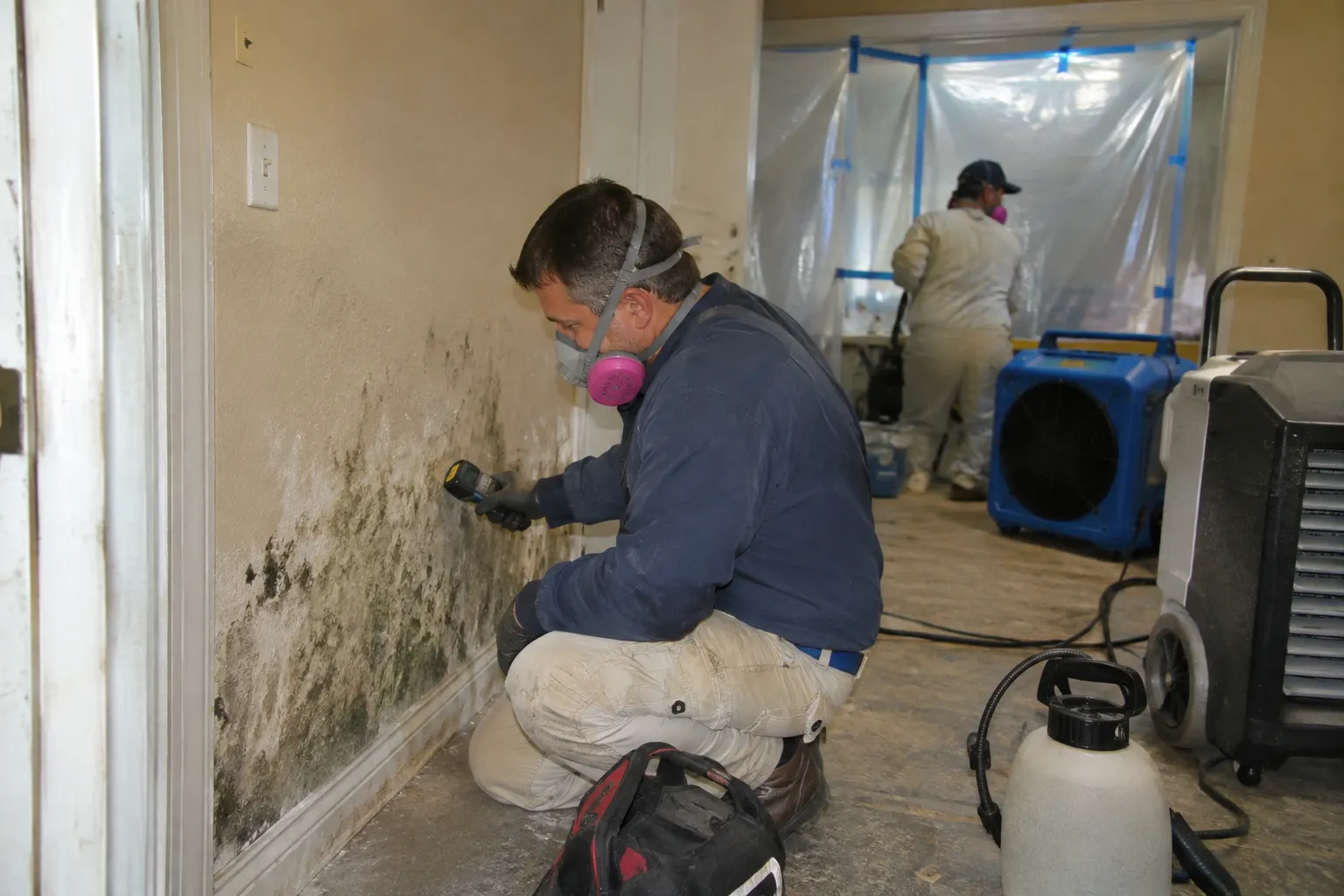
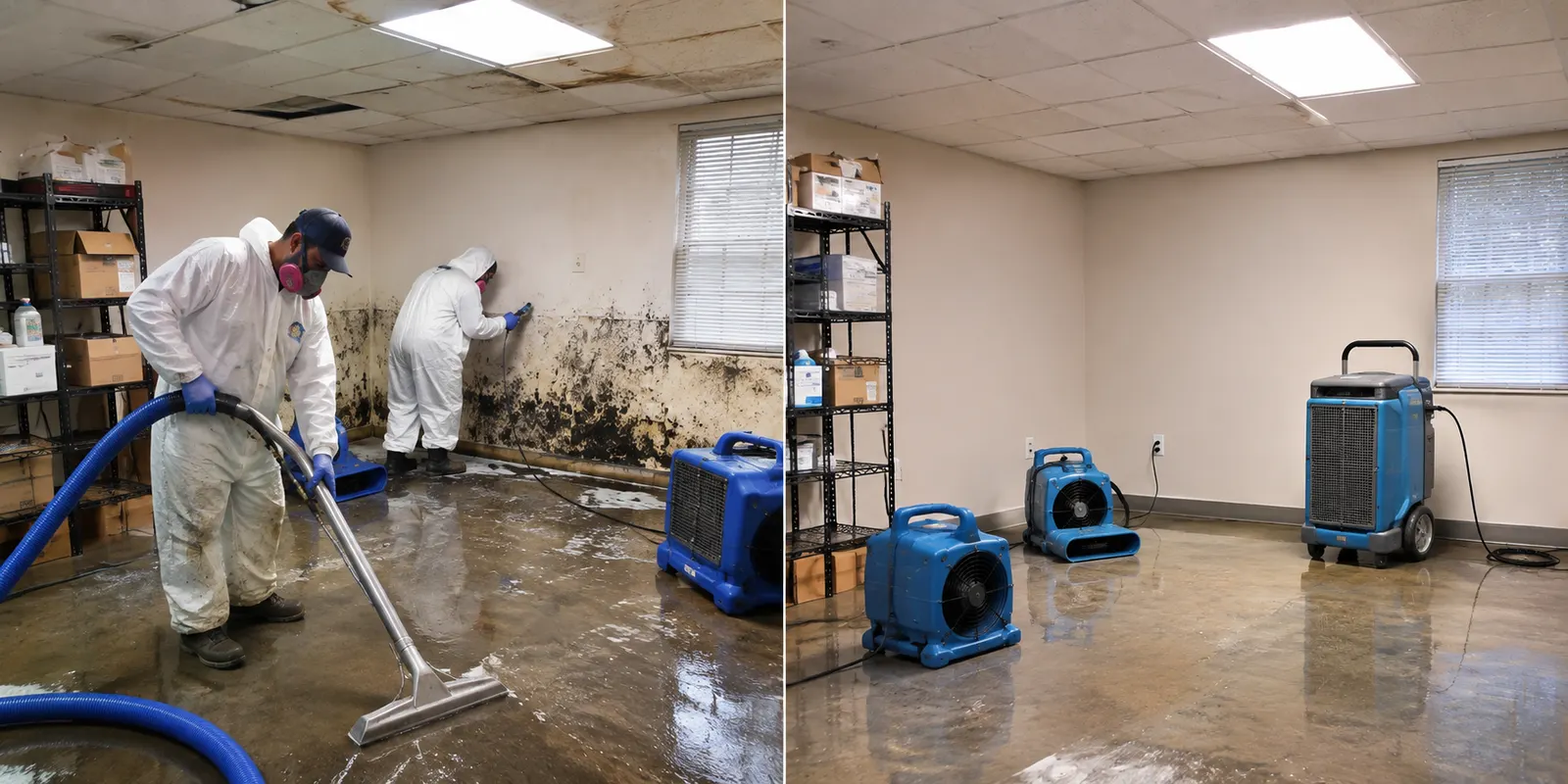
On the first day, the work is extraction and finding out where the water went. Moisture meters and thermal imaging map the wet areas, and equipment goes in. On day two, the question is whether the readings are falling. If they are, the plan is working. If a section is not drying, it is usually because water is trapped behind something, such as baseboards, a vapor-resistant paint or flooring, and that is the moment to open it up.
By the third day, a material that is still wet is a candidate for removal. That is not a sign something went wrong. It is the point at which it becomes cheaper and safer to take a piece out than to keep nursing it. For the full process, see how structural drying works.
Room by room
- Kitchen and laundry: cabinet bases, toe-kicks and the bottom of the wall behind appliances stay wet longest.
- Bathrooms: the subfloor around the tub or toilet, and the wall behind the vanity.
- Bedrooms and living areas: carpet pad and the bottom plate of exterior walls.
- Attics: insulation and the underside of the roof deck.
- Basements and garages: stored cardboard and wood, and the base of finished walls.
These are the places to open first when readings stall, and the places to photograph first when you document the loss.
If the window has passed
Losing the 48 hours changes the plan, not the outcome. If you found a leak late, or the house was empty, the steps are the same, with an extra layer of caution.
- Stop the source, or the clock restarts every time it rains or the pipe weeps.
- Look and smell. Visible growth, a musty smell and staining on the back of drywall are signs that moisture has been there a while.
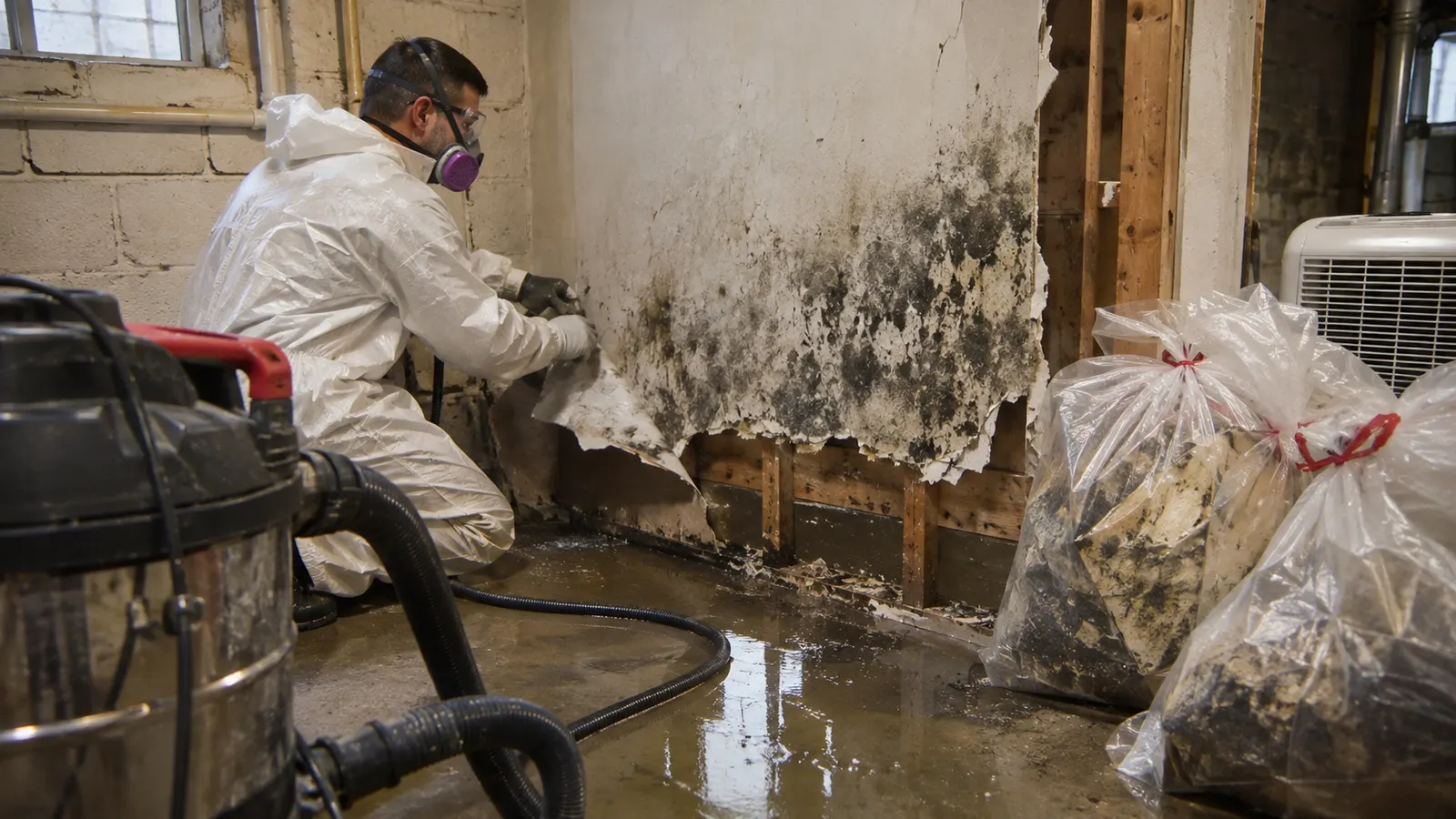
- Keep the area closed and do not scrub dry. Disturbing growth releases spores into the air.
- Get readings. A meter shows whether the structure is wet right now, which is more useful than guessing how long it has been wet.
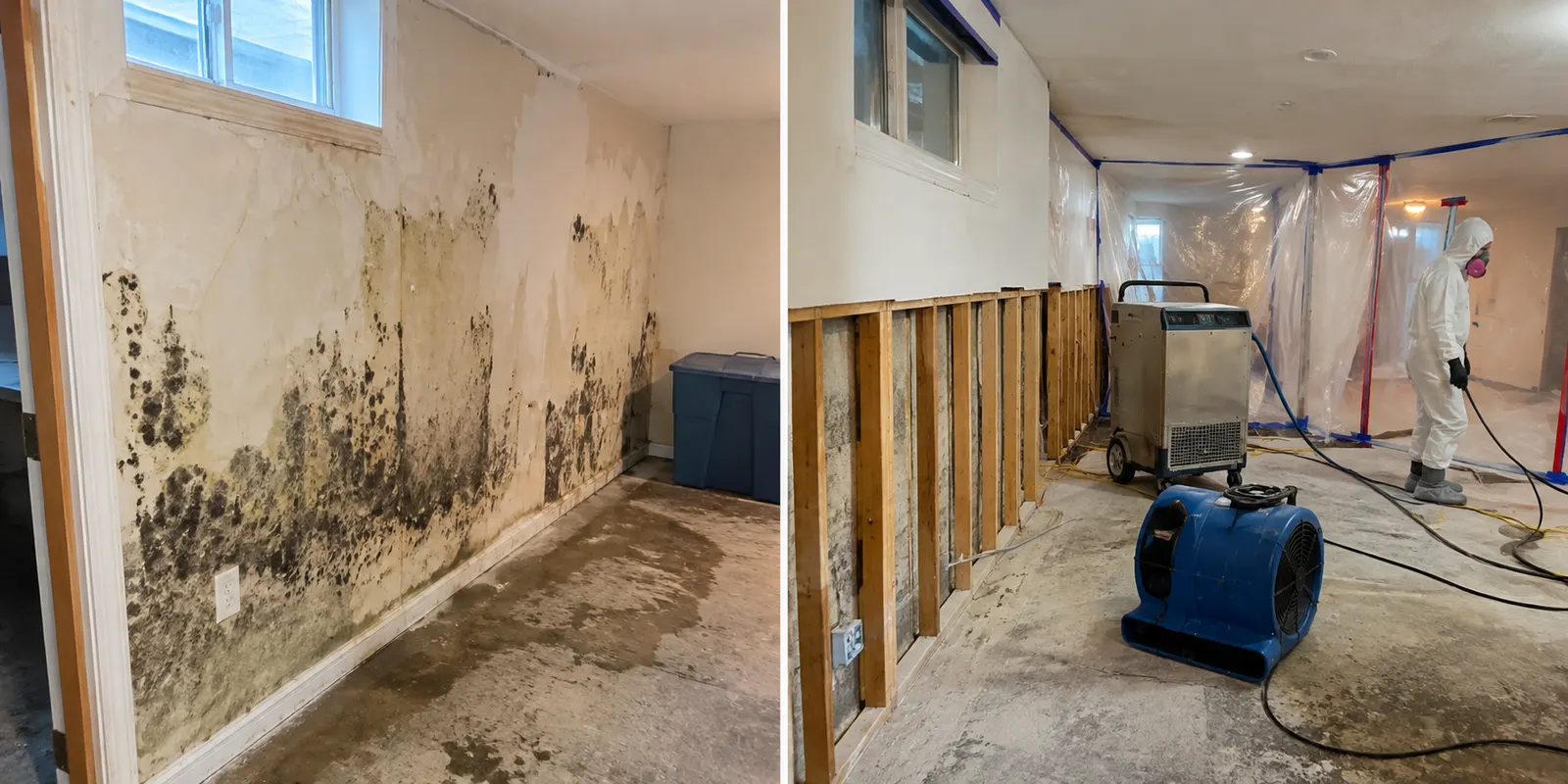
- Plan removals. Affected porous materials come out. EPA says a patch under about 10 square feet can in most cases be handled by a homeowner, and larger areas call for its remediation guidance or a professional.
Speeding up drying before help arrives
If the 24 to 48 hour window is running and help is hours away, there are steps that help and steps that do harm. They apply to a clean-water leak. If the water was sewage or floodwater, stay out and wait for professionals.
- Remove standing water where it is safe, with towels, a mop or a wet vacuum made for water.
- Get wet things off the floor. Lift furniture legs, pull rugs and move boxes. Photograph first.
- Open cabinet doors and drawers so air reaches the wall bases behind them.
- Pull furniture away from wet walls by a few inches.
- Run a dehumidifier, if you have one, in the closed room, with a fan if the circuit and floor are dry and safe.
- Lift the edge of wet carpet at a wall if you can do it safely, so air reaches the pad.
What does harm: opening windows on a humid day, which lets in air that is wetter than the room; closing wet items into plastic bags or boxes; piling wet fabric in a corner; running a space heater next to wet material; and putting off the call because the room looks better than it did. Looking better is not dry.
Why Dallas heat matters
EPA’s guidance does not break the 24 to 48 hours down by temperature, and this post will not invent a number. The practical point is that North Texas summers keep a closed-up house warm, and warm, damp, enclosed spaces such as attics, wall cavities and closets are the places most likely to hold water long after the floor has dried. Run air conditioning only if the HVAC system has not been wet or contaminated. EPA says not to run an HVAC system that you know or suspect is contaminated with mold.
Why cleaning is not enough
Wiping visible growth off a wall is a reasonable step for a small, dry, hard surface. It is not a fix for a wall that is still taking on moisture, and it does not touch growth inside drywall or insulation. EPA also says killing mold with bleach is not recommended as routine practice, since dead mold can still cause allergic reactions and the goal is to remove it. The lasting fix is to find and stop whatever kept the material wet and to remove what cannot be dried. The mold removal page covers the process, and the post on hiring a mold remediator in Texas covers who is allowed to do it.
Common questions
Is 24 to 48 hours a guarantee?
No. It is EPA’s guidance for most situations. Contaminated water, saturated structural materials and hidden cavities can behave differently, which is why moisture readings matter more than the calendar.
Can mold grow in less than 24 hours?
Neither EPA nor CDC puts a floor on it in the pages cited here. They give 24 to 48 hours as the window to dry things out, which is a reason to start immediately.
What if I dried everything but it still smells musty?
A musty smell after drying means moisture or growth is still somewhere, often in a wall cavity, under flooring or in insulation. See the post on musty smells with no visible mold.
Should I test the air for mold after a leak?
CDC does not recommend mold testing, and EPA says sampling is usually unnecessary when growth is visible. See the post on when testing helps.
If water is already in the building, call and describe it. Related service: Mold removal.
Sources and further reading
- EPA, A Brief Guide to Mold, Moisture and Your Home, drying within 24 to 48 hours, 10 square feet, sampling, biocides, HVAC, sewage
- CDC, About Mold, 24 to 48 hour cleanup guidance, testing, who is affected
- CDC, Reentering Your Flooded Home, electrical safety, mold, generators; updated August 24, 2026
- EPA, Mold Cleanup in Your Home, updated June 4, 2026
This article is general information from the Dallas Flood Guard editorial team. It is not medical, legal, engineering or insurance advice. Sources are linked above. See the editorial policy for how posts are researched and corrected.