Key points
- Electricity is the first hazard. CDC says never to turn power on or off yourself if you must enter standing water to reach the switch.
- Floodwater can contain sewage. Treat water that came from outside or a drain as contaminated, and wear boots, gloves and goggles.
- Never run a generator or gas-powered engine inside a home, garage or porch. Carbon monoxide is the hazard.
- A ceiling that is bulging or sagging is a collapse risk. Stay out from under it.
- People with asthma, allergies or weakened immune systems should be more cautious about mold and damp.
Whether you can stay in a house after water damage depends on six separate hazards, and you need to be safe on all six, not just the one that is easiest to see. The sections below take them in order of how quickly each one can hurt someone.
The six hazards
A wet room can look the same whether the water is clean or contaminated, whether the outlets are live or dead, and whether the ceiling is sound or about to fall. That is why the question is about hazards, not appearance. Check each one, and if you cannot confirm that one is safe, treat it as not safe until someone qualified has looked.
1. Electricity
CDC’s re-entry guidance for flooded homes is direct. It says never to turn power on or off yourself or use an electric tool while standing in water, and that if you must enter standing water to reach the main power switch, you should call an electrician. It also says to have an electrician check the electrical system before power is turned back on. That applies to a burst pipe that put water into outlets as much as to a river flood.
- If the panel is dry and the path is dry, switching off the circuits that serve wet rooms is reasonable.
- If you cannot reach the panel dry, do not try. Call your electric utility or an electrician.
- Do not plug anything into outlets that were wet. Do not use extension cords through water.
- Ceiling light fixtures that filled with water should stay off until they have been checked.
2. What the water carries
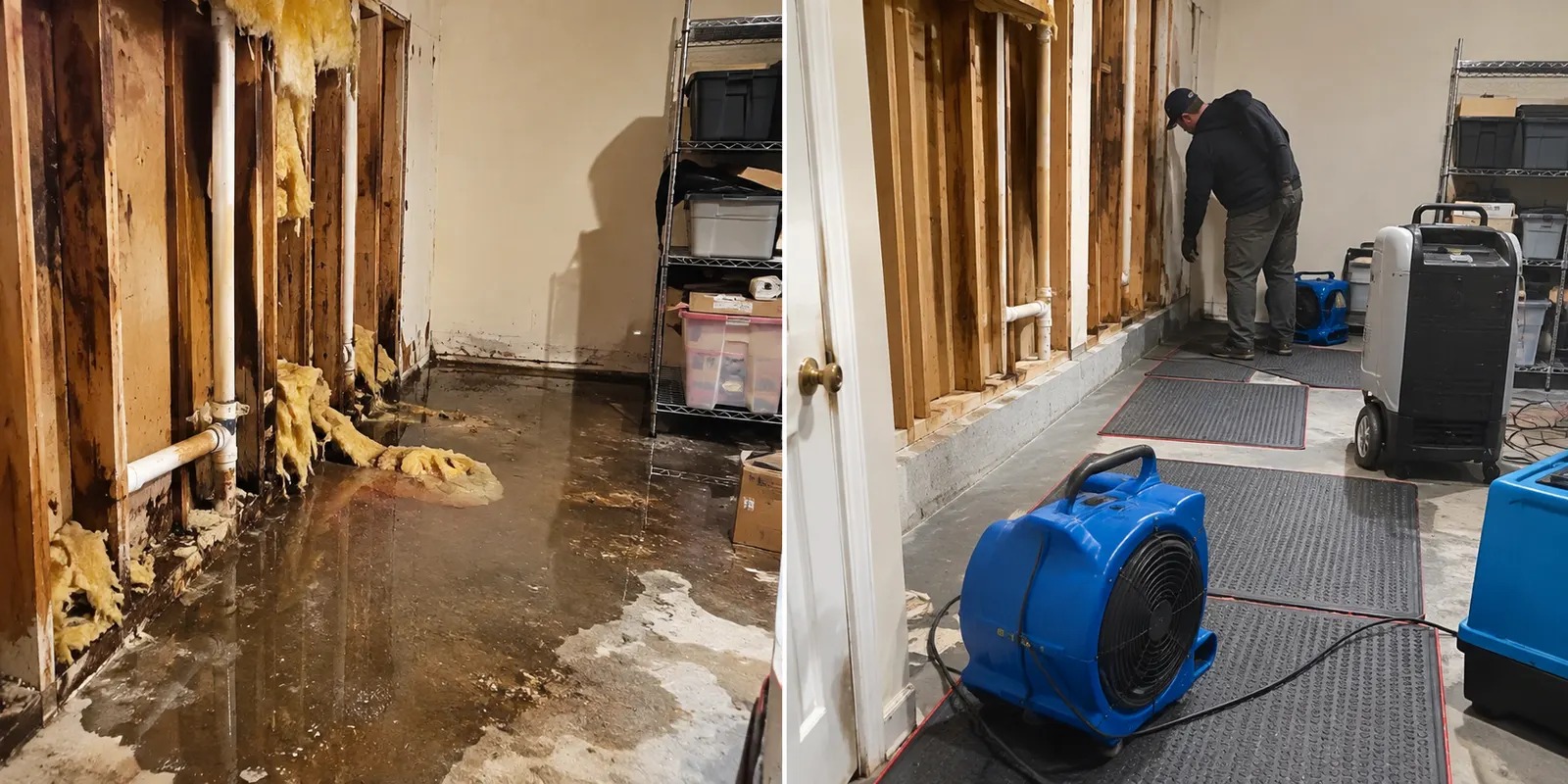
Water that came from a clean supply line starts out relatively clean. Water that came from outside, from a drain or from a sewer line does not. CDC says floodwater may contain sewage, and its guidance for cleanup is to wear rubber boots, rubber gloves and goggles if you must enter floodwater, to wash hands with soap and water, and to throw away items that cannot be disinfected, such as wall coverings, cloth, rugs and drywall.
EPA’s mold guidance adds that if the damage was caused by sewage or other contaminated water, you should call a professional with experience cleaning and fixing buildings damaged by contaminated water. The water categories post explains how the industry sorts these cases.
3. Gas and carbon monoxide
Two separate problems. A gas smell means leave and call from outside. Carbon monoxide comes from gasoline and propane engines, and the usual route is a generator run to keep a fridge or fans going. CDC says never to operate a gas-powered engine inside a home, basement, garage, carport or porch, and to keep a generator well away from windows, doors and vents. If a house has been wet and closed up, open doors and windows to air it out when it is safe to do so.
4. Ceilings and floors
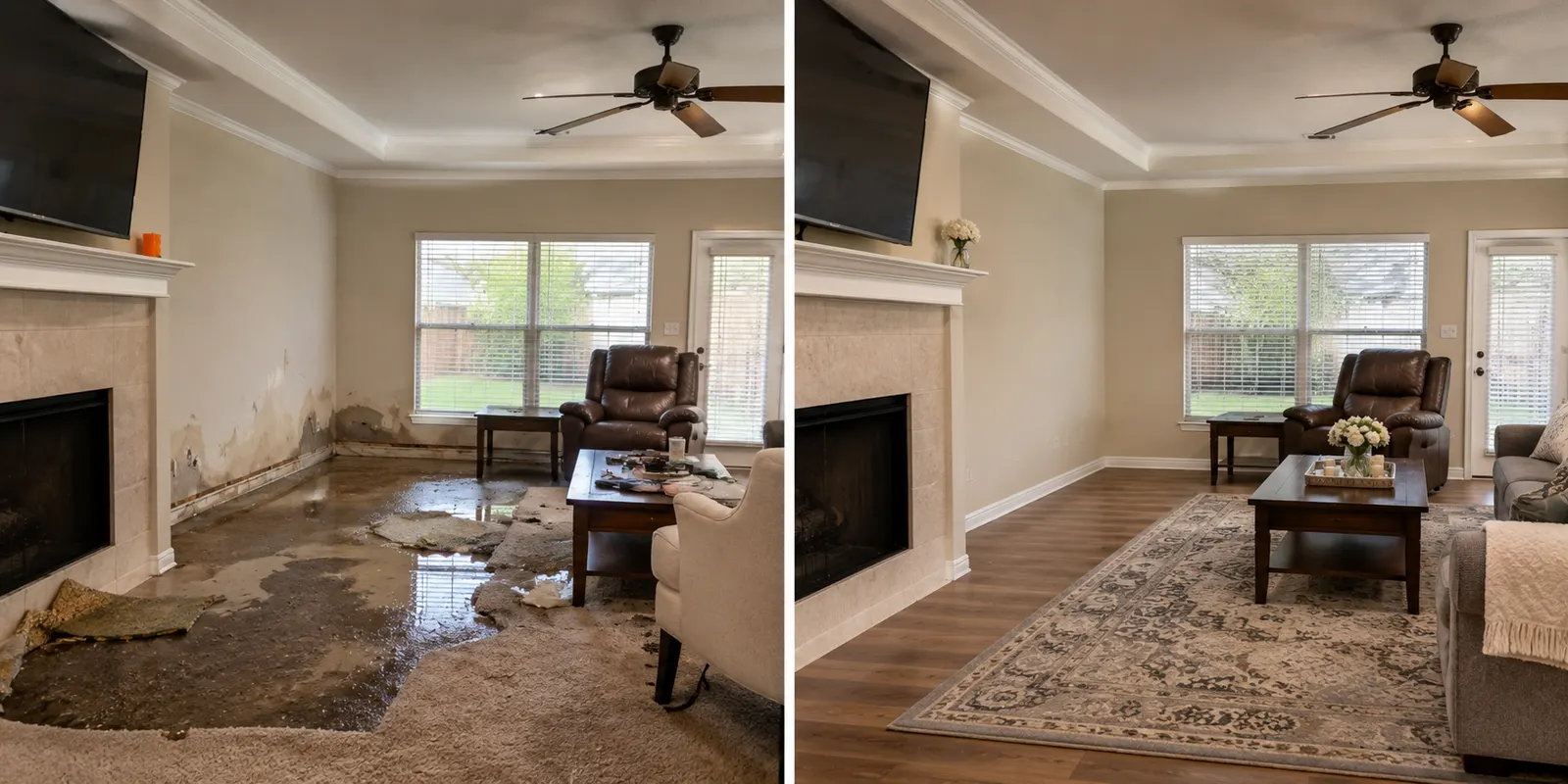
Wet drywall and insulation are heavy, and a ceiling can hold a pocket of water that releases all at once. A bulge, a sag, a steady drip or a brown ring that is spreading means stay out of that room until the ceiling has been dealt with. Floors can fail too: soaked subfloor, especially particleboard, loses strength, and a wet basement stair can be slick and unreliable. See the ceiling and attic page for how ceilings are assessed.
5. Mold and damp
CDC says that people with asthma or mold allergies may have severe reactions to mold, and that people who are immune-compromised or have chronic lung disease may get infections in their lungs from it. Its re-entry guidance says to assume a flooded home that has been closed up for several days has mold. EPA recommends drying water-damaged areas within 24 to 48 hours and says not to run an HVAC system that you know or suspect is contaminated with mold. If anyone in the household is in a higher-risk group, ask a physician before they spend time in a damp house. See how long before mold grows.
6. Slips and tools
Wet hard floors, mud and debris cause a lot of injuries. Wear shoes with grip, not slippers. If you are moving heavy wet items such as carpet, get help and lift with your legs. Do not use a household vacuum on standing water. If you are working in dark areas, use battery lanterns rather than candles. Do not drive or walk through moving floodwater to get to the house: the National Weather Service says as little as 6 inches of fast-moving water can knock over an adult and 12 inches can carry away most cars.
A re-entry sequence if you left
- Look from outside first. Check for downed power lines, a smell of gas, standing water at the doors and visible structural damage.
- Do not turn power on or off yourself if you would have to enter standing water. CDC says to call an electrician.
- Open doors and windows. CDC’s re-entry page suggests entering briefly to air the house out for at least 30 minutes before spending time inside.
- Put on protective gear. Boots, gloves and goggles for floodwater contact, and an N-95 respirator at a minimum for mold cleanup, per CDC.
- Photograph before you touch anything. See the documentation checklist.
- Throw away food that may have touched flood or storm water, per CDC.
- Wash your hands with soap and clean water after contact with floodwater or damaged materials.
Children, pets, older adults and where to stay
Some people in a household are more exposed than others. CDC says people with asthma or mold allergies can have severe reactions to mold, and that people who are immune-compromised or have chronic lung disease can get lung infections from it. If anyone in the household is in either group, ask a physician before they spend time in a damp house.
- Children. Keep them out of affected rooms while the floor is wet, and always when the water came from outside or a drain. Wet floors, loose debris and cords are hazards even when the water is clean.
- Pets. Keep them out of standing water and away from damaged materials. They walk through water and then lick their paws, and floodwater may contain sewage, per CDC.
- Older adults. Slips are the main risk, along with anything that needs power, such as medical equipment. Make a plan for powered equipment before the electricity is shut off.
- Medications. Move medicines and important papers to a dry place, and take them with you if you leave.
If you leave, keep receipts. The Texas Department of Insurance’s home insurance guide describes additional living expense coverage, which can help with housing while a home is unlivable, and says it might be limited to 10 to 20 percent of the dwelling coverage. Ask your insurer before booking a long stay, and ask what it requires.
A decision table
schematicCan you stay? A rough guide by situation
Green means usually fine. Amber means only if the conditions are met. Red means leave or stay out of that area.
| Situation | Stay in the house? | The condition that decides it |
|---|---|---|
| Clean supply-line leak, one room, power checked | Usually yes | Power is safe and the ceiling is sound |
| Water in outlets or near the panel | No, not that area | Electrician must clear it |
| Storm water or flood water inside | Not until cleanup is done | Treat as contaminated |
| Sewage backup | No | Professional cleanup first |
| Bulging or sagging ceiling | Not in that room | Collapse risk |
| Damp for days, musty smell | Depends on who is in the house | Asthma, allergies or weak immunity: ask a physician |
| Generator running in garage | Shut it off and move it outside | Carbon monoxide |
Common questions
Can I sleep in a room that is not wet?
Often yes, if the power to that room is safe, no gas smell is present, the ceiling above is sound and the water was clean. If the water came from outside or a drain, or odor is moving through the house, leaving is the safer choice.
How long should I wait before moving back in after drying?
Until the moisture readings are back to normal, the cleanup is complete and any electrical equipment that was wet has been checked. CDC’s mold guidance says to ensure the cleanup is complete before reoccupying the home.
Is the tap water safe after a burst pipe in the house?
A burst pipe inside the house does not by itself make the water supply unsafe. Floods and sewage backups are different: follow local notices about drinking water.
What if I smell gas?
Leave immediately, do not touch switches, and call 911 and the gas utility from outside.
If water is already in the building, call and describe it. Related service: Flood damage cleanup.
Read about flood damage cleanup →
Sources and further reading
- CDC, Reentering Your Flooded Home, electrical safety, mold, generators; updated August 24, 2026
- CDC, Floodwater After a Disaster or Emergency, protective gear, what to discard; updated August 24, 2026
- CDC, About Mold, 24 to 48 hour cleanup guidance, testing, who is affected
- CDC, Guide to Mold Cleanup, respirator and cleanup guidance
- EPA, A Brief Guide to Mold, Moisture and Your Home, drying within 24 to 48 hours, 10 square feet, sampling, biocides, HVAC, sewage
- NWS, Turn Around Don’t Drown, depth of moving water that moves people and vehicles
This article is general information from the Dallas Flood Guard editorial team. It is not medical, legal, engineering or insurance advice. Sources are linked above. See the editorial policy for how posts are researched and corrected.